
Photographers - Polo Grounds 1914
source: Repository: Library of Congress, Prints and Photographs Division, Washington, DC 20540 USA

Photo shows Herman A. "Germany" Schaefer (1876-1919), one of the most entertaining characters in baseball history, trying out the other side of the camera during the Washington Senators visit to play the New York Highlanders in April, 1911. Germany Schaefer, a versatile infielder and quick baserunner, played most of his career with the Detroit Tigers and the Washington Senators. The camera is a 5x7 Press Graflex with a modification to accommodate the large lens. The camera was produced by the Folmer & Schwing Division of Eastman Kodak Co. between 1907 and 1923.
source: Repository: Library of Congress, Prints and Photographs Division, Washington, DC 20540 USA
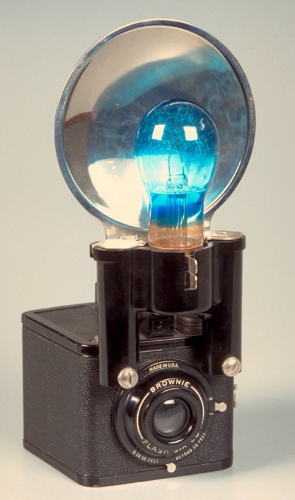
Brownie Flash Six-20
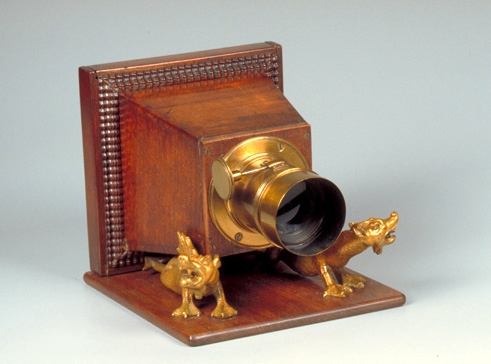
Bourquin
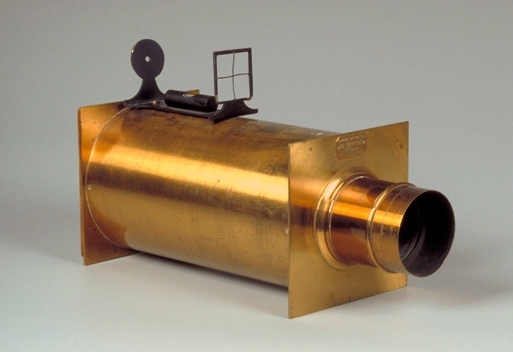
Portrait Chambre Automatique de Bertsch
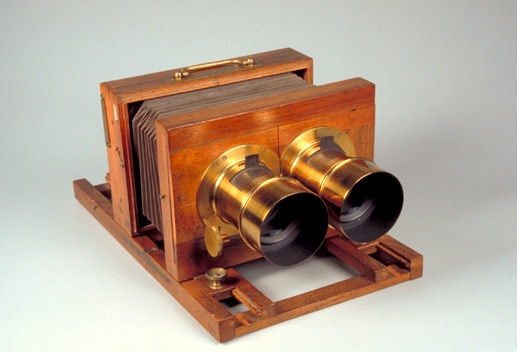
French stereo
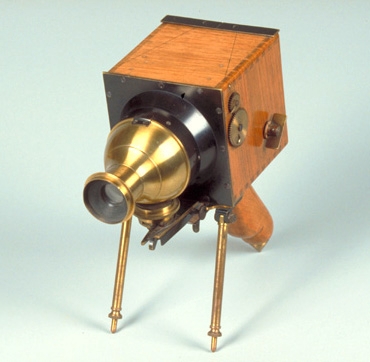
Escopette
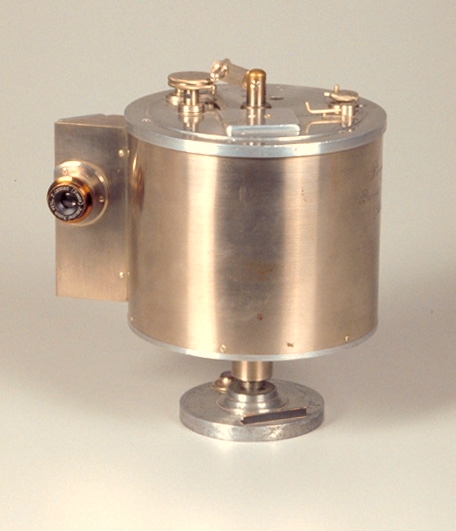
Periphote
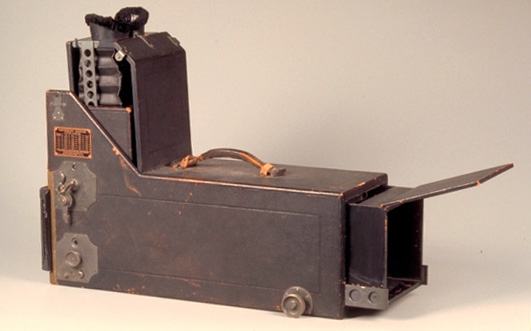
Naturalists Graflex
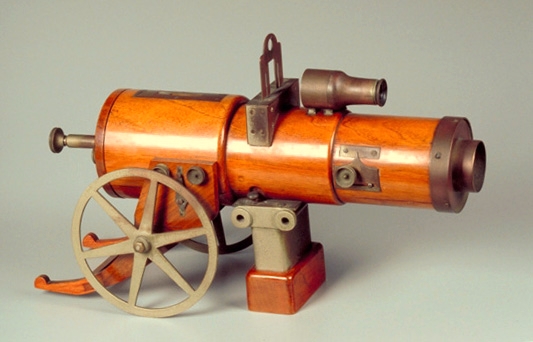
Raderkanone
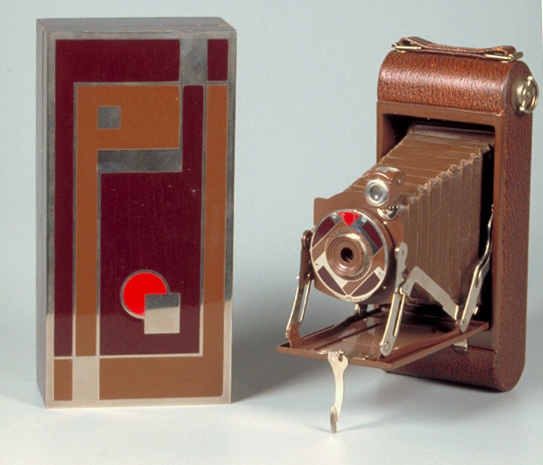
Gift Kodak
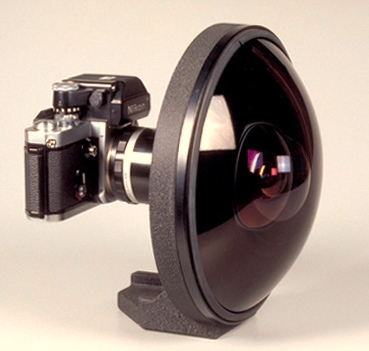
Fisheye-Nikkor 6mm f 2.8
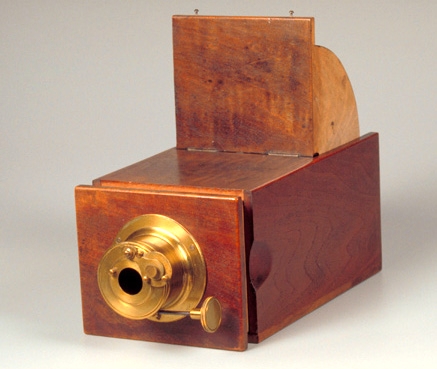
Camera Obscura
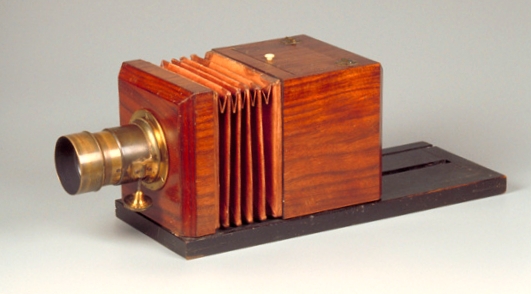
Lewis Daguerreotype
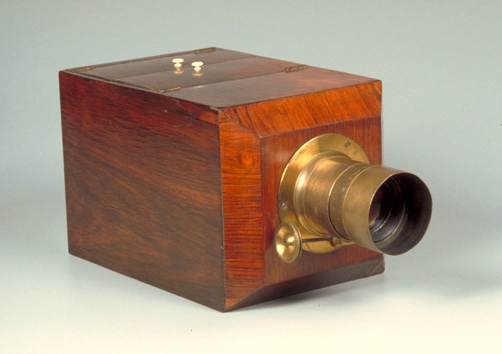
American Daguerreotype
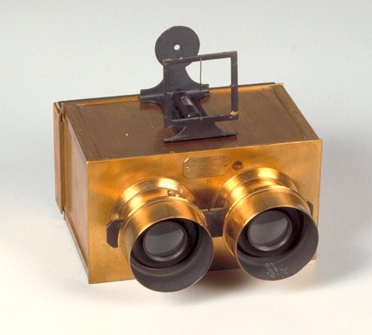
Stereo Chambre Automatique de Bertsch
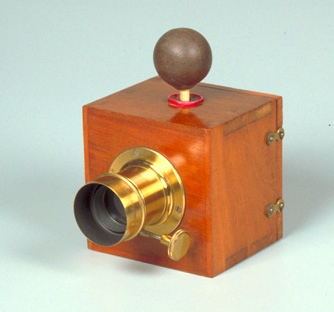
Dubroni Apparatus No 2
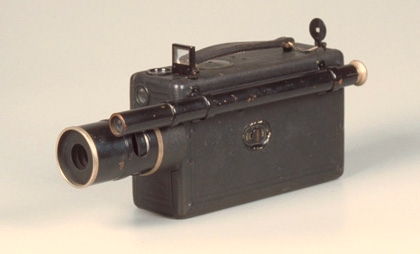
Cine-Kodak Model B
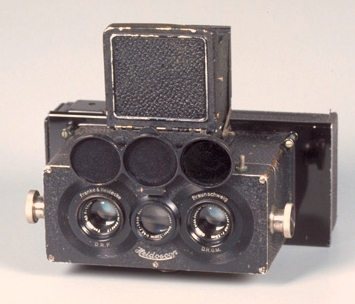
Heidoscop 6 x 13cm
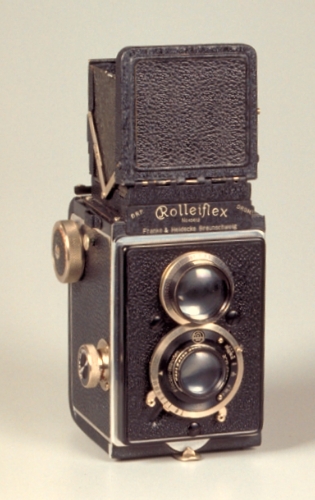
Rolleiflex I original model
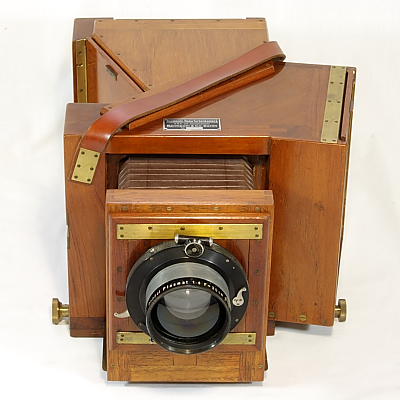
- BERMPOHL NATURFARBEN KAMERA c. 1930
- Bermpohl & Co., Berlin, Germany
- Lens: f4, 30 cm Double Plasmat, iris diaphragm to f32. Serial no. 583442.
- Shutter: Compound, speeds 1 - 1/50, B, T.
- Construction: Polished teak body, deal internal fittings, brown leather bellows.
- Format: Three, 13 x 18 cm plates.
- Focusing: Bellows to 50".
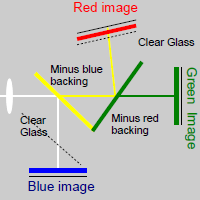
- Attributes: Three plates are simultaneously exposed behind Red, Green and Blue filters.
- Notes: The filters carry the serial number of the camera.
- With: Focusing screen. Two wooden blanking plates. Nitraphotlicht Tageslicht Grun filter 42/A. Nitraphotlicht Rot filter 43/A. Nitraphotlicht Blau filter 41/A.
- The Bermpohl is a one-shot camera for colour separation negatives. Three negatives are produced for red, green and blue images with the appropriate colour filter positioned in front of each negative. The light is divided behind the lens by two semi-silvered mirrors. To prevent double images being formed by reflection from the back of the mirror it is coated, on the back, with the minus colour for the negative to which it is directed.
- Source: http://earlyphotography.co.uk/site/entry_C480.html
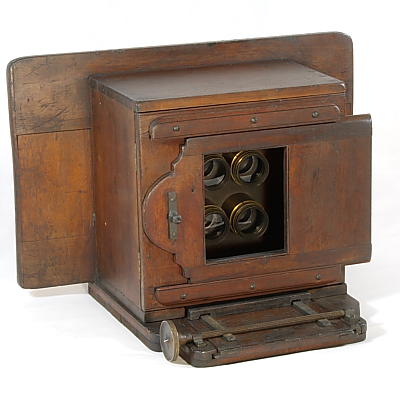
- FOUR LENS CAMERA 1882
- J. Lancaster & Son, Birmingham, England
- Lens: Four, c.f5.6, 4" Petzval type lenses, fixed aperture.
- Shutter: Simple sliding shutter.
- Construction: Mahogany.
- Format: 4 exposures, 2" x 1 ½" on a 3 ¼" x 4 ¼" plate or 8 on a 5" x 7" plate. (Victoria size).
- Focusing: To 17".
- Lancaster produced a range of multi-lens cameras for Gem or Victoria size images. These were essentially very similar cameras differing in the number of lenses (between 2 and 12) and whether a repeating back was fitted. When introduced in 1880 the camera had 12 lenses, two years later other sizes were introduced. The price of this example was £5.5.0.
- In the early 1900s the Lancaster multi-lens cameras become a box shape with a flap or slide in front of the lenses.
- Source: http://earlyphotography.co.uk/site/entry_C480.html
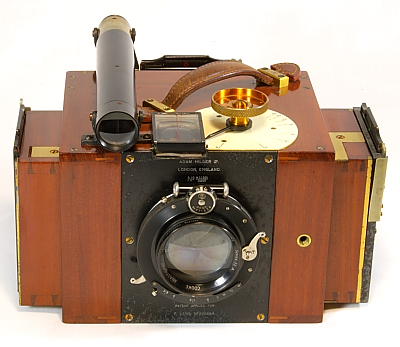
- HILLMAN COLOUR CAMERA c.1931
- Adam Hilger Ltd, London, England
- Lens: f3.5, 6 ¼" Cooke Series IIA, iris diaphragm to f32. Serial no. 210466 .
- Shutter: Compound, speeds 1 - 1/100, B, T. Serial no. 689059.
- Construction: Polished mahogany, dovetail joints.
- Format: Three, 2 ½" x 3 ½" exposures (red, green, blue) on separate plates.
- Focusing: Sliding box to 4 ½'. Scale to 6 feet.
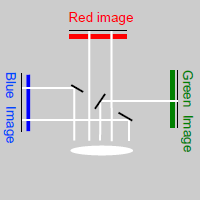
- Attributes: Eye-level view-finder (lens/post). Coupled rangefinder using a ground glass screen. A central mirror behind the lens directs light to the green image. An annular mirror, surrounding the fixed, directs light to the blue image situated opposite the green. Light passes between and around the two mirrors to the red image at the back of the camera. Masks in the image plane have notches to indicate, on the film, the colour of the image. The focusing knob moves all three plate chambers.
- Notes: The lens number is also engraved on the camera body. Another, similar, Hilger camera is known having a serial no. of 1301 / 31202.
- With: 24 single metal slides (A.P. Paris). 3 colour filters. Case.
- Hillman submitted a number of patents on colour photography equipment especially for cine use. The patents, here, cover the mirror arrangement and the movement of the three focusing chambers. Also mentioned is the idea of moving the chambers at different rates to compensate for chromatic dispersion.
- Source: http://earlyphotography.co.uk/site/entry_C480.html
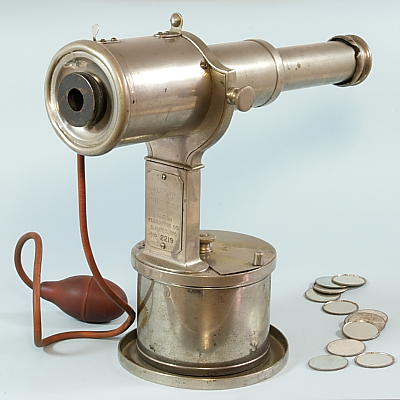
- TELEPHOT c. 1913
- British Ferrotype Co., Blackpool, England
- Lens: Doublet of two plano-convex elements. Fixed aperture.
- Shutter: Two-blade pivoted return, B setting. Operates between the lens.
- Construction: Nickel plated metal body.
- Format: 100, 1" diameter exposures on ferrotype buttons.
- Focusing: Fixed.
- Attributes: The base contains four developer/fixer troughs.
- With: 48 un-exposed buttons, stamped made in Holland. Rubber bulb release.
- This is a ferrotype button camera roughly shaped like a telescope. The 1910s were a popular time for button photographs and many novelty cameras were produced. The base contains four troughs, these all held a combined developer/fixer. Having four troughs allowed the photographer to continue working while buttons were being developed.
- Un-exposed buttons are loaded through the 'eye-piece' of the telescope and pushed forward by a spring. The shutter is operated by a bulb release. Operating a lever on the side of the camera allows the exposed button to drop into the developing bath in the circular base of the camera and the next button to be held in the exposing position.
- This type of camera was mostly used at the seaside or fairgrounds.
- Source: http://earlyphotography.co.uk/site/entry_C480.html

