Saturday 12th February 1876 Page 4 - The Bacchus Marsh Express (Vic.)
THE LARGEST PHOTOGRAPH IN THE WORLD
Of late years the art of photography has made rapid progress, but it has been left to a colonial amateur to produce the largest specimen of photography extant. Mr Bernhardt Otto Holterman, of St. Leonard's, North Shore, Sydney, a gentleman who has devoted many years of patient study to the development of his favorite art, recently conceived the idea of producing, by a direct negative, pictures of figures, scenery, of a size hitherto considered impossible. With this view he placed himself in correspondence with an eminent firm in Germany and in furtherance of his scheme visited the Fatherland personally, where, under his own supervision, a lens was manufactured, capable of producing a negative in dimensions 5ft. 6in. by 3ft. 6in. After much trouble and an expenditure of upwards of £1,000 sterling, he landed his apparatus safely in Sydney and at once set to work to produce a picture of that beautiful city. In this object he was assisted by Mr Charles Bayliss and as the result of their united efforts, a comprehensive panoramic view of the city and suburbs, extending over an area of nearly twenty miles, has been produced. A copy of this magnificent photograph was exhibited in this office on Wednesday and as a specimen of photographic art it has no equal. The view was taken from the tower of Mr Holterman's villa residence, at a height of 300ft above the sea level. The foreground represents the suburbs of St. Leonards, the buildings of which are shown with the distinctness of a carte de visite. A portion of the harbour is then met with and in a clear, beautiful-tinted perspective the city is shown. Considering that a distance of several miles is included in one direction and that almost every building is brought into bold relief, the picture must be regarded as a triumph of photographic art. Mr Holterman being desirous of representing the Australian colonies at the forth coming centennial exhibition at Philadelphia, is about to proceed there, taking with him many interesting views of colonial scenery. Mr Bayliss has been located in Melbourne for some weeks and during his stay has taken a series of panoramic views of the city from the tower of Government-house. The panorama comprises eleven views, each 18 inch by 22 inch, which, joined together, form an exceedingly effective representation of "the queen city of the south". Victorians may be proud of their representation at Philadelphia.
Saturday 18th October 1879 Page 3 - The Sydney Morning Herald (NSW)
SYDNEY INTERNATIONAL EXHIBITION
Among the amusements which the International Exhibition has attracted to this city, the camera obscura erected by the Comet Camera Company, of Melbourne, opposite the entrance to the Domain, in College-street, is certainly not the least attractive. The building itself is octagonal in form and on each part a large oil painting (all of them being copies of the great masters) is exhibited. The roof is cone shaped and is surmounted by a statue of Fame, which is a well executed piece of wood carving. Ascending the steps and entering the room, we find that the camera is five feet in diameter and has an area of 16 square feet. This is very much larger than any hitherto exhibited here. The picture thrown, too, is very beautiful and will well repay the visitor. It embraces, of course, the whole circle and every object is brought out with a distinctness and yet softness that a painter might envy.
BERNHARDT OTTO HOLTERMANN
Born 29th April 1838 Hamburg, Germany
Died 29th April 1885 (aged 47) St Leonards, NSW
GOLD MINER, BUSINESSMAN, POLITICIAN
HOLTERMANN MANSION
St. Leonard's, North Shore, Sydney
Saturday 2nd October 1897 The Advertiser (Adelaide SA)
AN AUSTRALIAN ARTIST - WINS A PREMIER MEDAL
LONDON, September 30
Mr Walter Barnett, of Sydney, has been awarded the premier medal of the Royal Photographic Society, London, for head studies, the subjects being the late Sir Henry Parkes and Kowalski, the celebrated pianist.
Friday 17th February 1899 Page 2S - Bendigo Advertiser (Vic)
POLITE PHOTOGRAPHERS
The knack which French photographers and especially those of Paris, possess in relieving their sitters of a constrained and distressed look while sitting for their portraits has long been the envy and perplexity of photographers of other nations. A well known West End photographer, on a recent visit to Paris, took pains to study the means by which this very desirable result was reached. He reports that it all lies in a very simple device, which well illustrates the nature of the Frenchman. When a lady, for instance, is sitting to a photographer for a portrait, the operator does not, in a perfunctory manner, coldly request her to "Look pleasant now, madam" He says to her, in the most natural and graceful manner in the world. "It is quite unnecessary to ask madam to look pleasant; she could not look otherwise". The lady, of course, acknowledges the compliment with her most gracious and high-bred smile. "Click" goes the camera and the picture is obtained, revealing the sitter at her high-water mark, as it were.
HENRY WALTER BARNETT c.1894
Born 25th January 1862 St Kilda, Melbourne
Died 16th January 1934 Nice, France
PHOTOGRAPHER
Saturday 18th May 1907 Page 16 - Newcastle Morning Herald and Miners' Advocate (NSW)
WOMAN PHOTOGRAPHERS
The field for woman photographers is widening daily. Studio work by no means engages the greatest number of workers, though when one counts re-touchers and the studio staff generally an enormous number of women are found to be employed. Manufacturing firms all over the world are constantly on the look out for fresh designs and these, or ideas for them, are very frequently supplied by women photographers. Menu cards, book plates, panels for furniture, all furnish means for profitable application. There are further possibilities in book and magazine covers, title pages, headings and initial letters. Posters and friezes for wall decoration have recently been carried out solely by photography. The field of design precludes nothing that is decorative. Fruit and flowers form the chief motives for the decorative photographer, while leaves, ferns, seed vessels, shells and berries have been used by one or two workers with the greatest success. This decorative work is generally done in a studio and enlarging and coloring are of course special features in the work of photographic artists. It is work specially well adapted for women and it is satisfactory to learn on indisputable authority that the camera is proving so good a friend to workers. There is a large variety of Australian subjects for which inquiry is constantly being made in commercial circles and good pictures of birds and foliage, suitable for decorative work, are in much demand. Photographs of Australian birds, enlarged and truly colored, would almost certainly prove surprisingly profitable.
Saturday 13th February 1909 Page 43 - The Australasian (Melbourne, Vic.)
WOMEN PHOTOGRAPHERS
By QUEEN BEE
At the photographic interstate exhibition now being held in the Victorian artists' gallery, Albert-street, Eastern Hill, some 25 women have competed, hanging 50 works out of the total of 414. In the awards Mrs William Smith comes first in the genre section, with her admirable picture, "Snake Charmer" and she also takes the first prize in the architectural class for her "Cloisters at Toledo", a very sympathetic effort, aided considerably by the good judgment shown in its point of vision, really the leading principle in making a photographic picture. In "Autumn" Miss Lucy Archibald has secured a view that feelingly illustrates her title and Mrs E.E. Burgess has taken a lovely bit of river scenery in "The Yarra at Reyington" a spot that in all seasons furnishes endless charming compositions. The peep at "Gardiner's Creek", by Miss Florence Blanchard, will raise curiosity as to the locality of such a picturesque scene, of which the camera has been allowed honestly to do its own work. Mrs Mildred Nesbitt contributes a delightful Northamptonshire lane that English artists have painted so often in the spring and summer. Miss C.M. Pincott works atmospheric effects into the "Threatening Storm" and "Yarra at Warburton" and Mrs William Smith, in the same section, goes very far afield for her "Woods at Hague", "Beeches at Killymoon", the grand old Thames from Lambeth-bridge, "Salisbury Crags", "A Sweet Evening", Lake Geneva and "Home Sweet Home", all viewed and manipulated with the ardent spirit of the enthusiastic photographer.
Those familiar with Lorne scenery will recognize the truth of Miss Rita Vial's "Mouth of the Erskine", a well-known spot to those who yearly pass their holidays on the shores of Loutitt Bay. In "Evening Mists" by Miss M. White must have waited and watched some time before she secured the effect shown in her judicious print. In the portrait section women workers have again scored; Mrs E.E. Burgess by means of a capital model of a "Daylesford Veteran" and Miss Sylvia Brandt in three head studies. Although not a prize-taker, Mrs William Smith comes very near with her "Colleen Bawn" and Miss C. Pincott and Mrs D. Muntz's portrait studies are worthy special note. It is in the genre work that photography makes its boldest bid to be considered the "handmaid of art" and it is in this department that it encounters most difficulties. In addition to Mrs William Smith's prize picture, there are some thoughtful examples by Mrs A.E. Walcott that ought not to be passed over, such as "In Sickness and Health", a lovely collie dog watching beside his master and "Stirring the Christmas Pudding", "Play" by Miss Nellie Reed, "A Child",
"That lightly draws its breath.
And feels its life in every limb".
by Miss Agnes Thomson and "An Old Salt", are genuine genre subjects that show capable composition and well-studied lighting. In animal studies Mrs A.E. Walcott again scores, with "My Master's Paper", a grand old dog, with the paper in his mouth, waiting at the door to deliver it. Amongst the non-competitive section a number of seascapes of high merit are hung by Miss Lucy Archibald. Taken altogether, the women workers have done remarkably well, their contributions adding an immense amount of interest to the exhibition.
19th August 1909 Page 3 - Evening Post, Volume LXXVIII, Issue 43
ART IN PHOTOGRAPHY
A COLONIAL EXHIBITION - LONDON, 9th July. About half-a-dozen New Zealand amateur photographers are represented in a very interesting collection of pictures under the auspices of "The Amateur Photographer", in Long Acre. Most of the colonies are represented, as far afield as Hong Kong, Canada, New Zealand and South Africa. Somehow the South African colonies seem to have a very attractive sense of the artistic and plenty of scope. The pictures of Dutch and native life there, particularly those of Mrs Minna Keene FRPS, are works of art to which any painter might aspire. Sydney Taylor and John Quail, also of South Africa, are artists of the first water. The best of the New Zealand pictures are those of S.G. Frith, Gerald E. Jones and H. Winkelmann. Mr Jones has several capital portraits and a fine statuesque group, "A Face and Form of Vigorous Youth" Mr Winkelmann's best is the hilarious and hard riding Maori wedding party. "In the Glen," a most looking bush scene and "Watching" (a serious-looking party of gulls on the end of a stone seawall), are the best of Mr Friths. Mr Reginald Passey has a typical bush scene, "A Forest Clearing" with two small figures standing in the light, which floods through the tall trunks in the background. Mr R.B. Walrond has several Wanganui River pictures which rather remind one of sepia sketches. There are two excellent pictures by Mr Nelson Stedman, one "Hard Labour" a close view of a horse straining at the chains; the other a delightful "Evening" view of the trawling fleet at Napier. Mr T.D. Leedham, who completes the New Zealand group, is represented on the walls by "Steering Home". He has some much finer work, chiefly long shore and harbour scenes, in the portfolios.
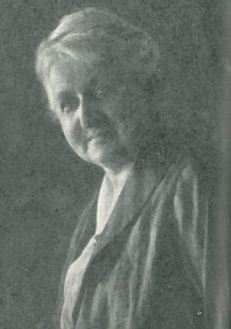
MINNA KEENE
DOB 5th April 1861 Arolsen, Germany Death - November 1943 Oakville, Ontario
Minna Keene moved to Britain between 1870 and 1880 where she became a photographer. Both her pictorial photographs and her portraits were recognized by various newspapers and journals at this time. Her work varied from ornithological images for English school books to portraits of famous statesmen. In 1908 she became a Fellow of the Royal Photographic Society of Great Britain, one of the first women to receive that honor. Around 1903 the Keene family moved to Cape Town, South Africa where Minna Keene did photographic studies of various ethnic groups. Ten years later the family moved to Canada and Keene was hired briefly by the Canadian Pacific Railroad to photograph the Rocky Mountains. The Keenes settled in Oakville in 1922, where Minna opened a studio. Keene's work was exhibited around the world during her lifetime and was included in the 1983 exhibit - Rediscovery: Canadian Women Photographers 1841-1941. Her photographs are in the collections of the National Archives of Canada and the Smithsonian Institution, Washington, DC.
1990 awarded FRPS - Fellow of the Royal Photographic Society
Member - Linked Ring, London
Member - London Salon of Photography
MINNA KEENE
Thursday 23 December 1909 Bendigo Advertiser (Vic)
PHOTOGRAPHERS
Leading the photographic displays in Bendigo is that of Mr Vincent Kelly, of Mitchell-street, in whose show cases are to be found a splendid array of all classes of photographic studies. Mr Kelly has come very much to the fore of late years and his ever-increasing business is the result of his thorough knowledge of the art of photography. Particularly attractive amongst Mr Kelly's studies are the sepia sketch pictures, which are said to be an advance on the Gibson studies, which were introduced some time ago by Mr Kelly and which immediately became very popular. Preparations have been made for the Christmas season by way of special charges and special designs.
"SAFE AT ANCHOR"
by J.F. Hurley c.1910
22nd November 1911 Page 663 - The Australasian Photo-Review
JAMES FRANCIS "FRANK" HURLEY JOINS THE MAWSON ANTARCTIC EXPEDITION AS OFFICIAL PHOTOGRAPHER
Mr J.F. Hurley, so well-known to Sydney photographers and for some time past associated with Sydney depot of Kodak Ltd., has been selected to accompany the Mawson Expedition as Official Photographer. Both parties have reason to be satisfied with this arrangement, inasmuch as Mr Mawson secures the services of a thoroughly capable and efficient photographer upon whom he may rely at all times and Mr Hurley is given an opportunity such as comes to few men.
Mr J.F. Hurley is by profession an electrician and instrument maker; holding Sydney Technical College Honor certificates. He was employed in the Government Electric Light Branch as clerical electrical calculator and subsequently served as a fitter at the Eskbank Ironworks, Lithgow.
He is now in his twenty-sixth year and took up the study of photographic art some twelve years ago. At that time the camera was but a hobby which was enthusiastically indulged in. The outcome was the adoption of photography as a profession five years ago. Mr Hurley's work has been generally admired, not only for its technical excellence, but also for its originality of conception and departure from the conventional.
He has given considerable time to research work and the application of photography to scientific purposes and is a keen enthusiast in cinematography.
Endowed with such qualifications, Mr Hurley should certainly prove of great assistance to Mr Mawson in his Expedition. We feel sure that we voice the sentiments of the photographic fraternity in wishing Mr Hurley "Bon Voyage and good luck".
JAMES FRANCIS "FRANK" HURLEY
JOINS THE MAWSON ANTARCTIC EXPEDITION
AS OFFICIAL PHOTOGRAPHER IN 1911
Tuesday 27th November 1912 Queensland Times (Ipswich QLD)
PHOTOGRAPHERS FOREGATHER
The president, secretary and several other members of the Ipswich Amateur Photographic Society met last night for the purpose of "opening" a very fine enlarging camera which the society specially imported from England. One of the members, Mr Horne, displayed a very successful enlargement of a fine photograph he had taken of a mail-train passing, through Ipswich, while Mr Parker showed that he also had made an excellent "job" of the enlargement of a scenic photograph. The members were very enthusiastic over the virtues of their new acquisition and a pleasant evening was spent in discussing camera lore.
Tuesday 29th July 1913 Queensland Times (Ipswich QLD)
PHOTOGRAPHIC PRIZES - AUSTRALIAN WINNERS
London, 27th July
The Photographic Society of New South Wales won the amateur photographers competition on Saturday. The adjudicator stated that the collective entry showed a great advance upon that of former years and reached a notably high average. In the individual awards silver plaques were awarded to Norman C. Deck and Harold Cazneaux, of New South Wales and Gerald E. Jones, of New Zealand, while bronze plaques were awarded to J.S. String, H.C. Dreyer, C.L. Newman and J.W. Hunter, of New South Wales and J. Williams, of Melbourne.
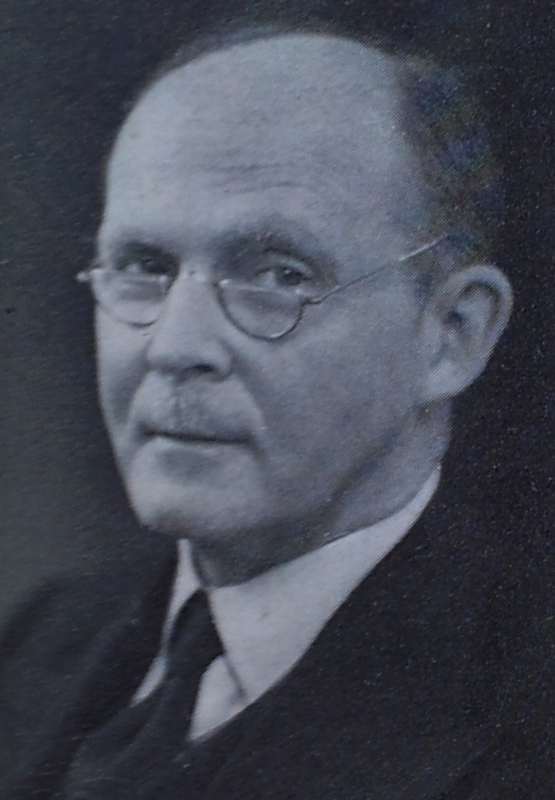

left to right - NORMAN DECK, HAROLD CAZNEAUX
Friday 29th May 1914 Page 7 - Bendigo Advertiser (Vic.)
SIR JOSEPH SWAN DEAD
A NOTED INVENTOR
London, 27th May
The death is announced of Sir Joseph Wilson Swan, Kt., M.A., F.R.S., D.Sc., inventor of the "Swan" incandescent electric lamp and discoverer of the means of making rapid dry photographic plates. Sir Joseph had reached the advanced age of 86 years.
Joseph Wilson Swan was born at Sunderland in 1828. He made an exhaustive study of chemistry and electricity and was thus enabled to make improvements in photo-mechanical printing and in electrometallurgical deposition. He also invented the carbon process for making permanent photographs, but his greatest boon to students of photography was his discovery of the rapid dry plate. He was president of the Literary and Philosophical Society of Newcastle-on-Tyne. corresponding member of the Royal Philosophical Society of Glasgow, honorary member of the Royal Photographic Society and the Pharmaceutical Society of Great Britain and in addition, was a past-president of various kindred institutions. Sir Joseph was awarded the Hughes medal of the Royal Society in 1904 for his invention of the incandescent electric lamp and various improvements in the practical application of electricity. He also received the Albert medal of the Royal Society of Arts in 1905, the Progress medal of the Royal Photographic Society and the gold medal of the Society of Chemical Industry. He was knighted in 1904.
Monday 10th August 1914 The Sydney Morning Herald (NSW)
PHOTOGRAPHERS BEWARE
The Defence authorities have Issued a warning to photographers and others, quoting section 82 of the Act, which states that any person who, without lawful authority, makes or attempts to make any sketch or photograph of any fort or naval or military work of defence is liable to a penalty of £100, or six months imprisonment and have all the materials in his possession confiscated.
Any person who enters or approaches any fort or naval or military work of defence with sketching or photographic materials in his possession is liable to a penalty of £50 and the forfeiture of the material. Any person who trespasses on any military or naval work of defence is liable to a penalty of £20. Any member of the defence or police forces may, without warrant, arrest any person suspected of any of these offences.
Saturday 25 March 1916 The North Western Advocate and the Emu Bay Times (Tasmania)
PLUCKY PHOTOGRAPHERS
Kinematograph films are proving immensely useful to the French War Staff. The photographers, who are volunteers, must have nerves of steel. They are willing to take great risks and fly in aeroplanes at a low altitude. If an accident happens a special device destroys the films in order to prevent the enemy securing them. The films show the enemy's trenches, bodies of moving troops and the firing of guns. Photographs taken from sea planes have sometimes revealed moving periscopes.
left to right - "MORNING" and "BRIDAL VEIL THROUGH THE MIST" by E. Gordon-Garrett, Katoomba NSW
Friday 17th January 1919 Page 7 - The Blue Mountain Echo (NSW)
SCENIC PHOTOGRAPHY
In Mr E.G. Garratt, Katoomba has one of the finest amateur scenic photographers in the State and he has attained the right to be considered such, as the result of three short years of hard study, added to a natural artistic sense. Three years ago, Mr Garratt took his little daughter to a local "pro" (now defunct) for the purpose of having her photo taken. After the sixth attempt he decided to purchase a camera and "have a shot himself". His very first attempt proved great success, pictorially and it gave our friend the photographic fever, from which he still suffers. Mr Garratt made photography a deep study, just as other men do their profession and by this means has climbed to the top of the tree. It Is not generally known that "E.G.G." is a member of the Royal Photographic Society having had his fees paid by the Society, for three years on account of some of the excellent work he has turned out. Examples of his work may be seen in some shop windows around the town, including Bridal Veil in a mist, which won the Australian Photo Review, first prize, about twelve months ago.
"TWILIGHT MISTS" by E. Gordon-Garrett, Katoomba NSW
Saturday 6th August 1921 Page 14 - The Mercury (Hobart, Tas.)
WOMEN PHOTOGRAPHERS
A recent London paper mentions that at a recent conference of the profession a well-known London photographer expressed the opinion that photography was not a man's work, women carrying out the various operations and processes far better than men. Not only, he declared, are they far more sympathetic and successful in putting sitters at their ease, but in printing and developing they far surpass men. However this may be and one is doubtful how even woman's patience and tact could exceed that often shown by a male photographer in arranging large groups or inducing a spoilt child to "smile and look pretty", still one cannot help wondering why women who in these days have wandered into so many carefully guarded men's preserves have not taken up seriously the profession of photography. Of course, there is much to be learnt, as in the serious taking up of any business and a certain artistic talent is necessary for good work, but it has considerable interest and is not so heavy as many of the businesses into which women are entering every day. Alice Hughes, whose name as a photographer was so well-known in London in pre-war days, realized a large income from her business, in spite of the heavy rent paid for her studio in a very fashionable street. In Australia and Tasmania, where photography is carried to such a pitch of perfection, one cannot recall the name of a single woman photographer, though one would imagine that it would have far more interest and charm than typing or serving in a shop, while to an intelligent woman the proper preparation should not present insuperable difficulty.
1st October 1921 Page 28 - Harringtons Photographic Journal
LONDON SALON of PHOTOGRAPHY
The following Sydney Photographers have had pictures hung at the London Salon of Photography which opened on the 10th inst.: Messrs. S.W. Eutrope, J.E. Paton, W.S. White, A. Ford, C.W. Bostock, H. Mallard, C.E. Wakeford and D.J. Webster, all of whom are members of the Photographic Society of New South Wales and the Sydney Camera Circle.


Left to Right - CECIL BOSTOCK; HENRI MALLARD
9th June 1922 Page 9 - The Sydney Morning Herald (NSW)
THE KINEMA
EARLY EXHIBITIONS
SOME OF THE PIONEERS
The rapid evolution of the kinematograph, which is demonstrated in a remarkable manner by an exhibition at the Town Hall, which will conclude to-day, is one of the wonders of the age and in its early history in Australia some men who are still prominently associated with the industry played the part of pioneers. One of these, Mr A.J. Perier, of the firm of Hitchman and Perier, was able yesterday to furnish some interesting information.
Mr Perier says that the first moving picture machine introduced in Sydney before the advent of the kinematograph was the Edison kinetoscope. This machine resembled a small stereoscopic cabinet. The spectator, gazing through a sight-hole, beheld moving pictures of dancers and subjects of a similar description. The machine was operated by electricity and was generally set in motion on the penny-in-the-slot system.
It was not until towards the end of the year 1896 that the kinematograph itself came to Sydney. Three machines for the projection of kinematograph films were landed by three different people in Sydney. Probably the first one to arrive was one imported by Mr Perier himself, in his capacity as manager for Messrs. Baker and Rouse and Mr G. Neymark. This instrument was a projector manufactured by A.J. Pipon, of Paris. As the whole stock of films sent with it consisted of only 12 subjects, the owners awaited further supplies before making a public exhibition. In the meantime, the Tivoli management were able, on 19th September 1896, to exhibit publicly the instrument brought out by Mr Carl Hertz, the conjuror and the first subject shown to the Sydney public was a view of the traffic across London Bridge. A few days later, on 26th September 1896, the original Lumiere kinematograph was shown privately at the Lyceum Theatre, before a large audience, amongst whom was Sir Frederick Darley. The operator was Monsieur Maurice Sestier, who opened a shop in Pitt-street, near Market-street, under the name of "Salon Lumiere". This was the first home of the moving pictures in Sydney. M. Sestier was followed by Mr James M'Mahon, who operated with a "Denemy" projector. The M'Mahon brothers secured the premises of the "Lumiere" people and conducted a show there for some time. In the meantime the Pipon machine was taken to Melbourne and a salon was opened in Collins-street.
The Melbourne Cup was first cinematographed in the same year by the Lumiere machine and again in the following year, when three different operators (Messrs. Perier, Blow and Thwaites) secured negatives. One of the operators (Mr Thwaites) showed the finished result on the screen of the Melbourne Opera House the same night. In this he achieved a record for speed which was not beaten in the old country for many a long day. The other films were developed in Sydney in the Falk Studios by Mr Walter Barnett and M. Sestier.
Mr Mark Blow, of Sydney, was very early in the field and he and his operator, Mr Jenkins, secured many interesting records.
At the time of the festivities in regard to the foundation of the Commonwealth, Major Perry, of the Salvation Army in Melbourne, acting in conjunction with the late Government Printer, Mr Gullick, exposed over 1000ft of film on the pageant. This film was subsequently exhibited at Her Majesty's Theatre, Sydney, during the staging of the pantomime "Australis". When it is stated the projector used was one of the original Lumieres. They were built to take a film of about 60ft only and some idea of the task of exhibiting well over 1000ft from such an instrument can be imagined. This work was made possible by the energy of one of the Cummings brothers, who worked night and day to provide a "take up" mechanism to allow this little camera to do that work. The showman in the early days had to rely on limelight, which is always more or less unreliable for this class of work and he had to carry his own plant with him - a proceeding which exposed it to considerable risk of damage. An extraordinary growth, scarcely dreamed of when the kinema was first produced, has marked its development in this country, as it has done in all parts of the world.
Tuesday 23rd April 1923 Goulburn Evening Penny Post (NSW)
SUCCESSFUL PHOTOGRAPHERS
Mr R.J. Turner, of this city, won second prize in the photographic competition of the Daily Telegraph last week with a picture showing the ceremonial dress of the Wollondilly tribe. It is stated to have been taken 35 years ago on what is now the Goulburn golf links, which was then the blacks camp. Amongst others Mr A.W. Picker (Pigga) is thanked for most interesting snapshots suitable for storyettes and for informative notes.
Monday 25th June 1923 The Register (Adelaide SA)
ART PHOTOGRAPHY
In view of the establishment by the Public Library Board of the nucleus of a photographic section, it is interesting to note that the judgment of the board in selecting the two first pictures from the art photographs by Mr A. Wilkinson, of Adelaide, has been confirmed by prominent art authorities in England. Mr Wilkinson has received satisfaction of the acceptance by the Royal Photographic Society of London of two pictures, "Looking from Glen Osmond" and "The Monarch of the Glen". The London Salon of Photography has accepted "The Quarry" and all the art photographs submitted to the colonial competition held in London once a year by him and he was awarded the bronze plaque. This is the fifth plaque which he has won, besides a silver plaque in the colonial competition.
Monday 10th September 1923 Page 3 - Daily Telegraph (Launceston, Tas.)
AUSTRALIAN PHOTOGRAPHERS
LONDON. Saturday Night — Messrs Cazneaux, Monte Luke have been favorably noticed for exhibits at the London salon for photography. Other Australian exhibitors are: C. Bostock, S. Eutrope, A. Ford, D.R. Hill, K. Ishida, H. Mallard (Sydney), J.B. Eaton and A. Field (Victoria), A. Wilkinson (Adelaide) and A. MacDonald (Invercargill).


Left to Right - HAROLD CAZNEAUX; MONTE LUKE; CECIL BOSTOCK; HENRI MALLARD
Friday 14th November 1924 Page 17 - The Advertiser (Adelaide, SA)
PHOTOGRAPHERS SCHOOL
 The Eastman School of Professional Photography, which has held sessions on three consecutive days at the Institute Rooms, North-terrace, terminated last night, when the final section of the instructional motion picture was shown. At the close of the evening, Mr A.A. Stamp, well-known in photographic circles in this city, proposed a vote of thanks to the Kodak Company on behalf of the photographers of Adelaide. He spoke in appreciation of the facilities provided by Messrs. Thomas Baker and J.J. Rouse, which made the school possible in Australia. Mr R.S. Sladdin, of Victor Harbor, seconded the motion on behalf of the country photographers and it was carried with enthusiasm. Mr H.H. Wight responded on behalf of the Kodak Company. The school has been well attended by photographers and their employees, who have benefited by the new ideas and work room methods dealt with in the many lectures and demonstrations given. The motion pictures also proved attractive and many studio proprietors expressed their intention to adopt changes and improvements suggested.
Thursday 11th September 1924 Page 1 - Evening News (Sydney, NSW)
CAMERA ART - MONTE LUKE'S PORTRAIT
The wonderful strides that artistic photography has made during the last decade are well exemplified by the work of Monte Luke, with which Sydney connoisseurs are familiar. Two photographs which he sent to this year's London exhibition of photographic art have been hung and considering the select nature of the exhibits at this most exclusive show, the artist has good reason to be proud of the honor. One of the photographs sent to London is entitled "Alsia" and is a remarkably fine picture of a dark-haired girl with large, appealing eyes. The lighting of the face is broadly treated and the eyes in particular have been well brought out. The shading of the neck and shoulders is true and unforced; while effective contrasts have been secured by the massed dark of the dress and the wavy masses of the hair.
The Eastman School of Professional Photography, which has held sessions on three consecutive days at the Institute Rooms, North-terrace, terminated last night, when the final section of the instructional motion picture was shown. At the close of the evening, Mr A.A. Stamp, well-known in photographic circles in this city, proposed a vote of thanks to the Kodak Company on behalf of the photographers of Adelaide. He spoke in appreciation of the facilities provided by Messrs. Thomas Baker and J.J. Rouse, which made the school possible in Australia. Mr R.S. Sladdin, of Victor Harbor, seconded the motion on behalf of the country photographers and it was carried with enthusiasm. Mr H.H. Wight responded on behalf of the Kodak Company. The school has been well attended by photographers and their employees, who have benefited by the new ideas and work room methods dealt with in the many lectures and demonstrations given. The motion pictures also proved attractive and many studio proprietors expressed their intention to adopt changes and improvements suggested.
Thursday 11th September 1924 Page 1 - Evening News (Sydney, NSW)
CAMERA ART - MONTE LUKE'S PORTRAIT
The wonderful strides that artistic photography has made during the last decade are well exemplified by the work of Monte Luke, with which Sydney connoisseurs are familiar. Two photographs which he sent to this year's London exhibition of photographic art have been hung and considering the select nature of the exhibits at this most exclusive show, the artist has good reason to be proud of the honor. One of the photographs sent to London is entitled "Alsia" and is a remarkably fine picture of a dark-haired girl with large, appealing eyes. The lighting of the face is broadly treated and the eyes in particular have been well brought out. The shading of the neck and shoulders is true and unforced; while effective contrasts have been secured by the massed dark of the dress and the wavy masses of the hair.
AN AUSTRALIAN GIRL
This is one of the two splendid camera studies by MONTE LUKE,
of Sydney, which have been hung in this years exhibition of
photographic art in London.
Tuesday 21st April 1925 Page 5 - Newcastle Morning Herald and Miners' Advocate (NSW)
PHOTOGRAPHERS BARRED
Press photographers at the Torquay national hard court tennis championships were refused permission to enter the grounds. It is understood this was due to the action of the Lawn Tennis Association, owing to undesirable men gaining admission to the courts. The photographers are asking whether the prohibition will extend to Wimbledon and other big tournaments.
Saturday 2nd May 1925 The Register (Adelaide SA)
Mr A. Wilkinson, of Prospect, South Australia, has again been awarded the silver plaque in the recent colonial competition of The Amateur Photographer in London. He has also had two pictures hung - in the London Salon and one produced in the Photograms of the Year. In a letter of congratulation to Mr Wilkinson, Mr O.J. Mortimer, of The Amateur Photographer, writes: Your prints have been retained for a while to include in the Colonial Exhibition, organized by The Amateur Photographer, at the Royal Photographic Society's house. I hope to see further examples of your excellent work for our next competition, also for the London Salon of Photography and Photograms of the Year.
Saturday 12th May 1925 Page 1 - The Newcastle Sun (NSW)
PHOTOGRAPHIC EXHIBITION
Twenty-four exhibits out of 400 were hung at the International exhibition at the London Salon of Photography, including work by Bedggood, Bostock and Cazneaux (Europe); Hill, Ford, Luke, Mallard, Morris and White (Sydney); Dickison and Eaton (Victoria) and Miss Girlick (New Zealand).
Thursday 15th October 1925 Page 10 - Cairns Post (Qld.)
Who discovered photography ? France has just celebrated the centenary of photography, commemorating the fact that in July, 1825, Joseph Nicephore Niepce invented the "bitumen process". Last year a memorial tablet was unveiled at the Royal Photographic Society, London, to the "Father of Photography", Henry Fox Talbot, who produced a permanent negative on paper in 1839. To these rival claims must be added those of Josiah Wedgwood and Sir Humphrey Davy, who obtained results by coating paper with a solution of silver nitrate prior to 1802. There may be cited, too, the invention of the camera obscura, ancestor of the modern Kodak, by I.D. Porta, in the year 1509 and it is worth recording that the first lens was discovered in the ruins of Nineveh and is now in the British Museum. For over 50 years from the production, of the first negative, photography remained a mysterious art practised by professional specialists and a few amateurs whose enthusiasm carried them over the difficulties of the process. Outdoor photography was a toilsome and tedious exercise. The traveling outfit, for instance, included a bulky view camera, heavy tripod, equally heavy and burdensome plates, a dark tent for loading and sensitizing plates before exposure, a nitrate bath and even a water barrel.
Saturday 5th June 1926 The West Australian (Perth WA)
PHOTOGRAPHERS BANNED
When a person has been arrested on a very serious charge it has often been the practice of photographers to wait in a lane at the side of the Police Court to photograph the prisoner on his way from the court to the cells. Yesterday morning three or four photographers took up positions in the lane, but were ejected because, it is stated the Commissioner of Police had instructed that photographers were to be barred.
Wednesday 28th March 1928 The Sydney Morning Herald (NSW)
BOGUS PHOTOGRAPHERS
The Professional Photographers Association of New South Wales has had brought under its notice recently a number of cases of persons having canvassed districts and obtained photographs and money under the pretext of supplying further copies. In many instances a photograph of great value has been banded over and together with the amount paid as a deposit, has never been returned and no order delivered. The public has, therefore, been warned against giving photographs or money to any canvasser before making full inquiries as to the firm's bona fides.
Wednesday 5th December 1928 Page 12 - The Brisbane Courier (QLD)
AUSTRALIAN PHOTOGRAPHERS
In the field of photographic art Australians are well to the fore. Advice has now been received that Mr Val. S. Waller, of Sydney, has won the Eastman Gold Medal - the premier award - in connection with the third annual Kodak International Salon of Photography, which was opened at Kodak Hall, Harrow, England, on November 12. Mr H.A. Snape, of Brisbane, won the silver medal and a certificate. The exhibition is open to all members of the Kodak organization.
15th February 1929 Page 74 - Australasian Photo-Review
ROYAL PHOTOGRAPHIC SOCIETY
There are three classes of members of the Royal Photographic Society, namely, Fellows, Associates and ordinary members. The Fellowship is awarded only to Associates and in recognition of outstanding work in some branch of photography. Mr Monte Luke is one of the latest Fellows. The Associateship is a mark of high standing in the photographic world and Dr. Julian Smith has just received that award.
15th November 1930 Page 552 - Australasian Photo-Review
LONDON SALON OF PHOTOGRAPHY 1930
Mr Harold Cazneaux, universally admitted to be the outstanding figure of artistic photography, so far as this part of the world is concerned, has now been regularly exhibiting in the London Salon of Photography for no less than twenty years.
Five of his pictures were hung this year, amongst the 438 selected from the thousands submitted from all parts of the globe. Other Australians represented were: Monte Luke, 1; Arthur Ford, 1; J.B. Eaton, 4; F. Lewis, 3; Ruth Hollick, 1; W. Orthman, 1. New Zealand is represented by H.E. Gaze and F.H. Taylor, each with one exhibit.
left to right - RUTH HOLLICK, MONTE LUKE, HAROLD CAZNEAUX
Tuesday 4th November 1930 Page 2 - Evening News (Sydney, NSW)
AUSTRALIAN PHOTOGRAPHERS IN EXHIBITION
From among the thousands of prints from all parts of the world sent to the International exhibition of the London Salon of Photography recently, 438 were selected to be hung in the galleries. Australians and New Zealanders were well represented, nine photographers displaying 18 prints. The salon is to the photographer what the Academy is to the painter.
14th February 1931 Page 71 - Australasian Photo-Review
ROYAL PHOTOGRAPHIC SOCIETY
Two Australian names figure in the list of Fellowships just awarded by the Royal Photographic Society. Dr. Julian Smith and Mr August Knapp are to be congratulated on the Honor conferred on them, especially honorable at a time when admissions to the Fellowship are exceedingly few in comparison to the number of candidates there-for.
15th December 1931 Page 605 - The Australasian Photo-Review
MONTE LUKE's One Man Show, SYDNEY
During November 1931, Monte Luke FRPS, held an exhibition of some ninety of his pictures, mainly in Bromoil Transfer.
The exhibition naturally fell into two classes: portraiture and landscape. The group of portraits gained impressiveness by virtue of the distinguished sitters and these portraits for the most part in low key, a treatment in many cases most successful, but in one or two others a lighter treatment might perhaps have been adopted.
The landscapes covered a wide variety of subjects, an appealing series being from Bong Bong and Kangaloon.
Many of the exhibits have been shown in salons overseas and greatly admired wherever they have been seen.
MONTE LUKE FRPS
15th March 1932 Page 123 - Australasian Photo-Review
ROYAL PHOTOGRAPHIC SOCIETY
Australian readers will learn with pleasure that the Fellowship has been bestowed on Mr John B. Eaton and will agree unanimously that the Honor is well deserved.
Thursday 17th March 1932 Page 5 - Western Mail (Perth, WA)
Mr George Eastman, of Kodak camera and photographic fame, committed suicide at his home at Rochester, New York, on Monday. He was one of the richest men in America and probably the greatest philanthropist in the world. He believed that his work was done and could not endure the suffering brought about by his recent illness.
GEORGE EASTMAN
The late Mr George Eastman. Born at Waterville, New York, in 1854, Mr Eastman began life as a clerk. For his own convenience in camera work he composed an emulsion which was coated and dried on a glass plate. This proved a great improvement on the cumbersome wet-plate photograph, which was then in use. By 1878 he had started manufacturing dry plates. Then he set to work evolving a practical film, which he obtained only after much pain and trouble. By 1889 Kodaks were already in the market and December, 1891, saw the birth of the daylight Kodak. In the ensuing years his business grew tremendously, due to the increasing part photography was playing in the lives of people.
In post-war years he performed notable philanthropic work. Early in 1908 he concluded an agreement with Thomas Baker, senior partner of Baker and Rouse, of Australia, by which the company obtained valuable interests in Australasia.
Friday 15th September 1933 Page 1 - The Daily News (Perth, WA)
PHOTOGRAPHERS HONORED
Perth Exhibitors in London
WORKS ACCEPTED BY ROYAL SOCIETY
LONDON - 14th September 1933 - Two Perth photographers are included among seven Australians out of 300 world-wide exhibitors at the Royal Photographic Society today. Dr. H.S. Lucraft, of Perth, has two photographs, including an effective child study, "Ironing Days", while Mr Augustus Knapp, of Perth, also has an exhibit. Dr. Julian Smith, of Melbourne, has a pair, including a fine portrait of a pioneer; Mr John Eaton, of Toorak, has two landscapes and Messrs. R.V. Simpson, of Sydney and C.S. Tompkins of Camberwell, have one each. There are also three natural history studies by Mr H. Chargois of Cairns. Mr W.C. Davies, of New Zealand, has seven and Mr Ellis Dungeon, of New Zealand, one. The London Salon displays eleven Australian works among the 404 chosen out of 4500 submitted from 24 countries. These include four from Mr John Eaton, three from Dr. Julian Smith, two from Mr Cazneaux, one from Mr Monte Luke and one from Mr A.L. Smith.
FINE CHILD STUDY
The Royal Photographic Society sets the standard for the world and it is considered an honor to have work accepted. This honor is not entirely new to Perth. There is a Dilettante Club here, which has neither president nor committee; there are nine members and three of them have had exhibits accepted, which is a gratifyingly high proportion. When Mr van Raalte began his aquatint work here Mr Knapp saw possibilities in the process which he thought might be applied to photography and in Perth, mainly through his research and experiment, a new quality of print, with unusual roundness and softness, was obtained. This was treated at first rather with contempt, but when sent to London it attracted attention and favorable comment. "Dr. Julian Smith", said Mr Knapp, "is probably the leading amateur portraitist in Australia. Dr. Lucraft's "Ironing Day" is an exquisite child study, one of the best things he has done". Mr Knapp does not know which of his photographs have been accepted. He had sent some landscapes, "very simple in composition".
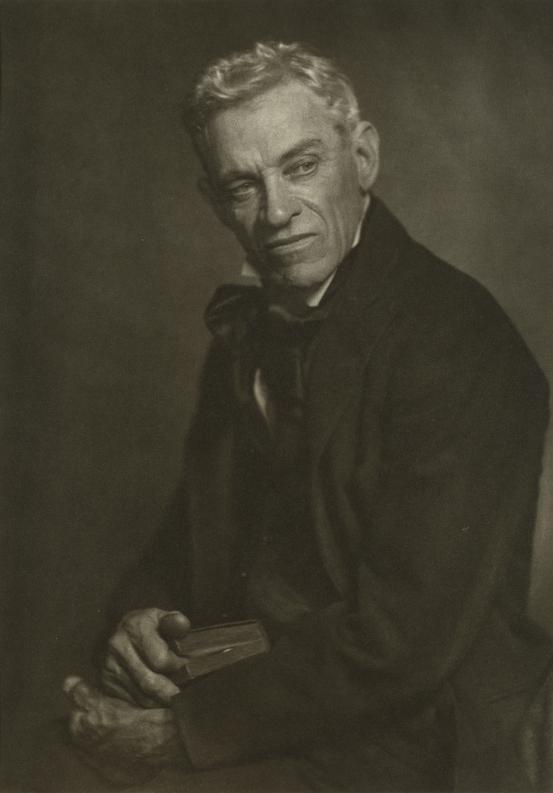
AUGUSTUS KNAPP
Saturday 16th September 1933 Queensland Times (Ipswich QLD)
Saturday 16th September 1933 Northern Star (Lismore NSW)
Saturday 16th September 1933 Cairns Post (Queensland)
LONDON EXHIBITION - Royal Photographic Society
SEVEN AUSTRALIANS INCLUDED
Seven Australians are among the 300 exhibitors from all over the world at the exhibition of the Royal Photographic Society. Two photographs by Julian Smith, of Melbourne, include a fine portrait of the pioneer John Eaton, of Toorak. There are two landscapes by H.S. Lucraft, of Perth and two photographs, including an effective child study of ironing day. One photograph each is exhibited by Augustus Knapp, of Perth, R.V. Simpson, of Sydney and C.S. Tompkins, of Camberwell. There are three natural history studies by H. Chargois, of Cairns. The New Zealanders, W.C. Davies and Ellis Dungeon, show seven and one photograph respectively. A London salon displays 11 Australian works among 404 chosen from 4500 submitted by 24 countries. John Eaton has four, Julian Smith three, Harold Cazneaux two, Monte Luke one and A.L. Smith one.
Saturday 27th January 1934 Page 22 - The Argus (Melbourne Victoria)
STREET PHOTOGRAPHERS
With the object of protecting pedestrians on city pavements against being annoyed by itinerant photographers, the traffic and building committee of the City Council decided this week to continue to prosecute offenders until the practice was abandoned. Several prosecutions are pending.
Saturday 9th June 1934 The Argus (Melbourne Victoria)
PIRATE PHOTOGRAPHERS
Determined to circumvent photographers who had exclusive rights to take pictures of the match, a "pirate" firm erected a scaffolding on top of a house adjoining the ground and placed long range cameras above netting erected to block their view.
Thursday 15th November 1934 Page 5 - The Argus (Melbourne Victoria)
AWARDS TO PHOTOGRAPHERS
Opening the Centenary International Exhibition of Professional Photography at the Athenaeum yesterday, Councillor Sir Harold Gengoult Smith recalled that it was just 100 years since Henry Fox Talbot had announced his discovery of photography. He was glad that, as the awards showed, Australian photographers were able to do well in competition with the finest photographers in the world.
SIR (HAROLD) GENGOULT SMITH; CYNTHIA MARY (née Brookes), LADY SMITH
DOB 25 July 1890 East Melbourne, Victoria
Died 14 April 1983 Armadale, Melbourne, Victoria
LORD MAYOR of MELBOURNE
The following awards were made by the Judge (Mr Harold Cazneaux) of medals presented by the Professional Photographers Association of Victoria:
PORTRAITURE
GOLD MEDAL — Lady Jane by Max Habrecht (Detroit U.S.A.).
SILVER MEDALS - The Head Man by John Scott Simmons (Melbourne); Ethelreda by J.Dorin (Chicago U.S.A.); The Cavalier by Monte Luke (Sydney NSW); W.O. Forsythe Esq. by Charles Aylett (Toronto, Canada)
BRONZE MEDALS - The Feather Boa, by Dickenson-Monteath Studio (Melbourne); Wesley College by John Scott Simmons (Melbourne); Field-Marshal Lord Milne, by C. Stuart Tompkins (Camberwell); Llewellyn Powers Esq. by Wilfred Cumming (Weymouth, England); Maureen by Guttenberg Ltd (Manchester); Weidesmenn by Emil Synek (Melnik Czechoslovakia); Judge Bull as Lincoln by Robert Kohler (Milwaukee, U.S.A.).
COMMERCIAL
SILVER MEDALS - The Hat, by Jack Cato (Melbourne); Records by Dickenson-Monteath Studio (Melbourne).
BRONZE MEDALS - Bahnhof by Erno Vadas (Budapest, Hungary); Elon by Blakeslee-Klintworth (Florida U.S.A.).
OTHER SUBJECTS
GOLD MEDAL - Seagulls by F. Schensky (Heligoland).
SILVER MEDAL - Richness by Gannon Sjowall (Oslo, Norway).
BRONZE MEDALS - Melbourne Looking South-East by Dickenson-Monteath Studio (Melbourne); Determination and Confidence by Arthur N. Vieash (Perth, W.A.); Collie Puppies by Thomas Fall (London).
The exhibition will remain open until November 24.
HAROLD PIERCE CAZNEAUX
Monday 26th August 1935 Page 4 - The Argus (Melbourne, Vic. )
ROMANCE OF KODAK
When the Photographer Needed a Cart
WORK OF EASTMAN AND BAKER
At a day when almost every family includes at least one amateur photographer, when many miles of photographic film are exposed in Victoria at every holiday season and when the amateur's complete outfit may be carried conveniently in the vest pocket, or in a woman's vanity-case, it is difficult to realize that half a century ago the landscape photographer had to have some kind of vehicle to transport his kit. Those were the days of the wet plate, when a cumbersome camera and tripod were essential and the glass plates on which the photographs were taken had to be sensitized in chemical baths immediately before use, exposed while they were wet and developed on the spot. A large light-proof tent and a complete equipment of chemicals and utensils for sensitizing the plate, developing it and fixing it, had to be carried on every photographing tour and an assistant was most desirable, if not indispensable.
Two men who were undismayed by such difficulties are remembered with the opening to-day of the new Kodak House in Collins street; one was Mr Thomas Baker, who, as a young manufacturing chemist in Melbourne in 1875, began the manufacture of wet plates in Australia and the other was Mr George Eastman, a young bank clerk in Rochester (U.S.A.), who became an amateur photographer in 1878. Mr Baker made the plates; Mr J.J. Rouse sold them; and in 1888 they entered into partnership as Baker and Rouse, manufacturers of and dealers in photographic materials.

GEORGE EASTMAN
Born 12th July 1854 Waterville, New York, USA
Died 14th March 1932 Rochester, New York, USA
Photography pioneer, Founder of Eastman Kodak
Meanwhile Mr George Eastman, in the United States, became so consumed with his hobby that he left the bank and began to make photographic plates for himself. Dry plates replaced the old wet plate process and Eastman made such good dry plates that his business increased and the Eastman Dry Plate Co., with additional capital supplied by Mr Henry A. Strong, who became Eastman's partner, became a thriving business. Eastman and his associates invented the roll film and the Kodak camera in which it might be used conveniently.
Baker and Rouse joined forces with the Eastman Kodak Co. in 1908 to form Kodak (Australasia). The Australian company has a huge factory at Abbotsford, where photographic films, plates and papers are made and mounts, albums and photographic chemicals are prepared. Chemical compounds of silver are the basis of photographic action and the Kodak works at Abbotsford use more silver annually than any other consumer in Australia,
KODAK HOUSE, Collins Street, Melbourne - 1935
Thursday 23rd January 1936 The Queenslander (Brisbane QLD)
FOR PHOTOGRAPHERS
In these days of films the dark slide is seldom seen in an amateur photographer's outfit; but there still is to be found here and there one who is old-fashioned enough to believe in plates and refuse to use anything else. One of the difficulties encountered by the plate user is that he forgets which slides have been used for exposing, although some operators avoid this by numbering the slides and exposing the plates in order. Even then it is not easy to remember, especially when there is hurry, which was the last number exposed.
This difficulty disappears if a piece of gummed paper, such as stamp margin, is stuck over the lower end of the cover of the slide, so as to overlap the frame. When placing the slide in the camera for exposure the thumb-nail is run through the paper at the joint. As the paper seal must be broken before the plate can be exposed, there can, therefore, be no doubt. The exposure and any other details may be recorded on the piece of paper remaining.
Thursday 23rd January 1936 Page 3 - The Queenslander (Brisbane QLD)
Mr H.A. Snape, of Brisbane, has received advice from the Royal Photographic Society of Great Britain that he has been admitted to Associateship of the society. Mr Snape has been studying the science and practice of photography all his life and has exhibited to leading International salons for a number of years. He has received gold, silver and bronze medals and is well known internationally by his pictorial photography. He has given lectures over the air from 4QG and at several schools. At present he is demonstrator for Kodak, Ltd.
Monday 7th September 1936 Page 16 - The West Australian (Perth, WA)
CAMERA ART - A FINE DISPLAY
All who were acquainted with the late Henri van Raalte found that among the most outstanding of his many admirable qualities was his unswerving fidelity to the highest principles of artistic practice.
Again and again I have heard van Raalte say to his students (who worshiped him both as man and artist), that nothing he could teach them would be of any avail in making them genuine craftsmen until they learnt the first and most important lesson that truth of perception is what counts in art and that until the faculty of accurate observation is developed, no work, however it may appeal to the popular taste, is any thing but a sham and a delusion.
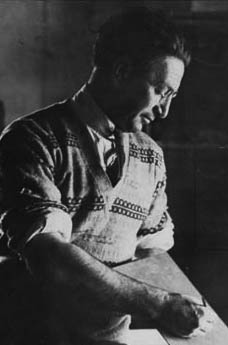
HENRI VAN RAALTE
Indeed, in his fiercely truthful moods, van Raalte would say just what he thought of "that empty and ugly thing called popularity" and would ask "Will any man suppose it is worth the gaining?" Quoting Stevenson, he would remind us that the artist works "entirely upon honor" and that the public knows little or nothing of those merits in whose quest he spends his main endeavors. "Merits of design, the merit of first-hand energy, the merit of a certain cheap accomplishment which a man of artistic temperament easily acquires - these they can recognize and these they value. But to those more exquisite refinements of proficiency and finish, which the artist so ardently desires and so keenly feels, for which (in Balzac's vigorous words), he must "toil like a miner buried in a landslip", for which, day after day, he recasts and revises and rejects - the gross mass of the public must be for ever blind. Under the shadow of this cold thought, the artist must preserve from day to day. his constancy to the ideal".
No better memorial to our great West Australian etcher could have been devised than an organization dedicated to the principles which he laid down and which he himself so consistently observed, as is testified by all his work which remains to us. Such an organization exists in the van Raalte Club, which has done a great deal to prove to us if any proof were needed - that photography is entitled to a high and honorable place among the graphic arts. The club members are imbued with a determination to achieve beauty only by legitimate means and to avoid all that smudgy out-of-focus "artiness" by which second rate photographers, instead of developing the individual technique of their own craft, have often made the grave error of imitating other and fundamentally different media of expression.
An exhibition of recent work by members of the van Raalte Club. which will be officially opened by Mr G. Pitt Morison in the Newspaper House art gallery at 3pm this afternoon, is without doubt one of the finest displays of its kind yet seen in Perth. The level of craftsmanship is high and in many instances the attainment of artistic and technical perfection has clearly been the photographers main objective. But this is not to suggest that other qualities are lacking, for in the remarkably comprehensive range of subjects depicted many interests other than the purely aesthetic have been catered for and the general result is a most absorbing and inspiring reflection of the life and scenery of the State. "The mission of art" van Raalte was wont to emphasize, "is not to copy Nature, but to express it" and these pictures make one realize to what a notable extent photography (despite what is often said to the contrary), may penetrate below externals and present not only the obvious details of a scene, but the very atmosphere.
STIMULUS TO APPRECIATION
Present-day art criticism in Australia is all to often a mere conglomeration of vituperative epithets; therefore it may occasion some surprise that in an endeavor to give a just estimate of this exhibition, one can find nothing but good to say of it. In more senses than one it is a liberal education, this vivid pictorial commentary on phases of our daily activities and on our varied and beautiful landscapes and seascapes. These camera studies make us aware, with a sudden emotion, of the glory of our great national heritage; they make it possible for us to gaze, with something of the photographers own discernment, upon scenes with which, in some cases, we may have been long familiar, but which now take upon them a new splendor and a new significance.
The work of these artists is established and built on truth and not the least part of their achievement, one feels, is that it interprets us to ourselves and gives us a glimmering of what prompts and lies at the bottom of our thoughts when we are stirred, somewhat vaguely, by love of country. The van Raalte Club artists produce work which calls us, with an all-persuasive voice, to the higher and nobler patriotism which consists in an understanding of what our land itself really is and what our affection for it really means.
"The sun is God", said the dying Turner and the merit of many of the pictures in the Newspaper House exhibition resides not only in their skillful composition, but also in the fervor of their orisons to the sun-god. Balanced and harmonious arrangement and evidence of a sure instinct for the decorative, are by no means lacking, but what is even more satisfying is the brilliant treatment of light and shade, the presentation of Nature's own ingenious chiaroscuro - her gleams and glooms and all the mysterious loveliness of her intricate patterning and subtle gradations of tones and half-tones. Excellent in this respect are the pictures by Mr Augustus Knapp, that experienced and talented artist whose work for many years past has won high praise in salons all over the world. It is, of course, to his initiative and imagination in the judicious use of the screen in printing methods that the club members owe a large part of their success, as they willingly and gladly acknowledge. In all the best of the 114 exhibits in the display, the fine grain and other qualities of texture show how great a part the screen has taken in the attainment of these excellent results.
The exhibitors are Augustus Knapp, H.S. Lucraft, E.A. Coleman, E. Cohen, F. Roper, T. Phillips, J.A. Jeffery. A. Badock. J.H. Hallam, D. Vincent, J. Dent, L.E. Pearce, V. Pearce, A. Kniep, R.C.S. Steele and R. Scott. Next in order of merit after Mr Knapp's work comes that of Dr. Lucraft, but while those two artists undoubtedly lead the van, the rest of the exhibitors come very close on their heels, with pictures whose diverse beauty will be a revelation to many people. The exhibition will be open daily until next Saturday, between the hours of 10am and 6pm.
Thursday 1st April 1937 Page 6 - News (Adelaide, SA)
SCOUTS ARE KEEN PHOTOGRAPHERS
Immediately after he had wished the Australian Boy Scout coronation contingent bon voyage on Government House lawns today, the Governor (Sir Winston Dugan) was besieged by amateur photographers in the contingent. All sorts of cameras from tiny box cameras to movie cameras were produced from pockets and cases like magic and snaps were taken of His Excellency with Chief Commissioner Rymill. "Don't forget to send me a copy", jocularly remarked Sir Winston as he waved to the Scouts, whose three hearty cheers then echoed throughout Government House grounds.
SIR WINSTON JOSEPH DUGAN
Born 3rd September 1876 Parsonstown, King's County, Ireland
Died 17 August 1951 (aged 74) Marylebone, London, England
21st GOVERNOR OF SOUTH AUSTRALIA
Monday 10th October 1938 Page 4 - The Courier-Mail (Brisbane, Qld)
GARDENS PHOTOGRAPHERS
J. Thoms wrote a letter to The Courier-Mail, which was published on October 4. He alleged that during several visits to the Botanic Gardens he and his wife were followed by photographers, that he informed a photographer that neither himself nor his wife wished to be photographed and that as they were leaving they were again approached. To contend that visitors to the gardens are pestered by photographers is untrue and unfair. Because of Mr Thoms's complaint permits have been canceled and men who have relied upon this form of work for years to earn a livelihood have been thrown out of employment. One is a returned soldier with four years service overseas; he has a wife and four children and now has been thrown on to half rations and half relief. I cannot stress too strongly the dilemma of these photographers, who over a period of years, have given a cheap and courteous service to people of Brisbane and tourists who wished to carry away with them a souvenir of their visit to Brisbane's Botanic Gardens.
Brisbane. E.R. CLARKE.
Friday 10th March 1939 Bunyip (Gawler, SA )
PHOTOGRAPHERS
Gawler people who visit the city have doubtless been snapped by street photographers, who present a tiny camera, aim with their eye and click the shutter. A move is being sponsored by business interests in Adelaide to keep them from the footpaths in the busy streets during hours when shoppers throng the pavements. It will be remembered that about a year ago, the City Council refused permission for a Victorian firm to operate cameras in the street. These picturesque figures of the pavement are a familiar sight in our streets and if they are removed, many people will miss them. But whether they care enough to take particular interest in their fate is another matter. If, as the business interests suggest, the shoppers are being inconvenienced, the city council will have no alternative but to act against photographers.
Tuesday 3rd December 1940 Page 10 - The Sydney Morning Herald (NSW)
STREET PHOTOGRAPHERS
The City Council has decided to review the position of street photographers, who now are liable to prosecution for infringement of city by-laws. The Works Committee of the council decided yesterday to obtain the advice of the City Solicitor on a proposal submitted by Alderman O'Dea that if prosecutions were to be launched persons on whose behalf photographs were taken as well as photographers should be prosecuted.
Saturday 14th December 1940 Page 1 - Mirror (Perth, WA)
SOCIETY PHOTOGRAPHER DIVORCED
One of Perth's most fashionable photographers, Harold Emil Axel Poignant, has many times peeped through his lens at a young couple just starting out on their voyage on the sea of matrimony.
No doubt the obvious happiness of the blushing bride and bridegroom must have many times reminded him of his own wedding in April, 1930. His venture, however, was far from a happy one.
His relations with his wife were allegedly very strained and they were broken altogether yesterday when the Chief Justice granted Sandra St. Lucien Eliot Poignant her divorce from her artistic husband.
Unique feature of the case was that neither party appeared. Mr W.M. Byaes (for the wife) produced an affidavit signed by Mrs Poignant in Sydney. Respondent did not defend the proceedings.
After their marriage in 1930, read Mrs Poignant's evidence, they lived at Sydney, where her husband was a clerk on 2GB. Three months after the wedding, Poignant was dismissed and the wife went to work as a domestic. In August she became ill and came to W.A. for an operation, at her mother's expense. In November, she returned to N.S.W. and found her husband still out of work.
PURCHASED CAMERA
Shortly after her return he purchased a camera and equipment with borrowed money and set up a snapshot business. For its failure she blamed his laziness. From time to time money from the wife's mother was received and she was also working. When it was suggested to Poignant that he should try to find a regular job, alleged the wife, he would fly into a, terrible rage and tell her he preferred working on his own account.
October 1931 saw the not-so-happy couple in W.A. Early in 1932 he bought another camera and working with supplies obtained on his mother-in-law's credit, he once again set up a business as a photographer.
Although arguments arose between them, Mr and Mrs Poignant continued to live together and his wife admitted in her affidavit that he was making a success of the business.
INTO A RAGE
Then she asked him to make a home for themselves, but he allegedly flew into a rage. After the death of her mother, his attitude grew worse and more violent. He would not ask for conjugal rights, she stated. In June, 1937, he left the house in West Perth and his wife obtained a separation through the Married Women's Court, under which an order was made for maintenance. About this time Mrs Poignant took a health trip to Sydney.
Since her arrival in Sydney in 1937, stated the wife, she has not received any money from her husband for her maintenance. She has supported herself on her own earnings and on her share of her deceased mother's estate, which is now all but exhausted. A decree nisi returnable in six months was granted.
Thursday 20th February 1941 The Daily News (Perth WA)
PHOTOGRAPHERS WARNED
Amateur and professional photographers are warned against photographing marches of troops and other subjects of a Navy, Army, or Air Force nature. The warning which was issued today at headquarters, Western Command, applies to all establishments and includes ceremonial marches. Under the National Security (General) Regulations, action may be taken to seize cameras and films and to inflict penalties on people taking photographs without special permission. At Western Command Headquarters, it was stated that it was realized that amateurs frequently took photographs of forbidden subjects or formed bodies of troops for their personal interest and not with any evil intention. It was not possible, however, for the authorities to discriminate easily between the two and it was, therefore, requested that particular attention should be given to this warning which, if unheeded, might lead to legal proceedings.
Tuesday 1st July 1941 Page 4 - The Argus (Melbourne, Vic)
PHOTOGRAPHERS FINED
SYDNEY, Monday — Fourteen persons were fined 10/, with £1/9/ costs, in the Central Summons Court today for having taken photographs of vessels in harbour from decks of ferries. This is a breach of the National Security regulations.
Wednesday 9th July 1941 The Sydney Morning Herald (NSW)
FOOTPATH PHOTOGRAPHERS
The City Council's decision to license photographers on the city footpaths, though rather belated, should overcome a dilemma of some standing. For a considerable time the public or, at any rate, the female public-has shown its appreciation of the enterprise of these snap shooters, but under the city bylaws the latter were obstructing pedestrian traffic and for that reason numbers of them have from time to time been prosecuted and fined.
Whatever resentment against harsh authority may have been felt by the victimized ones, all those photographers who still offer their skill in more orthodox but less obtrusive fashion that is to say, in private studios - certainly did not share it. But the law's self-assertion was a failure for the fines did not diminish the number of offences; in fact the street trade grew and apparently prospered.
The City Council has now done the sensible thing in deciding to control what cannot be cured without Draconian severity and towards this end, to license the street photographers. With any real abuses of a privilege the Council should henceforth be able to deal more easily.
Wednesday 5th August 1942 Page 2 - National Advocate (Bathurst, NSW)
Mr John P. Carney, amateur photographer, a Griffith, NSW, who has for many years successfully exhibited his pictures at the Bathurst Show, has been elected an Associate of the Royal Photographic Society of Great Britain.
Monday 17th May 1943 Examiner (Launceston TAS)
PHOTOGRAPHERS DIFFICULTIES
Because of the requirements of the services, photographers, professional and amateur, have been hard hit by the shortage of films and paper.
A prominent amateur photographer said on Saturday that films and papers were procurable only in very small quantities. The number of professionals had declined, especially in country centers. The demand by branches of the defence services for materials had grown so extensively that distributors received only limited supplies.
Film base and paper base have to be imported and transport is a big problem. Professionals have been rationed 50 per cent, on their 1940-41 quotas, but the amount of business available to them has become well over 100 per cent.
A member of the profession pointed out that nothing carried more sentiment than a photograph. That was why soldiers wanted to give their photographs to friends and vice versa and send them home to parents and relatives. The demand in this direction was very large. He appreciated the manner in which a Launceston firm had treated professionals within the scope of their supply.
Friday 4th June 1943 Page 6 - The West Australian (Perth, WA)
WAR PHOTOGRAPHERS - DAMIEN PARER'S RESIGNATION
Mr Damien Parer, the well-known Australian war photographer, has tendered his resignation as a member of the staff of the Department of Information with which he has been associated for the past 3 years. Mr Parer, who is 24 years of age, has already achieved considerable fame for his air photography in the New Guinea and SW Pacific war areas. His best-known films have been those descriptive of the Kokoda trail in New Guinea, the Bismarck Sea naval battle and Australian guerilla fighters in Timor. The resignation of Mr Parer, which was sent from New Guinea under date May 25th, was received by the Secretary of the Department of Information (Mr R. Hawes) in Melbourne on Tuesday. Mr Hawes said that Mr Parer, who had given the requisite 3 months notice in accordance with his agreement, intimated that the resignation had been tendered because he was dissatisfied with his salary and the inadequate general and living expenses allowed by the Department of Information.
MINISTER'S REPLY
Replying to a statement by Mr A. Parer, brother of Mr Damien Parer, to the effect that the last-named was resigning because of the inefficiency within the Department of Information and inadequate equipment, the Minister for Information (Senator Ashley) said today that the equipment which had been made available, admittedly with some difficulty, to Department of Information newsreel men had enabled them to take films which had been shown throughout the Allied world and had been classed as outstanding among pictorial records of the war. The Department of Information had for 12 months been endeavoring to obtain new and additional equipment for its photographers through the United States and the United Kingdom. Photographers associated with American and British Press publicity organizations were similarly embarrassed at present.
STATEMENT BY MR CURTIN
Referring to the resignation of Mr George Silk, a war photographer, from the Department of Information, the Prime Minister (Mr Curtin) made the following statement today: "Mr George Silk applied for accreditation with 'Life' while he was still licensed as a war photographer of the Department of Information and for this reason it is impossible for this application to be dealt with before his Department of Information licence of accreditation has been canceled. Before Mr Silk applied for accreditation with another organization he should have had his licence canceled, but instead of making proper arrangements and representing his wishes fairly to the department he left Melbourne and flouted all ordinary procedure. "The secretary of the department informed him in Sydney that when it came to his knowledge that the reason for Mr Silk's application for resignation was not illness, that before accreditation could be granted for his employment with another publicity organization it would be necessary for him to have a clearance from the Department of Information as an accredited war photographer. He was instructed to return to Melbourne immediately but he refused. "Public Relations of the Department of the Army, the accreditation authority, was advised of the position and requested to cancel Mr Silk's Department of Information licence of accreditation. Any further accreditation by Mr Silk for affiliation with a particular journal or publicity organization will be for Public Relations of the Department of the Army and Allied Headquarters to decide on the basis of whether he is a fit and proper person to be accredited. This is the position in respect of all accredited correspondents and photographers".
Monday 27th November 1945 Page 1 - Examiner (Launceston TAS)
PHOTOGRAPHERS NOW SHOOTING LEAD
LONDON (A.A.P.) - Four Australians, including a Launcestonian, Flt. Lt. Harold Panitzki, who formerly specialized in photographic "shots", are now showing that their firepower is as skillful as their camera work. They have just been transferred from a Mustang photographic reconnaissance unit to a Typhoon squadron in the Canadian wing of the R.A.F. Second Tactical Air Force. When photographing they had orders not to fight except in self defence, but occasionally they were allowed to beat up German vehicles. They are now taking heavy toll of railway targets on the Western Front and sometimes escort Typhoon bombers on important missions.
Friday 13th April 1945 Page 4 - Examiner (Launceston TAS)
SUCCESS OF AMATEUR PHOTOGRAPHERS
Two Launceston amateur photographers have achieved outstanding success, one in an international photographic exhibition in America and the other in an important mainland photographic display. Mr J.W. Ikin received advice yesterday that one of his prints had been hung at an international photographic exhibition at Rochester USA. He had been informed, he said, that 80 prints had been submitted by Australian photographers, but only four had been selected for hanging, of which his was one. The picture is a landscape with children's figures taken in the Punch Bowl. A print from the same negative won a first prize at last year's Launceston show and another won an important competition in England last month. The other successful amateur is Mr W.L. De Santo, one of whose pictures exhibited at the last annual Australian Landscape Exhibition, organized by the Adelaide Camera Club, won a bronze plaque. More than 460 entries from all over Australia were shown at the exhibition and Mr Do Santo was the only Tasmanian to receive such an award. His picture is to be included in an exhibition, of Australian photography which is being collected on behalf of the Royal Photographic Society of Great Britain for display in England after the war.
Saturday 14th April 1945 Page 8 - Advocate (Launceston TAS)
PHOTOGRAPHERS SUCCESSES
LAUNCESTON, Thursday - Two Launceston amateur photographers have achieved outstanding success, one in an international photographic exhibition in America and the other in an important mainland photographic display. Mr J.W. Ikin received advice today that one of his prints had been hung at an international photographic exhibition at Rochester, U.S.A. He had been informed, he said that 80 prints had been submitted by Australian photographers, but only four had been selected for hanging, of which his was one. The picture is a landscape with children's figures taken in the Punchbowl. The other successful amateur is Mr W.L. de Santo, one of whose pictures exhibited at the last annual Australian Landscape Exhibition organized by the Adelaide Camera Club won a bronze medal. More than 400 entries were shown at the exhibition from all over Australia and Mr de Santo was the only Tasmanian to receive such an award.
Monday 24th September 1945 Page 20 - The Argus (Melbourne, Vic.)
ALLIED PHOTOGRAPHERS ARRESTED
"With an Australian woman correspondent and a dozen official Army photographers, I have been detained in Pearl Hill gaol by order of Brigadier McKerron, chief civil affairs officer, after one of the most astonishing scenes any of us have seen since the liberating army went ashore," writes Frank Rostron, Sunday Express correspondent in Singapore. "We were arrested and our cameras were confiscated for taking pictures of the arrival of the Japanese Gestapo in the gaol yard after a five-mile march through Singapore streets". "The films we took should be screened throughout the world to show how these cowardly bullies snivel even under our gentle methods".
Thursday 20th December 1945 Page 2 - Portland Guardian (Victoria)
WORLD FAMED DOCTOR
One of the most noted photographers in the world is Dr. Julian Smith, of Melbourne. When, therefore, the Portland Camera Club, received word over the weekend through Dr Maling that this famous medico was sending a panel of twenty photographs for exhibition at the forthcoming salon, its members felt that such a contribution will put the exhibition on a plane equal to any salon exhibition to be seen in Australia and the success of the forthcoming salon in Portland is now doubly assured.
Tuesday 21st May 1946 Page 8 - The Daily News (Perth, WA)
CAMERA ARTIST EXHIBITS HERE
An exhibition, of 95 prints of Dr. Julian Smith FRPS, of Melbourne, outstanding Australian amateur photographic artist, opened today at Kodak's, Hay Street. The exhibition was opened by president Dr H.S. Lucraft of the Van Raalte Club of Pictorial Photography. The photographs will be on exhibition for three to four weeks. "I hope the public will avail itself of this opportunity of seeing the work of one of the most famous photographers of his century", Dr Lucraft said. "During the past quarter of a century or so there has hardly been a single exhibition of the Royal Photographic Society of Great Britain that has not contained one or more of Dr Julian Smith's works.
Saturday 15th June 1946 Page 5 - The World's News (Sydney, NSW)
CAMERAMAN DEFIES DEATH TO RECORD HISTORY
"I can stand just six more years of this — then I'll be all washed-up." That is how George Silk, one of the world's most famous news photographers sees himself. Known as "the man with a million lives", he has faced death on countless occasions to record contemporary history. As a war photographer George Silk was superb. His irrepressible grin and high-speed camera traveled the globe in search of news-worthy pictures. He dodged bullets in the opening campaigns in the Middle East, trudged through the horror of the Gona-Buna fighting with the AIF, was in the battles for Cassino, a passenger in one of the first gliders to set down in Southern France. He watched men die beside him as he joined the spearhead thrusting into Holland and capped his experiences of front-line soldiering by traveling to Hiroshima in the flying-boat, taking the first Allied party to Japan. Experiences like those, crammed into six years of war, have turned George Silk from an ordinary, young photographer's assistant into a weary man who, to use his own words, "can stand just six years more of it".
KIWI MAKES GOOD!
Silk was a photographer's assistant in Auckland, New Zealand, at the outbreak of war. He was sent to the Middle East by the Australian Department of Information and when the Japs entered the war, returned to photograph the New Guinea campaign. He made his name famous when he went on a 750-mile trip through the Gona-Buna area, sharing every danger and hardship of the AIF and weighed down with cameras and cumbersome photographic material. But George Silk got little thanks from the Australian Government. Instead, he was offered a position by an American illustrated magazine, which boasts it has a team of 24 of the world's top news photographers. From New Guinea he went to Italy. He photographed the assaults on Cassino, the Anzo beach-head and the fall of Rome. On the morning of the assault on Southern France, Silk went in as a passenger in a glider. The glider hit anti-glider obstacles on landing and eight crew and passengers were killed. Silk alone got out. Two of his ribs were broken. After only two months convalesence, he joined the British Second Army in Holland, living in bomb-craters, dodging bullets and bombs, but always in the front line. He went in at Ardennes and, when crossing the Roer River, two pieces of shrapnel finished his interest in the war in Europe. He told me: "I had to pull right out and I got back to the US about VE Day. After that I came across to do the Pacific. I was the first in at Hiroshima. Went there in a US Navy flying-boat. It was a jacked up deal. George Silk, the man with the magic camera. "It was pretty eerie and grim going in at first. I went without any idea of what the reaction of the people there was going to be. It was two days before the signing of the surrender and I thought the people might be pretty mad. I thought they might go us. "We were literally unarmed. There was only the crew of the flying-boat and myself, but I walked through the streets and went into the hospitals and talked to people about the effects of the bomb and they were quite indifferent". His magazine then sent him to Korea and he got to the Russians occupation zone. Of the Russians, he says: "They were very friendly indeed. They actually showed more interest in us than we did in them. There was very little conversation. At parties, it was mostly singing and drinking and hearty slaps. There were slaps that brought one to one's knees". From Korea he went to Shanghai to cover the surrender of the Japanese forces in China and the capture of war criminals. At Shanghai, worn out with the strain of chasing round the world, sharing the combined dangers of soldiers, sailors and airmen, civilians and merchant seamen, War Photographer Silk was unofficially demobbed, to substitute civilian assignments for his war duties. But today, the life of the "top-24" is little less strenuous than that of the war years. For the six years of "active" life that he reckons remain to him, Correspondent Silk will travel over the whole world, spending only days in one country, being rushed from New Zealand to Russia if news breaks there. His first peacetime assignment was typical — a flight from Shanghai to New Zealand to do a series of pictures his magazine wanted. He rings his head office in New York from New Zealand, from a ship at sea, or from Vladivostok as unconcernedly as the average person rings the butcher. He charters a special plane to fly across, Australia with the same abandon that he would call a taxi.
NO EXPENSE SPARED
George Silk knows and his employers know, that news today is the most precious commodity in the world. The expense of collecting it is beyond the power of the average person to realize, but in a profession where competition is most severe, huge costs must be faced up to. He is not completely finished with war. Civil war in Persia, rioting in India, an insurrection in China would send him rushing across the world to share the fighting, the dangers and the terror. It is because of that and because he knows that "peaceful" assignments can include photographing erupting volcanoes, train smashes and the mad scatter of tearing round the world on an endless chase, he sets a limit on his future useful life — just six years more.
GEORGE SILK
The man with the magic camera.
Saturday 22nd June 1946 Page 5 - The West Australian (Perth, WA)
PHOTOGRAPHIC ART AT ITS BEST
An exhibition of photography that has recently been attracting a considerable amount of attention in Perth is still on show at Kodak's Salon in Hay-street. This is the one man show of Dr. Julian Smith's work, comprising some 95 prints. It will be closed on June 29. Now that the restrictions on the use of electricity have been removed, the prints can again be seen under lighting conditions that do them justice. The standard of the work is extremely high. Most of the prints shown, in fact, have already appeared in world-famous exhibitions, where only the very best photographic work of the year is accepted. This exhibition, therefore, gives to West Australians an opportunity of seeing a collection of prints judged by the highest authorities to be among the world's best. Every picture shown in this collection is an original idea embodied in a print of superlative quality. There is something here to appeal to every taste. Lovers of Dickens will find among the prints a number of old and familiar friends. Typical of these are Mr Micawber, Dick Swiveller and the little Marchioness. Many Perth residents will recognize in "The Connoisseur" a remarkably fine picture of the late Mr Augustus Knapp, founder of the Van Raalte Club of Pictorial Photography. As an example of work in a high key, "Silver Locks", a picture of an old, white-haired man, will more than satisfy the most critical observer. Julian Smith's own preference appears to be for work in a low key, with rich, dark shadows; a type of work in which he has few peers.
NOT TECHNIQUE ALONE
No photographer is likely to come away from a visit to this exhibition without having learnt something of value to him. Western Australia has never before had an opportunity of seeing a collection of prints made by the most famous photographer that our country has yet produced. The technical work is, of course, superb, but the outstanding quality of the work is not due merely to the technique. Anyone sufficiently interested can soon acquire the technical skill necessary to produce a good print from a good negative. Dr. Julian Smith's secret is more subtle than that. It consists largely in his ability to see a picture, often in the most ordinary material and then to record photographically just what he does see, in such a way that the finished print conveys to other people exactly what the artist saw before he began to make the picture. A story is told of Turner, the famous water-color artist. A lady after looking at one of his pictures of a sunset, observed "It is magnificent; but I must say I have never seen a sunset like that". "No, madam", replied Turner, "but don't you wish you could?" Julian Smith has the same seeing eye that Turner had, even though he looks at a different type of subject. This gift, which comes naturally to some people, can nevertheless also be cultivated and it is from this aspect that our local workers can hope to profit most by a study of Julian Smith's work. The appeal of the exhibition, however, is not confined solely to photographers. Most people can appreciate a really fine picture, whether they use a camera or not. "A thing of beauty is a joy forever; its loveliness increases"; and these studies by Julian Smith have probably never been surpassed, in their class, throughout the history of photography. Each one becomes more satisfying, the longer it is studied. Few members of the public will visit this free show without making a resolve to come back again. They will have an opportunity of doing this at any time up to June 29. The privilege of seeing an exhibition of this standard in Western Australia is unlikely to be offered us again for many years and no one with any artistic sense whatever should miss the chance of seeing this magnificent achievement of photographic art while it is still with us.
Thursday 3rd October 1946 Kalgoorlie Miner (West Australia)
PHOTOGRAPHERS BARRED
Nuremberg, October 1st — Despite protests from newspapers in Britain and America, the International Military Tribunal held to its original decision and refused to allow photographers in the courtroom while the prisoners were being sentenced. The tribunal's attitude was that it did not wish the court to be turned into a circus and would allow nothing that might impair the dignity of the court.
Thursday 3rd October 1946 The Argus (Melbourne VIC)
PHOTOGRAPHERS FINED
SYDNEY, Monday. Fourteen persons were fined 10/, with £1/9/ costs, in the Central Summons Court today for having taken photographs of vessels in harbour from decks of ferries. This is a breach of the National Security regulations.
December 1947 Page 701 - The Australasian Photo-Review
THE LATE Dr. JULIAN AUGUSTUS ROMAINE SMITH Hon.FRPS
The Photographic World will long mourn the loss of Dr. Julian Smith Hon.FRPS, who died on 154th November 1947.
He was a remarkable man, an individual of striking personality, possessed of great and driving energy; to whatever he put his heart and mind, that was always successful. To many, he seemed to wear a mantle of severity, but his piercing eyes and intense concentration were but part of his remarkable character, at heart he was a lovable and kindly man.
As is generally known, Dr Julian's hobby, pictorial portraiture, was adopted as a means of relaxation from his professional work and strange as this may seem, this hobby in turn became a driving force, demanding great concentration of energy and mental strain. He would come home after a long, tiring day and in the evening turn to his camera and lights, gathering his friends or models around him and working well on into the "wee small hours".
It was typical of the man that he should keep faith with the Adelaide Camera Club in respect of a promise made for a Salon Invitation Panel of his new work. Fifteen pictures were sent across; all were new, successful and dominant in their technique and interpretations.
Dr Julian Smith has left us a great memory, several published stories of his photographic credo and his hundreds of amazing portraits, the whole forming an incentive and an inspiration to all to carry the banner of pictorial photography along the path he has so ably pioneered.
HAROLD CAZNEAUX
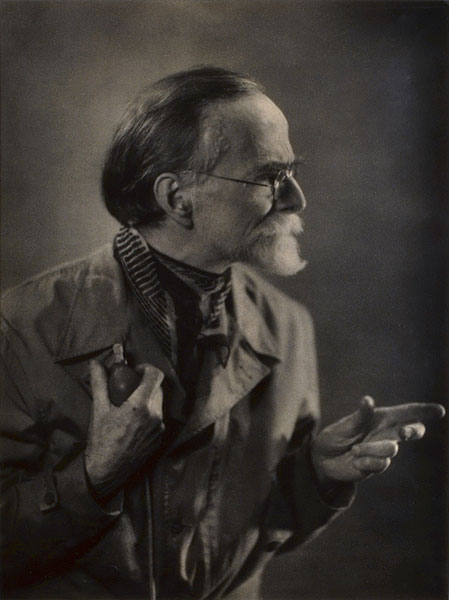
JULIAN AUGUSTUS ROMAINE SMITH
Thursday 9 November 1950 page 3 - Kalgoorlie Miner (WA)
STREET PHOTOGRAPHERS
Perth, 7th November — The Perth City Council decided yesterday to ask the Minister for Local Government, Mr Doney, to provide legislation for regulation and licensing of street photographers. It was said at the meeting that a letter had been received from the Commissioner of Police, Mr J. Doyle, concerning complaints of discomfort and annoyance caused by photographers in city streets at night.
Thursday 9 November 1950 page 3 - Kalgoorlie Miner (WA)
SAW EUROPE WITH HER CAMERA
It was "unconventional" for a woman to take up commercial photography in England, said Miss Antonia Blaxland, who returned at the weekend from England and the Continent, where she has worked and traveled for nearly two years. Miss Blaxland, who studied photography with Max Dupain in Sydney, was a commercial photographer in England for five months with Mr H.F.K. Henrion, a poster designer. Some of her work appeared in exhibitions at the Festival of Britain. The reason generally given for the lack of women in photography was that they are not strong enough to lift heavy weights such as lights, Miss Blaxland said. "This is just an excuse for not giving a job," she said. "The main reason is that it is just unconventional". Miss Blaxland took many photographs in Switzerland and Austria, where she spent a skiing holiday and in Italy.
Thursday 25th June 1953 page 3 - Advocate (Burnie, Tasmania)
TRIBUTE TO PHOTOGRAPHER
A tribute which members of the Northern Tasmanian Camera Club had arranged to pay to the well known Australian photographer, Mr Harold Cazneaux, will now hold a much deeper significance. Officials of the club were notified yesterday that Mr Cazneaux died in Sydney early yesterday morning. Mr Cazneaux, an Honorary Fellow of the Royal Photographic Society, had been prominent in Australian photographic circles for more than 50 years. Last year photographic societies in Sydney combined to pay tribute to Mr Cazneaux at a function at which 50 of his best works were displayed. Tape recordings and a film of the pictures displayed with comments by Mr Cazneaux were made and distributed to photographic societies all over Australia. Arrangements had been made to have, this tribute in Launceston next Tuesday and officials of the Northern Tasmanian Camera Club decided yesterday that they would hold the function as planned. Members of other clubs in the North and North-West have been invited to attend the function, which will be held at the club's rooms at the Queen Victoria Museum.
Monday 26th October 1953 page 4 - Examiner (Launceston, Tasmania)
TOP AWARD TO HOBART CAMERAMAN
A HOBART photographer, Mr Allan Walters, has won one of the three sesquicentennial medallions awarded in the all Australian exhibition of photography. Judging of the exhibition was completed in Hobart on Saturday.
Details: Sesquicentenary medallions: Alan Walters (Hobart), N. Ozolins (N.S.W.), C.R. Hartmann (Victoria).
Certificates of Merit: E. Robertson (S.A.), O. Truchanas (Tas.), Hugo Keil (S.A.), R. Warlow (N.S.W,), I. Yakovenko (Tas.), C.L. Leslie (A.C.T.).
Judges: Mr John W. Ikin, President, Northern Tasmanian Camera Club; Mr Alan B. Maddock, Vice-President, Southern Tasmanian Photographic Society; Mr Roy O. Cox, artist, Hobart.
Thursday 1st April 1954 page 10 - The Sydney Morning Herald (NSW)
LAST "SHOTS" TODAY AT THE QUEEN
When the Royal Yacht Gothic clears the "roads" off Fremantle to-day, thus ending the Royal tour of Australia, she will offer the last chance to scores of amateur and professional photographers to "shoot" the Royal visit to Australia.
Given fair weather, people with cameras will be on The Mole on Rottnest Island, on the ocean and in the air with super - speed pancromatic negative and ultra-fast lenses, filming the historic occasion as the Gothic dips to the Indian Ocean swell. Then, within a few hours, millions of people throughout the Commonwealth and in many parts of the world, will have a pictorial record of the send off at their breakfast tables, thanks to a combination of modern photography and photographic transmission methods. The art of photography has come a long way since Sir John Herschel first used the word "photography" when addressing the Royal Society in London on March 14th, 1839. Throughout Australia and New Zealand for three and a half months the Queen and the Duke have been "shot at" round 360 degrees and have taken it all admirably. Despite harsh lighting and many distractions, the Royal visitors gave the lens opportunists a great run for their money. No mere dilettante herself, the Queen has invariably had her serial camera at call and shown an aptitude for filming scenes that seized her interest so that she may share her experiences with her own family.
Queen Elizabeth turns photographer herself to get a
movie record of the GothicVs departure from Townsville.
The first of our monarchs to display a keen interest in photography was Queen Victoria. When David (later Sir David) Brewster first exhibited his improved "sterescope" at the Crystal Palace Exposition in London in 1851, she became a "3-D fan," and Brewster's viewer became increasingly popular. Three years later Queen Victoria and Prince Albert attended the first, photographic exhibition of the London Photo Society. The Queen was said to be "enraptured" with Brewster's pictures (taken with his double-eyed binocular camera) of persons, flowers, objects of natural history and particularly of many statues in Edinburgh and the highlands of Scotland. In view of the Queen's great weakness for statues, she surrounded herself at Osborne, at Windsor and at Balmoral with countless pieces and monuments, one suspects the brilliant Brewster was also a canny Scot. The Prince Consort became patron of the Photographic Society of Scotland in 1856, when Brewster became its first president. Yet it took the Queen 40 years after her "first photo rapture" before she granted the prefix Royal to the Photographic Society of Great Britain. This was in 1894 and Sir David did not live to hear of it.
Queen Victoria was "enraptured" by the first
photographic exhibition just 100 years ago.
The first sign of consternation in the Royal Family about photography came with Victoria's great-grandson, David, who wrote to his papa: "There were a great many photographers at the Gare du Nord (in Paris) and they let off a flashpowder as I was getting off the train, which was very disconcerting. They are a great nuisance and there were ten on board the (Channel) steamer and they followed one about the whole time". There is a suggestion, in that letter, of life in cloistered groves. The 18 year old Prince of Wales, on his first visit to Paris, found it strange to have "no reprieve from the Press". Certainly in the mind of the young Prince there was no evidence of the aplomb of his grandfather, King Edward VII, of whom the Duke was to write in his memoirs: "Few men could match his vitality, his sheer 'joie de vivre'. The Parisian term, "un bon boulevardier", might have been invented for him". In the same memoirs, the Prince (who became briefly Edward VIII), wrote: "I grew up before the age of the flash camera, when newspapers still employed large staffs of artists to depict the daily events with pen sketches. This artistic form of illustration seldom achieved the harsh or cruel accuracy of the camera lens, nor could it match the volume and mobility of the present-day photographer, dogging his often unsuspecting victim or waiting in ambush for a candid shot". This makes odd reading for many and in particular for one who recalls a brilliant June holiday in Sydney in 1920. On that day I blithely waltzed into a spacious, attractive atelier off deserted Pitt Street to come suddenly upon two handsome young men, completely relaxed, toying with a morning aperitif. The slim-waisted one clamped his black cigarette-holder between his fine teeth and screwed up his eyes at the intruder. It was the Prince of Wales, who relaxed immediately the portrait artist, Monty Luke, exclaimed: "When the devil did you return and what the deuce brings you here this day and hour?" The debonair, photogenic Prince had posed a dozen "takes" for the amiable, astute Luke and one left with the indelible impression that he was a camera artist's "natural" who knew his angles and lighting - and liked it! However much the now much photographed Duke of Windsor regrets the "disappearance of privacy since the days of my boyhood", he is not in accord with the facts.
This picture of the Duke of Windsor, when Prince of Wales,
is recalled by a reference in this article to the Duke's
visit to Sydney in 1920.
Photography's link with the Press dates back 40 years before his birth - to Paul Pretsch in 1854. Stephen H. Horgan introduced a process for half-tone newspaper printing about 30 years later, when, as staff photographer on the "New York Daily Graphic", his paper printed - on March 4th, 1880 - a portrait of Henry J. Newton, president of the American Institute and "a scene in Shantytown, N.Y." Modern cross-line screening, on glass, for making half-tone negatives came from Frederick Eugene Ives in 1886. Since then photography has been perfected so that today, allied to wireless transmission across continents and to high speed printing presses, we are able, at our breakfast tables, to see graphic illustrations, whether it be the previous night's air crash tens of thousands of miles away, or yesterday's racing at Royal Ascot, England.
1966 An Encyclopaedia of New Zealand, edited by A.H. McLINTOCK
OUTSTANDING PHOTOGRAPHERS
As New Zealand is a land richly endowed with natural beauty and with phenomena of great scientific interest, it was natural that photography should become the hobby of many individuals interested in recording its beauty and its natural history. Some of these persons became members of the Royal Photographic Society of London and attained great distinction internationally in the field of photography. Especial mention should be made of Gerald E. Jones, of Wellington, who became the first New Zealand born photographer to earn the title FRPS, gaining this distinction in 1912. George Chance of Dunedin, elected FRPS in 1923, shares with Jones the honors for pictorial photography in New Zealand. In 1954 Chance became overseas (New Zealand) corresponding member of the council of the Royal Photographic Society. William C. Davies, appointed photographer to the Cawthron Institute in 1920, paid much attention to photographing New Zealand natural history, particularly plants. He was awarded an ARPS in 1931, followed in 1932 by FRPS; later, in 1938, he became the first and only Hon.FRPS for New Zealand. In 1934 Davies was awarded the Royal Photographic Society Gold Medal for his photographic work in the fields of science. During his years of service to the Cawthron Institute, Davies amassed a collection of many thousands of negatives, a small selection from which is reproduced in his book New Zealand Plants. Davies retired from the Cawthron Institute in 1945 but continued actively in scientific photography until his death in 1952.
Thursday 2nd September 1954 page 7 S - The Sydney Morning Herald (NSW)
SHE PHOTOGRAPHS OPERATIONS FOR HER SURGEON - HUSBAND
An Australian woman who married an eminent London surgeon now has the rare privilege of going into the operating theatre with him to photograph his operations. This unusual husband - wife doctor - photographer team will arrive in Sydney by air on Saturday for five weeks visit. Dr. Rodney Maingot, one of Britain's leading surgeons, will be visiting McIlraith Professor at the Royal Prince Alfred Hospital. Mrs Maingot was originally going to Australia merely for a holiday and to revisit the country she left 20 years ago when she was Miss Rosalind Smeaton, of Brisbane and an actress with J.C. Williamson's. Now her visit will include giving a Sydney lecture on color photography and collecting a bag of color photographs of Australia to bring back to London. Mrs Maingot took up photography as a hobby after her marriage. She became an expert amateur, is a Fellow of the Royal Photographic Society and was the first woman elected to be a member of its council. Photography has never been a money-making career for Mrs Maingot, but lecturing to photographic groups all over England and helping to judge the work sent to the society from all parts of the world absorbs much of her time.
A few years ago, Mrs Maingot wrote a book on photography called "Amateurs Just Like You." An interest in her husband's work first attracted her to medical photography and now she is recognized as an expert in the specialized field of color work in medicine. Mrs Maingot also interested the Royal Photographic Society in this branch of photography and herself created the first medical photographic group within the society. "Although I was never a nurse and not used to surgery, the operating theatre has never worried me," she said. "On the contrary, I am fascinated by it all when I'm working". Anticipation and timing were the most important things to remember when using a camera at the operating table, she said. "And, of course, most surgeons are very impatient - though I must say my husband is always very good to me", she added. A few hours before they left by air on the first part of their journey to Sydney, Dr. and Mrs Maingot were still packing and packing, trying to get their luggage weight down to the air travel limit. There was little room left for clothes after Dr. Maingot's books and instruments, his wife's two cameras and photographic equipment had been packed. A trunkful of more than 500 photographic slides has been sent by sea and will be waiting for them in Sydney. About 400 of the slides belong to Dr. Maingot and will be shown at his medical lectures in Sydney. The rest are for a lecture on new color processes in pictorial photography which Mrs Maingot will give in Sydney.
Sunday 24th December 1978 page 9 - The Canberra Times (ACT)
A QUIET RECORDER OF OUR PAST
CAZNEAUX: Photographs by Harold Cazneaux 1878-1953. Selected and with an appreciation by Max Dupain. National Library of Australia.
Reviewer: TONY MANIATY
The saga of Australia's cultural isolation — that curious warp of time and distance — is not confined to the typewriter, the paintbrush or the stage.
In photography too, we have long suffered a history of delayed exposure to what is happening overseas. When ideas and images eventually arrive, they are usually worshiped like beacons of truth. There are few Australian photographic heroes.
For many, Harold Cazneaux was the first contender. Born across the Tasman 100 years ago, he purchased his original quarter-plate box camera in Sydney at the turn of this century and until the 1950s was refining his skills behind the lens. The result is well reproduced in this fine National Library edition: a selection of 85 images and an "appreciation" by fellow photographer Max Dupain of Cazneaux's life, a chronological essay that tells a lot about Australia's early cultural years.
In a creative sense, it sounds depressing.
"Think of the turbulence of thought and action that hammered out the theories of Post Impressionism and Cubism in Cazneaux's young days and the later dynamic theories of Dada and Surrealism in both painting and literature. What had we in Australia reflecting these movements, in art or anything else? Practically nothing. In photography we were still tied to the conventions of the old portrait studies with fake and phoney atmospheres, old cameras, head-rests and stuffed animals for the kids — even Red Riding Hood's wolf! What a ghastly and depressing environment for Cazneaux's creative soul. It drove him to a physical and nervous collapse".
It was a familiar story. There was virtually no chance in those days of specializing in any single field — home portraits, industrial shots, architectural work and magazine photography were Cazneaux's lot. Overseas, counterparts like Steiglitz were displaying at New York's Photo-Secession Gallery the new work of the Cubists, the Fauves, Picasso and other revolutionary painters and sculptors.
For all this isolation, Cazneaux's work is a landmark in Australian photography. With the untested optimism that filled this country once, he challenged the inherited English perceptions of what photography should be and changed as he went. Gradually the dreamy, deliberate and self-conscious aspects of his portfolio gave way to strong images of a young nation: the powerful surge of a wave bearing Sydney surfers in 1929, the industrial muscle of BHP's Newcastle steelworks in 1934 and surveying Sydney's new bridge and harbour life from a dizzying height. These were the raw symbols of power and independence; and if they have perhaps failed us now, they are important for that too. Cazneaux caught that mood.
In portraits and landscapes, he was less successful, both combining and confusing modern realism with some lingering nostalgia. His gum trees curl harshly under a veneer of prettiness and the faces of proud, independent women are sometimes finished with a painter's dreamy touch. Cazneaux was regarded in his own time as an outstanding photographer of people and the Australian bush, but when we try to reappraise that success, the artist's intentions are clouded as always by time and passing fashions. We judge from the current photographic perspective and as Dupain notes, what concerns us today is "the commonplace, the rational, the actual, the objective, the remorseless presentation of any act of life. Maybe this is what photography is all about. We will not be certain for another hundred years".
For now, an impossible gap exists between the gentle art of Cazneaux's prints and the aggressive photojournalism of today. His camera was the quiet recorder of Australia's social past and its natural history. "Let us all go forward doing our work sincerely and soundly", he once wrote. "The results will speak for themselves". To say the results are of national importance gives Cazneaux's photographs a stuffy grandeur they fortunately lack, but our common history is certainly there.
Sunday 8th April 1979 page 19 - The Canberra Times (ACT)
KODAK CLICK FIRST SOUND FOR MANY
The sound of photography to millions of sharp shooters was the distinct 'click' of a Kodak Brownie camera.
The first such camera was placed on the market in 1900. It was priced at $1 and used black and-white film which sold for 15 cents a roll. For the first time, the hobby of photography was within the financial reach of everyone. Many different models were introduced right up to the 1960's incorporating many new features such as a coupled flash unit.
In 1904 a folding Pocket Brownie camera was introduced which was less bulky than the box camera. It used 120 roll film, still available today and took pictures 5.5x8.2cm. In 1915 the name autographic was added to the title of the camera. By using special film it was possible to open the flap over a long slit on the back of the camera and to write places and dates on the back of the film alongside each photograph. Such models, although not worth a fortune, are being eagerly sought today by camera collectors.
Before World War I a Brownie camera which took stereoscopic pictures was available. Every scene was photographed simultaneously through two separate lenses. The resulting negatives were printed as a pair side-by-side and viewed through a special 3D Viewer.
At different times Brownie cameras with colorful coverings in red, green and blue were introduced. And there was a Baby Brownie camera in 1934. It used 127 film. Thousands of Brownie cameras were introduced specially for the New York World's Fair in 1939 and just before this time there was the Boy Scout Brownie camera. Kodak introduced a plethora of Brownie cameras in the post World War II era with names like the Target, the Six Sixteen, the Holiday, the Bullet and the Bulls-eye.
When the basic film quality improved it was possible to get enlarged prints from small negatives which equaled the quality of larger negatives which had to be made using larger, bulkier cameras. The same principle holds good today.
In 1956 the Brownie Starlet camera was introduced which took pictures 4.0x4.0cm on 127 film. It preceded a whole range of Brownie Starflex, Starmite, Starmeter, Starflash and Starmatic cameras.
In 1958 Kodak started to make cameras in Australia at a factory at Abbotsford. The factory transferred to Coburg in 1963 and by 1965 one million cameras had been produced. The majority of these were Brownie Flash II and Brownie Starmite cameras but the figure also included Instamatic cameras which had been introduced a year earlier. In fact it was the Instamatic cameras with their much-simplified cartridge loading which spelled the end of the Brownie cameras which used roll-films.
Now, nearly 80 years after the first Kodak Brownie camera was introduced, the name is being revived once more.
The new Brownie camera is an up to-the-minute camera using cartridges of 110 size film. The tiny negatives it makes are 13x10mm, about the size of a fingernail. That is a reduction of nearly one seventieth of the negatives made by early Brownie cameras and the final prints are better. The new camera can take black and-white pictures but most snap shooters will want color prints. The cartridges of Kodacolor II film it uses give 12 or 20 negatives which are made into 9x11.5cm color prints.
Unlike the early Brownie cameras, the new one takes pictures in doors easily with the aid of a flip flash. For dim weather conditions or for greater flash range it's possible to use Kodacolor 400 film. This very sensitive color film is 50 times faster than the first color print films introduced nearly thirty years ago.
Wednesday 3rd June 1981 page 25 - The Australian Women's Weekly (Sydney NSW)
A FIRST FOR WOMEN PHOTOGRAPHERS IN AUSTRALIA
QUICK THINKING AND LADDERS GOT THE TOP SHOTS
Adelie Hurley will never forget the night Katharine Hepburn arrived in town.
A crowd of Press photographers were at Sydney's plush Australia Hotel to record the event and Adelie, Australia's first woman Press photographer was there, trying to get in. The management refused Adelie admittance. She was wearing slacks - not the done thing at a posh pub in post-war Sydney. Livid, Adelie phoned the star in her suite. "Really?" Miss Hepburn exclaimed and strode briskly down to meet the hotel management. "I was the second woman allowed into the Australia wearing slacks," Adelie recalled proudly. "Katharine Hepburn was the first!"
The first work by Adelie, daughter of explorer, photographer and author Captain Frank Hurley, was published in the Sydney "Daily Telegraph" in the 1940s. She quickly established a reputation as "Front Page Hurley" because of her many photographic scoops. Her Press work is included in the first exhibition of photography by Australian women, which opens at the George Paton Gallery, Melbourne, on the night of June 1. The year-long exhibition, featuring the work of 26 women photographers (1860 to 1950), will tour Victoria, Tasmania, Queensland, SA and NSW. Some of the earliest photographs were taken by Norfolk Island missionary Kate Ivens in 1868. Also represented are May and Minna Moore, whose work is in the collection of the State Library of Victoria and who specialized in portraits of theatrical celebrities and young men departing for war; and Bernice Agar, who had her own studio in Sydney's Castlereagh Street in the 1920s and took elegant photographs of society women. Lillian Pitts, a schoolteacher and hobby photographer from Merrigum, Victoria, recorded (mainly humorously) country town life . . . women in stiff starched dresses, parasols held high, sitting primly in jalopies with flat tyres. By Adelie Hurley . . . trading her camera for life by the beach. contrast there is Adelie's work. She once stowed away on an overland troop convoy to get to Darwin in the early days of World War II.
She was discovered and dumped at a homestead. Undaunted, Adelie hitchhiked to Darwin, disguised herself as a soldier, sneaked into army camps, shot a series of photographs and got them back to her newspaper. Quick thinking and ladders - helped her achieve several notable scoops. She climbed a ladder to a floor above a Sydney Chinese laundry to take pictures of a police raid on an opium den. Adelie took her ladder along to photograph pianist Winnie Atwell. She waited until the men photographers had left, climbed her ladder and took a much-admired looking-down shot of the star looking up. Another person asked to "look up" for Adelie was Sir Robert Menzies. He was on a visit to Cairns and hacked at sugar cane as a gesture for the Press. Menzies chuckled, obliging. "Are you as good as your father?" he asked. "Almost," Adelie replied.
Adelie slogged at everything from fashion to football; the initial scepticism of male colleagues gave way to grudging admiration. She worked for "AM" magazine, "Truth" and the "Mirror" and for The Weekly where she became the first woman photographer to go to sea with the Australian Navy. But it was for her outback work that Adelie became well known. Today her old workhorse, the Linhoff tripod, rarely gets an airing. For the past few years Adelie (her father named her after the Adelie penguins of the Antarctic) and her husband Phil Harrison have managed the Island Reef resort out of Bowen, Queensland. She now prefers painting to photography. She remains critical of the photography in newspapers today. "Despite all the new-fangled garbage that photographers clutter themselves with, I don't think I've ever seen so many flat and static pictures and so many ugly pictures of pretty girls. The challenge to turn in something better and different seems to have gone".
Saturday 29th January 1994 page 49 - The Canberra Times (ACT)
AN ARTIST WHO RAISED PROFESSIONAL LEVELS - PHOTOGRAPHYBy Helen Ennis
HAROLD CAZNEAUX dominated the photographic scene in Australia between the wars and was recognized as the country's leading pictorial photographer.
But his influence was not confined to photographic circles. He reached a large audience through his work for the fashionable magazine, The Home, in the 1920s and early '30s. Issues of the magazine were peppered with photographs simply identified by the signature "Cazneaux". His career began in 1896 when, at the age of 18, he entered the photographic studio of Hammer & Co in Adelaide as an artist re-toucher. He moved to Sydney in 1904 where he worked at Freeman & Co, one of the oldest and most highly regarded photographic studios in Australia. Though a highly competent and conscientious studio photographer, Cazneaux was frustrated by the demands of the studio system. His real interest was in the use of photography as a medium of artistic expression. Following a physical and nervous collapse brought on by overwork and stress, Cazneaux left Freeman's in 1917 and established his own business.
Shortly after, he set up a studio at the family home in Roseville, on Sydney's North Shore. It was there, in the garden studio, that he worked until the end of his life. Cazneaux's family was closely involved with his photographic activities: his daughters often appeared in his photographs and later, worked as assistants in the studio. An enormously versatile photographer, Cazneaux mastered the areas of portraiture, city views and landscapes. During his first years in Sydney Cazneaux took hundreds of negatives of Sydney's streets and waterways. He was particularly interested in the picturesque elements of old Sydney which were fast disappearing. Modern Sydney also captured his imagination and he extensively photographed the Sydney Harbour bridge, the very epitome of progress to Australians at the time.
His portraits were prized for their naturalness. Subjects adopted less artificial poses and were photographed in natural light. As Cazneaux saw it, sunlight had a crucial role to play in the development of a "national character". Towards the end of his career Cazneaux concentrated on photographs of the landscape, especially the Flinders Ranges. For Cazneaux, the negatives provided only the raw material. He used a variety of techniques for expressive effects: manipulation of the negative (for, example, by smoking it or drawing on it); radical cropping; and different printing processes. He excelled at the production of bromoils which allowed him to modify the sharp definition of the negative and eliminate unwanted detail.
Harold Cazneaux died in his sleep in 1953 at the age of 75. In his various activities he raised the standards of Australian photography to a new level of professionalism, ensuring that it was worthy of sustained and serious attention. This is an edited extract from Helen Ennis's introduction to the book, Harold Cazneaux, The Quiet Observer.
JOHN CYRIL "JACK" CATO FRPS

John Cyril "Jack" Cato FRPS
Born 4th April 1889 Launceston, Tasmania
Died 14th August 1971 (aged 85) Melbourne, Australia
PHOTOGRAPHER and AUTHOR
John Cyril "Jack" Cato FRPS, was a significant Australian portrait photographer in the Pictorialist style, operating in the first half of the twentieth century. He was the author of the first history of Australian photography; The Story of the Camera in Australia (1955).
John Cyril (Jack) Cato, photographer, son of Albert Cox Cato, salesman and his wife Caroline Louise, née Morgan. At the age of 12 years he did an apprenticeship and studied arts in night school. His father arranged for him to have lessons from a friend who was a metallurgist at Queenstown, where he learnt the properties of metals in photography. John Watt Beattie, a Scottish landscape photographer and also the son of a photographer, introduced young Jack to the medium in 1896. He was further trained in art by Lucien Deschaineux at Launceston Technical School. From 1901 Cato worked under Percy Whitelaw and John Andrew, both local portrait photographers.
In 1906, aged 17, Cato joined Beattie in his Hobart premises and set up his own studio. Later he applied to be official photographer to (Sir) Douglas Mawson's 1911 Australasian Antarctic Expedition. However, Mawson passed him up and Henri Mallard, in favor of Frank Hurley. Cato traveled that year in Europe finding work with photographers in London, among them H. Walter Barnett, the fashionable society and vice-regal portraitist and theatre photographer Claude Harris. Through the latter and with encouragement from Dame Nellie Melba, he pursued freelance work in the theatrical world. Having contracted tuberculosis and, seeking the relief of a warm climate, Cato left England in 1914 to photograph on the expeditions in Rhodesia of Professor Cory of Grahamstown University. He enlisted for war service in South Africa. The anthropological photography earned him a fellowship (1917) of the Royal Photographic Society of Great Britain.
In 1920 Cato returned, still convalescing, to Tasmania, where he operated his own portrait-studio in Hobart and there married Mary Boote Pearce (d.1970) on 24 December 1921. He was President of the Tasmanian Photographers Association in 1923. In 1926 their son John was born and in 1927 they moved to Melbourne. Again with the patronage of Dame Nellie Melba and through her introductions to society and to theatrical circles, he set up a society portrait studio, first at 244 Collins Street, then permanently in Marcus R. Barlow's (1930) Art Deco Howey House at 259 Collins Street. There, he was conveniently located for clients, close to Melbourne's photographic community and the best department stores and boutiques around Collins Street, Melbourne. He put his Pictorialist style, natural gregariousness, love of theatre and technical knowledge to effect in becoming a leader of the trade in Melbourne for two decades.
His society, theatre and advertising photographs were frequently published in magazines and newspapers including The Australian Women's Weekly, The Argus, Table Talk, The Illustrated Tasmanian Mail, The Hobart Mercury and The Australasian. He maintained links with professional associations and amateur clubs through occasional exhibitions of his best work and was senior vice-president (1938) and a life member of the Professional Photographers Association.
Cato retired from his Melbourne studio in 1946 to begin a career as an author. In addition to a large number of articles in photographic, philatelic and other magazines, as well as serving as chronicler for the Savage Club, he published an autobiography, I Can Take It (1947) and a pictorial documentary, Melbourne (1949).
THE STORY OF THE CAMERA IN AUSTRALIA
Cato's The Story of the Camera in Australia (1955), though it is more populist than academic, is acknowledged as the first Australian national history of the medium. A keen stamp-collector from childhood (also 1935 president of the Royal Philatelic Society of Victoria) he was able to sell his stamps for about £10,000 in 1954 to finance six years of research for this book. He used the La Trobe Library picture and newspaper collections in Melbourne, making only one visit to Sydney and Canberra institutions. Cato also relied on regular personal correspondence with experts, such as letters from Harold Cazneaux, the celebrated Pictorialist and from Keast Burke in Sydney, a photography historian and campaigner for the recognition of photography as a historical resource and who was engaged in 1964 as consultant to the collections at the Australian National Library.
From 1960–63 Cato was photography columnist for The Age newspaper in Melbourne. He died on 14 August 1971 at Sandringham, Melbourne, survived by a son, photographer John Cato and a daughter.
- 2002 Included in exhibition Just Married, Monash Gallery of Art, Wheelers Hill, 6 September-20 October 2002
- 1995 Included posthumously with Athol Shmith, Harold Cazneaux, John Lee, Laurence Le Guay and Max Dupain in National Portrait Gallery curated exhibition High Society: Society Portraiture and Photographs
- 1938 Queen Victoria Museum Art Gallery, Launceston
- 1937 Group Show of early Kodachromes at Kodak (Australasia) Pty. Ltd., 45 Elizabeth St., Hobart
- 1936 Group Show Kodak (A'Asia) Pty. Ltd. Gallery, Collins Street, Melbourne
- 1934 Group show Centenary International Exhibition of Professional Photography, Athenæum Gallery, Melbourne. Awarded Silver Medal in Commercial section
- 1932 Solo Show, Athenaeum Gallery
- 1925 Solo Show of landscapes, The Bookshelf Gallery, Hobart
- 1923 Group Show of the Professional Photographers' Association of Tasmania, Hobart
OLEGAS TRUCHANAS
Birth 22nd September 1923 Siauliai, Lithuania
Death 6th January 1972 Gordon River, Tasmania, Australia
Olegas Truchanas, wilderness photographer and conservationist, was son of Eduard Truchan, civil servant and his wife Tatjana, née Bronovickaja-Baronenko. During World War II Oleg was active in the Lithuanian resistance. He went to Germany in 1944 and began law studies at the University of Munich. After the university closed temporarily in May 1945 he moved to the Baltic displaced persons camp at Garmisch. On 23rd February 1949 he arrived in Melbourne in the Nea Hellas. Sent initially to the Bonegilla migrant reception centre in Victoria, he chose to go to Tasmania where he was assigned to manual labor for the Electrolytic Zinc Co. of Australasia Ltd, Risdon. In 1951 he joined the Hydro-Electric Commission, Hobart, as a meter-reader. Becoming an engineering clerk two years later, he was to work in the area of statistical analysis until 1971.
Deeply attracted to Tasmania's wilderness areas, Truchanas undertook many solitary excursions, on foot and by canoe, into the island's south-west. Black and white and later, color photography became the medium through which he expressed his considerable artistic talents; he won prizes in overseas and Australian competitions. In 1952, climbing alone and without support, he reached the summit of Federation Peak. Twice, in December 1954 and February 1958, he traveled down the Serpentine and Gordon rivers from Lake Pedder to Macquarie Harbour in a self-designed kayak, a feat never before accomplished. On 21st January 1956 at Chalmers Church, Launceston, he married with Presbyterian forms Melva Janet Stocks, a clerical typist.
In October 1963 the Tasmanian government decided that the State's south-west was to be opened up to hydro-electric development. The fears of conservationists were realized in 1965 when the premier Eric Reece announced that there would be "some modification of Lake Pedder National Park" and that the water level of the lake would be raised. Truchanas, placing himself in a difficult position with his employer, gave a series of audio-visual lectures in the Hobart Town Hall and elsewhere in Tasmania, aimed at publicizing the environmental losses that would follow the flooding of the lake. The project went ahead despite the protests. In February 1967 Truchanas's collection of photographs was burnt in the Hobart bushfires that destroyed his home; he immediately set about replacing the lost pictures.
From 1961 Truchanas was a leader and instructor at adventure camps run by the National Fitness Council of Tasmania. A founding member (1968) of the Tasmanian Conservation Trust, he campaigned with other members for the preservation of the Huon pine, which was threatened with extinction by logging; on 5th August 1970 one thousand acres (405 ha) of Huon pine forest on the Denison River were gazetted for protection under the Scenery Preservation Act (1915). In 1971 Truchanas was elected to the council of the Australian Conservation Foundation. At the end of that year he resigned from the H.E.C. and set out to re-visit 'The Splits' on the Gordon River, which he had previously navigated and photographed. On 6th January 1972, while attempting to retrieve his canoe, he slipped on wet rocks and disappeared. His body was found three days later, wedged against a submerged tree. After cremation, his ashes were spread over Lake Pedder. He was survived by his wife and their two daughters and son.
The artist Max Angus said in a tribute that Truchanas's physical, mental and spiritual powers, his passionate love for this island, combined to make him, our chief guide and conscience in times of threat to our national environment and prime source of revelation of the grandeur of our wilderness through the mastery of his camera. He included a selection of Truchanas's best photographs in his book The World of Olegas Truchanas (1975). Mount Truchanas, in the Hamersley Range, Western Australia (1975) and the Truchanas Huon Pine Forest (1990), were named after the conservationist. In 1998 the Queen Victoria Museum and Art Gallery, Launceston, acquired a collection of his photographs; the National Museum of Australia holds a canvas-covered canoe made by him.
PETER DOMBROVSKIS
Birth 2nd March 1945 in a refugee camp in Wiesbaden, Germany
Death 28th March 1996 Western Arthur Range in southwest Tasmania
Peter Dombrovskis was born in Wiesbaden, Germany in 1945 of Latvian parents. He emigrated to Australia in 1950 with his mother Adele and started taking photographs in the 1960's. He was strongly influenced by Lithuanian-Australian pioneer, conservationist and photographer Olegas Truchanas, who became a father figure to him. He was equally influenced by landscape photographers of mid-century America such as Ansel Adams, Edward and Brett Weston and Eliot Porter.
In February 2003, Peter Dombrovskis was inducted into the International Photography Hall of Fame in Oklahoma City, now in St Lious Murori, United States of America. Peter is the first Australian to be accorded this honor and one of only 58 people to be inducted over the 200 or so years of the history of photography. Peter's work is also represented in the collections of the National Library, National Gallery of Australia, Australian Heritage Commission, National Gallery of Victoria, Queen Victoria Museum and Art Gallery, Tasmanian Museum and Art Gallery, the Royal Tasmanian Botanical Gardens, the Wilderness Gallery and many private collections.
Some of Peter's photographs have been instrumental in the conservation of various Tasmanian wild places including the prevention of the damming of the Franklin River. Peter's works have been published over 35 years in the form of books, calendars. cards and posters.
The National Library of Australia has acquired the archive of Peter's transparencies so that future generations may view and enjoy his photography.
All Peter's photographs were taken with a large format Linhof Master Technika 5 x 4 inch flatbed field camera. He used three lenses; a 90mm Nikkor F4.5, a 150mm Schneider Symar-S (standard lens) and a 300mm Nikkor MF9. He sometimes used a polarizing filter.