CECIL WESTMORELAND BOSTOCK

DOB - 1884
DOD - 27th December 1939 - Marrickville, NSW
Cecil was born in England. He emigrated to New South Wales, Australia, with his parents in 1888. His father, George Bostock, was a bookbinder who died a few years later in 1892. Bostock had an important influence on the development of photography in Australia, initiating a response to the strong sunlight. He presided over the transition from Pictorialism to Modernism and was a mentor to several famous Australian photographers: notably Harold Cazneaux and Max Dupain.
Cecil was first apprenticed as an electrical fitter in the Waverley Tramway Workshop. He left home around 1901 as his mother was not pleased with his decision at that time to become an artist. He became Hon.Secretary of the Photographic Society of New South Wales and a foundation member of the Sydney Camera Circle. In addition he became a member of the Commercial Artists Association of New South Wales, implying he worked as a photographer.
Bostock served in the Australian Imperial Forces from 1917-1920. His Unit was the Field Artillery Brigade, May 1917 Reinforcements, which embarked from Sydney, New South Wales, on board HMAT A28 Miltiades on 2 August 1917. He served as a gunner where he made his only image of the war "Day breaks-cold-shrieking-bloody". He was discharged from the army in February 1920 in Sydney, and soon after married an English girl he had met in London whilst stationed there for six months in 1919. In London, Bostock joined the Royal Photographic Society and socialized in photography circles. He also held a one-man show of his watercolors of war scenes at the Adelphi Gallery in 1920.
1913 September, joined the Photographic Society of New South Wales.
23rd June 1914 and 22nd June 1915 became assistant Hon.Secretary of the Photographic Society of New South Wales.
1916 became Vice-President of the Photographic Society of New South Wales.
1916 - The Sydney Camera Circle was formed and Cecil was a Foundation member.
Examples of Cecil's work appeared periodically in the pages of the "Harringtons Photographic Journal" for many years and been published in the "Amateur Photographer", "Photograms of the Year" and "American Annual of Photography". He also exhibited at the London Salon, the American Salon, the Royal Photographic Society and in the Colonial competition.
Whilst in London during 1919, Cecil joined the Royal Photographic Society and the London Camera Club, at the latter he was able to meet most of the noted workers in London. While in England he secured a collection of very fine negatives of Cornwall and London.
Cecil was instrumental in forming the Contemporary Camera Groupe, which was designed to unite artists and photographers. The Groupe held a first and only exhibition in December 1938, for which he designed the catalog.
THE SYDNEY CAMERA CIRCLE
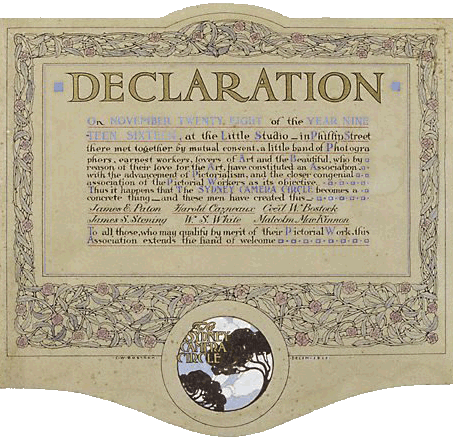
1916 November 28th, a group of six photographers met at Bostock's - Little Studio in Phillip Street, Sydney to form the Pictorialist Sydney Camera Circle. This initially included Mr Cecil Bostock, Mr Harold Pierce Cazneaux, Mr Malcolm McKinnon, Mr James Paton, Mr James Stenning, Mr W.S. White and they were later joined by Henri Mallard. A manifesto was drawn up by Cecil and signed by all six attendees who pledged - to work and to advance pictorial photography and to show our own Australia in terms of sunlight rather than those of greyness and dismal shadows. This established what was known as the Sunshine School of photography. The style of pictorialism practiced by Australians was concerned with the play of light, sunshine and shadow and the attention to nature and the landscape and had an affinity with the Heidelberg School of painters.
Olive Cotton joined the Circle in 1939 as the first female member.
Cecil edited and designed the catalogs for the Australian Salon exhibitions in 1924 and 1926. The logo and Declaration of the Sydney Camera Circle were also his work.
Publication by Cecil - Cameragraphs of the year 1924 - a souvenir of the first exhibition of the Australian Salon of Photography.
Publication by Cecil - Cameragraphs of the year 1926 - selections from the second exhibition of the Australian Salon of Photography.
Thursday 17th November 1921 Page 5 - The Sydney Morning Herald (NSW)
Mr CECIL WESTMORELAND BOSTOCK'S FINE EXHIBITION
The first exhibition of the photographic art of Cecil W. Bostock was opened in the Kodak Salon yesterday.
Mr Bostock works in the direction of introducing art knowledge and principles into photography; he is of opinion that photography can be placed on the same plane as etching and engraving. His exhibition reflects these views.
Altogether there are 101 pictures. To a fine technique Mr Bostock has added a discriminating choice of subject and reproductive talent of a high order. Possibly the most striking exhibit is "Day breaks-cold, shrieking, and bloody". Here is shown an 18-pounder at the moment of recoil, with crouching "tin-hatted" gun crew, a white pall of smoke drifting from the muzzle, under a stormy sky. The picture seems to personify the spirit of war, and was accorded a flattering reception when hung in the London Salon of 1919. Cornwall evidently has a strong fascination for Mr Bostock. He depicts fine examples of Cornish scenery. A happy effect is achieved in "An Old World Harbour", where the quaint old-fashioned basin of Polperri is shown bathed in sunshine; while beautiful light effects distinguish "Bye-way to Highway". A virile effort is "Fishermen of Penzance" and a fine choice of title is exhibited in "Australia Triumphant", showing a splendid squad of Diggers, bearing their laurel-crowned colors, passing the Admiralty Arch, London. "The Flower Sellers, Durban" and the "Tower Bridge, London", are splendid examples of light effects, while bush, harbour and city scenes are of considerable local interest. In the same category is "Etude Beethoven", depicting Mr Verbrugghen and Miss Jennie Cullen. Very close to nature is a "Bowl of Roses", while "La Lune", the moon, a white opaque ball, hanging above a dreamy landscape, does not need the imprimateur of the London Salon (1919) to indicate its beauty.
In declaring the exhibition open, Sir Henry Braddon said it was a delight to do a returned soldier this little service, and complimented the exhibitor on the high standard of his work.
15th December 1921 Page 618 - Vol. 28 No. 12 The Australasian Photographic Review
CATALOGUE
of
THE FIRST EXHIBITION OF THE PHOTOGRAPHIC ART OF C.W. BOSTOCK
held in
THE KODAK SALON, 379 GEORGE STREET, SYDNEY, 16th to 28th NOVEMBER
The above announcement, taken from the catalog, compliments twice C.W. Bostock, Artist Photographer, and the management of the Kodak Salon.
Mr. Bostock here discovers himself as an artist of force. Represented by only a few works in the recent The Sydney Camera Circle Exhibition, he suffered from the limitations of the limited display there. Bostock evidently likes and needs a large field, and justifies himself thereby. He is too varied to be cramped by a section. His moods need a whole wall or a whole exhibition. Mr. Bostock shows some hundred pictures, and somehow it seems that it needs the hundred to show the measure of his quality. It is one of the minor troubles of versatility in art that we have to have a large expanse of wall or book paper to be convincing.
It was both my purpose and my pleasure a little while ago to review an exhibition of The Sydney Camera Circle. Mr. Bostock, if I remember rightly, did not figure largely in the exhibition. As an artist I think I took exception to one of his larger works, and, seeing it again, I would like to have a yarn with C.W.B. if only to argue out what seems to me to be a false plane of light. Lord! what would we artists be without arguments? Frankly. I ask you.
But if I had to-day any thought of argument with Bostock, I think he has crushed it with a picture that sets me wondering just how and when he made it. It is a picture and a photograph beyond criticism. “Day Breaks—Cold, etc", London Salon, 1919.
If Mr. Bostock will accept my congratulations for that picture they are here and his. Talking painter-wise, and given a palette, one could so easily translate it into color — it paints itself.
And one has to, when all is said and done and pictured, look for the emotional quality in art. Mr. Bostock’s emotional vision rises to its highest in this picture.
And there are three nudes in this exhibition that are very beautiful: “The Model": “And so the Potter Formed His Clay”; and A Pose”. To photograph the nude is one of the most difficult problems of the camera-man because the human figure, in spite of all that we dream about it, is not inherently beautiful. The artist with the pencil can add or subtract. The artist with the camera can only render what the model gives him and it must be his effort and achievement to so pose and light his model that the resultant picture will be a thing of beauty. It is not easy to get results figure-wise with the camera. Mr. Bostock has succeeded, and I, for one, would like to see him devote all the time he can to making more of these pictures.
Limitations of space will not allow me to go on discussing Bostock and his art. I do not know how many of Sydney’s beauty lovers wandered into the Kodak Salon to spend a happy hour, what time his exhibition was on, but for those who did not — I can only hope for them that the chance may come again, to see, in addition to those named above. “The Great Dune”, a fine thing of grey sand dunes: “A Street in a Cornish Village”; and “Circular Quay from Dawes' Point". The two elegant still-life studies, “A Bowl of Roses", and 57: “Australia Triumphant”: the fine composition of “Summer Idyll”: “His Majesty", quaint and decorative; “Storm Approaching", a bit of Nature pictured whilst you and I were probably comfortably seated drinking tea and growling about the weather: and my old friend, “Thatched Cottages", which is quite beautiful.
Tuesday 2nd January 1940 Page 8 - The Sydney Morning Herald (NSW)
DEATH of Mr CECIL WESTMORELAND BOSTOCK
Mr Cecil Westmoreland Bostock, who died on 27th December 1939, was well known in Sydney as a photographer gifted with distinctive design and artistry. His works were exhibited at many salons in Australia and overseas. Mr Bostock served in the last war with the A.I.F., and was subsequently transferred to the photographic section of the War Records Department in London.
ONE SUMMER'S AFTERNOON
by Mr CECIL WESTMORELAND BOSTOCK c.1920-21
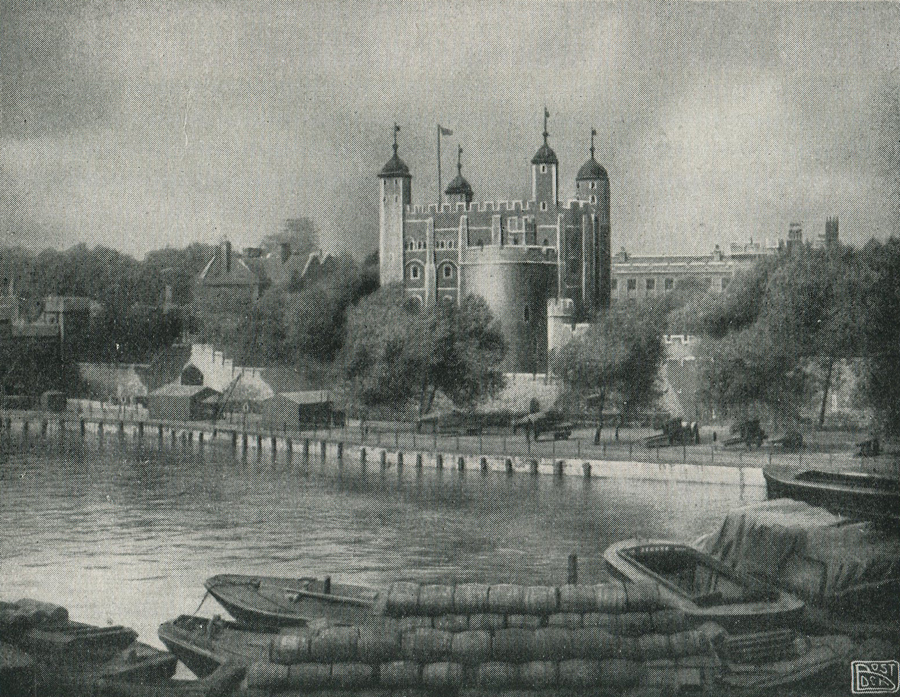
TOWER OF LONDON
by Mr CECIL WESTMORELAND BOSTOCK c.1920-21
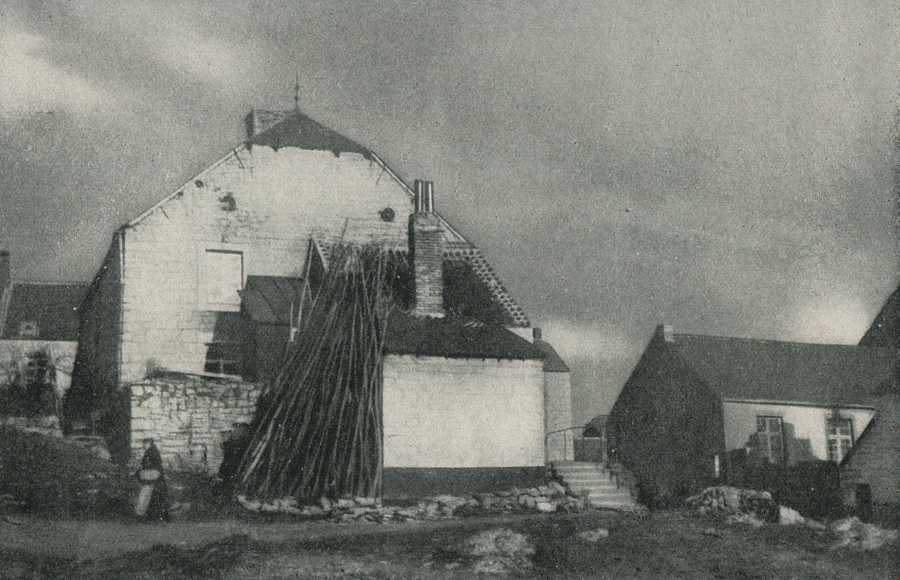
IN A BELGIAN VILLAGE
by Mr CECIL WESTMORELAND BOSTOCK c.1920-21
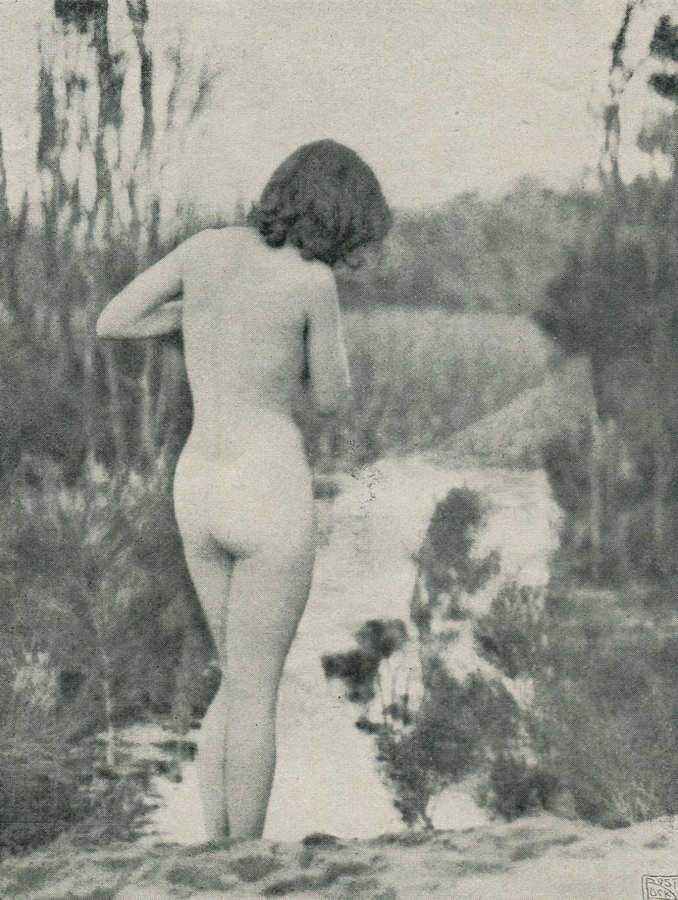
NUDE STUDY
by Mr CECIL WESTMORELAND BOSTOCK c.1920-21
LIGHT AFTER STORM
by Mr CECIL WESTMORELAND BOSTOCK c.1920-21
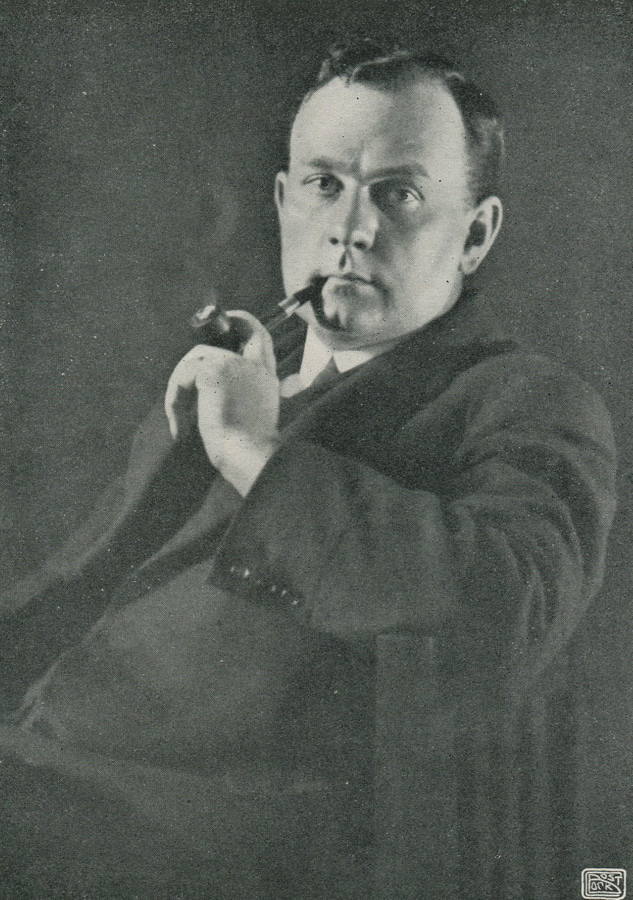
PORTRAIT STUDY
by Mr CECIL WESTMORELAND BOSTOCK c.1920-21
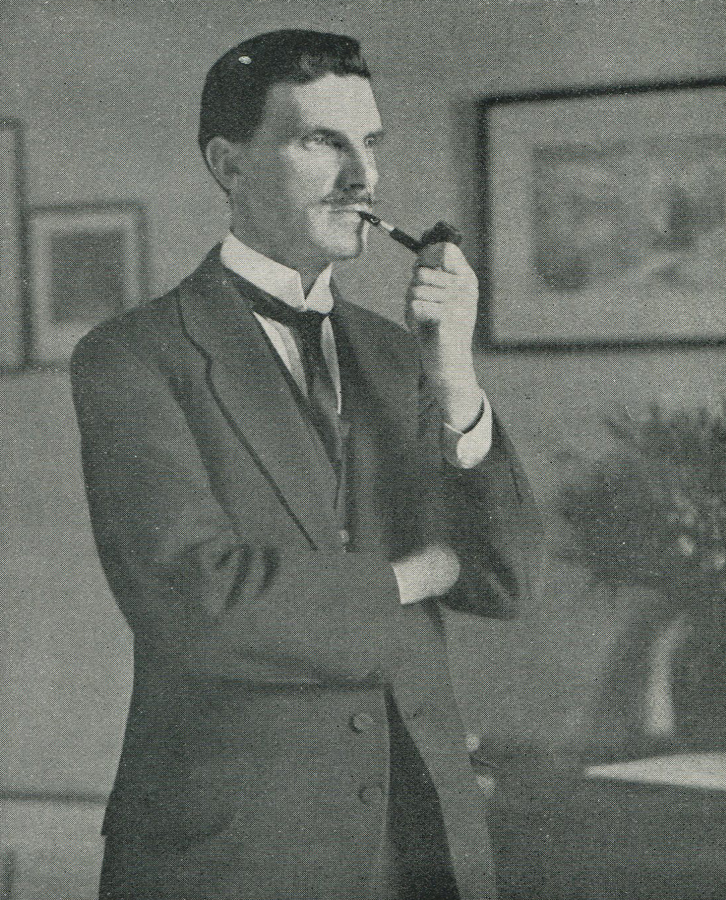
P.H. WILLIAMS, ESQ.
by Mr CECIL WESTMORELAND BOSTOCK c.1920-21
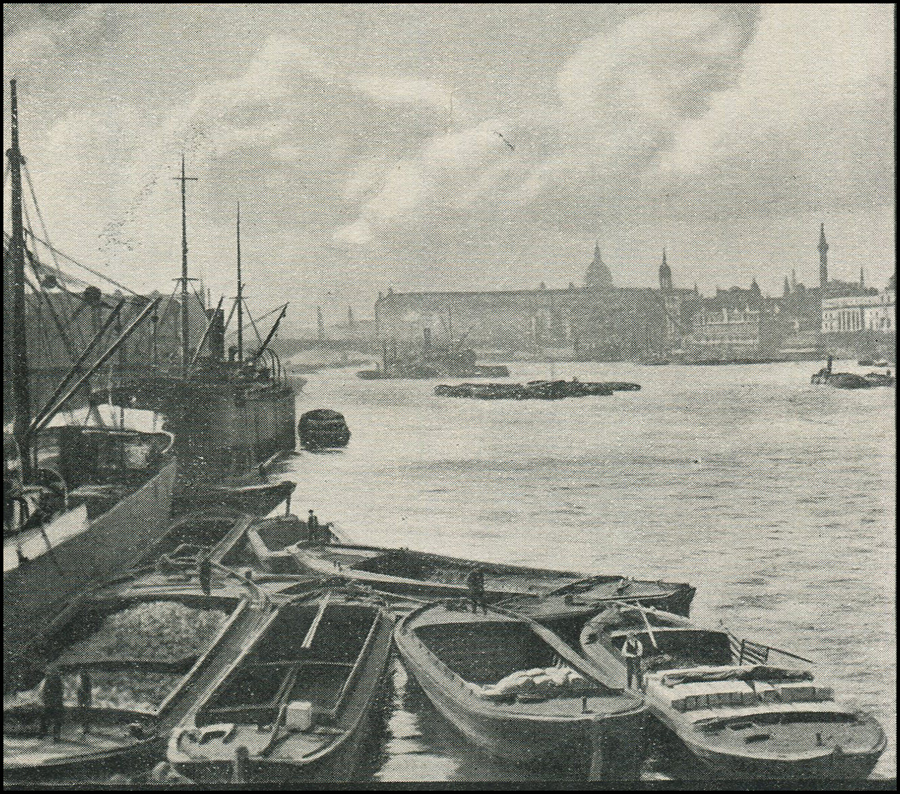
THAMES by LONDON BRIDGE
by Mr CECIL WESTMORELAND BOSTOCK c.1920-21
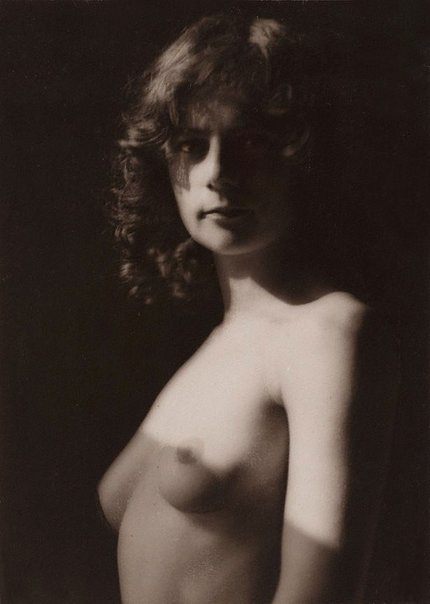
NUDE STUDY
by Mr CECIL WESTMORELAND BOSTOCK c.1916-17
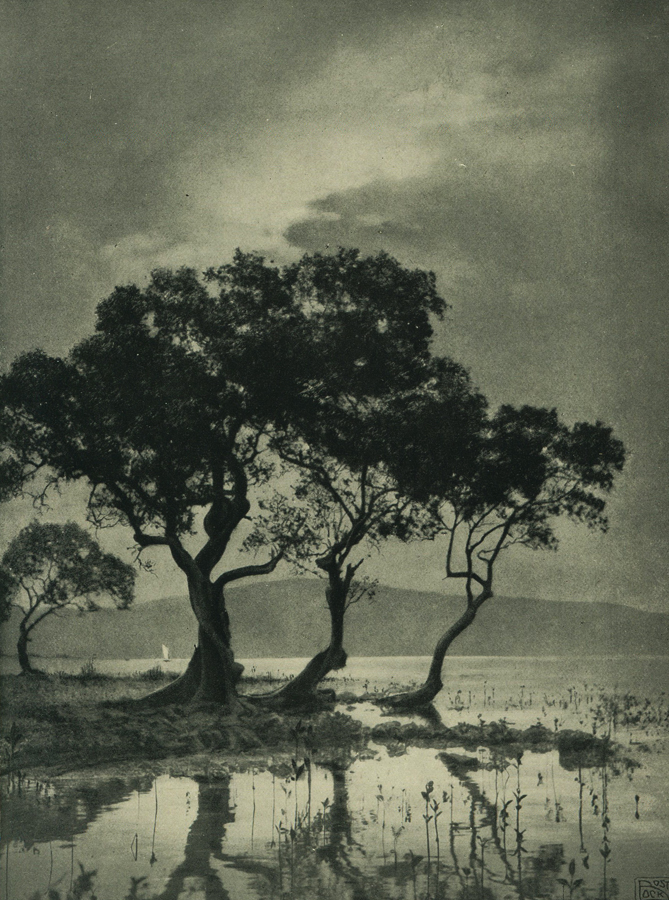
MANGROVES
by Mr CECIL WESTMORELAND BOSTOCK c.1926
