THE SYDNEY CAMERA CIRCLE
FORMED 28th NOVEMBER 1916
FOUNDING GROUP
CECIL BOSTOCK, HAROLD PIERCE CAZNEAUX, JAMES STENING, MALCOLM McKINNON, JAMES PATON, WILLIAM STEWART WHITE


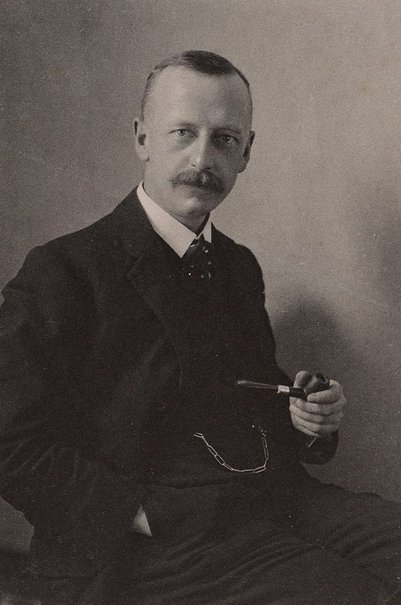
left to right CECIL BOSTOCK, HAROLD PIERCE CAZNEAUX, JAMES STENING
The founding group of six photographers met at Bostock's, Little Studio in Phillip Street, Sydney to form the Pictorialist The Sydney Camera Circle. A manifesto was drawn up by Cecil and signed by all six attendees who pledged, to work advance pictorial photography and to show our own Australia in terms of sunlight rather than those of greyness and dismal shadows. This established what was known as the Sunshine School of Photography. The style of pictorialism practiced by Australians was concerned with the play of light, sunshine and shadow and the attention to nature and the landscape and had an affinity with the Heidelberg School of painters.
The aim of the The Sydney Camera Circle is to promote photographic pictorialism and secure greater recognition for photography as an art form.
Mr. Harold Cazneaux recalled that the The Sydney Camera Circle was formed by a small band of photographers who were interested in the development and advancement of photography as a medium of artistic expression.
The early members of the The Sydney Camera Circle were largely amateurs who met monthly to discuss the latest methods and processes in photography and to show their work to other members for constructive criticism.
1917
The Photographic Society of New South Wales War Chest Interstate Exhibition
An important show at the Education Department Gallery, Sydney, in November 1917. The Circle was represented by prints from C.W. Bostock, Harold Cazneaux, A. Ford, Henri Mallard, J.E. Paton, E.N. Poole, G.E. Wakeford, W.S. White and S.W. Eutrope. M. Mackinnon and J.S. Stening also showed work. A fine catalog was produced in which ten reproductions on inserts were included.
15th November 1918 Page 589 - Vol. 25 No. 11 The Australasian Photographic Review
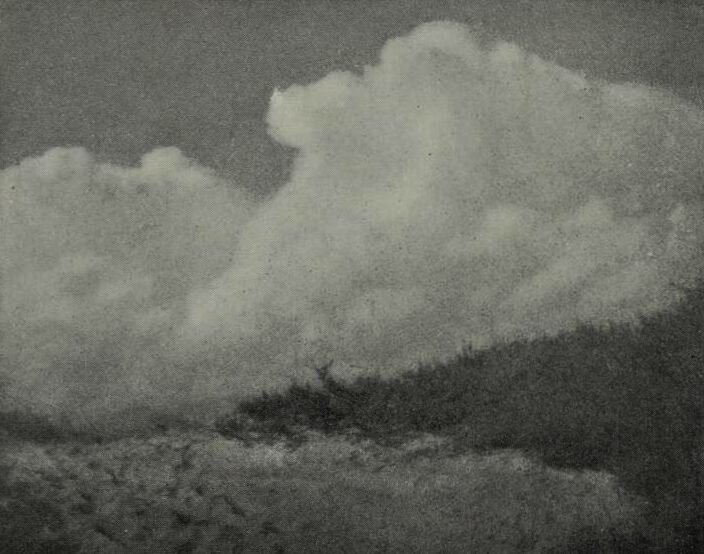
OMINOUS
By Robert Holcombe
1919 - 1924
At this stage reference should be made to Mrs. A.J. Milson, the only woman pictorial worker ever elected as a member. About 1918 she appealed to the writer for instruction in pictorial photography. Her subsequent rise to photographic fame was rapid and brilliant and she was soon represented in the London Salon and Photograms of the Year. Of special historical interest, one picture might be recorded — this was jointly produced by Mrs. Milson and myself. At the end of 1919 Captain Ross Smith and Lieutenant Keith Smith landed at Mascot, Sydney, in their ponderous Vickers-Vimy plane, at the conclusion of their famous prize-winning trip from London to Sydney. I was present at this landing with my camera ready for action, but the vast welcoming crowd broke down the barriers and rushed the plane, thereby making any type of planned photography impossible. However, Mrs. Milson was not the type of person to admit photographic defeat, and she later persuaded the famous airmen to re-enact their arrival. Her Graflex pictures were most successful, and were subsequently worked on by myself for exhibition and publication purposes. The resultant photograph, “London to Australia,” was widely shown at this time. In 1923 Mrs. Milson visited London and, with the assistance of Mr. F.J. Mortimer, gathered together a magnificent collection of overseas pictorial photographs. These were subsequently shown in the Kodak Salon, Sydney, the exhibition being opened by the Hon. Mrs. Pitt-Rivers on 6th June, 1924. For personal reasons Mrs. A.J. Milson shortly afterwards gave up photography and resigned from the Circle.
1919
Arthur Ford was awarded bronze medal by the Amateur Photographer and Photography in the Colonial competition.
The book The Art of John Kauffmann published by Alexander McCubbin in Melbourne.

JOHN KAUFFMANN
Born 29th December 1864 Truro, South Australia
Died 29th November 1942 South Yarra, Melbourne
PHOTOGRAPHER
Tuesday 23rd December 1919 Page 5 - The West Australian (Perth, WA)
LOAN EXHIBITION FROM SYDNEY
A collection of 80 pictures illustrative of pictorial photography, sent on loan to the The Western Australian Camera Club by the Photographic Society of New South Wales is now on view at the Public Art Gallery, by permission of the trustees. The suggestion to have an interchange of photographic work came several months ago from Mr. James E. Paton, Hon.Secretary of the The Sydney Camera Circle, which is a club of pictorial workers drawn principally from the advanced workers of the Photographic Society of New South Wales. At the invitation of this society the The Western Australian Camera Club recently sent a collection of 24 pictures to Sydney. They were favorably received and in return the local society has now the opportunity of viewing some of the best work of New South Wales amateurs. Out of the 80 pictures, at least half stand out as being work of conspicuous merit and in some instances the whole five or six pictures of individual exhibitors can be classed as worthy of being shown in any exhibition of photographic work. This can well be said of the work of Messrs. H. Irons, C.E. Wakeford, R. Davies, W. Barrett, Harold Cazneaux, Henri Marie Joseph Mallard, J.E. Paton, E.N. Poole, W.S. White, M. Mackinnon and E. Lascron. Mr. Herbert iron's picture "The Stall in the Alley" is a conspicuously good piece of composition. It is a picture that tells a story at once. His portrait studies are probably the best in the exhibition, save only the portrait of a laughing girl by Mr. Harold Cazneaux. Several pictures by Mr. Wakeford have caught Australian bush and lighting most realistically.
"The Selector's Home" being a very fine example of high-key photography in bright sunlight not overpowered, by heavy harsh shadows, which Australian lighting conditions too frequently produce with the camera, "A June Morning" is a clever bit of control work in printing and "The Harvester" is a very pleasing bit of composition. To camera workers who experience difficulty in taking pictures with the light coming towards the lens, Mr. Ralph Davies's picture, "Fog's Mantle", is a revelation of what the camera can be made to do in practised hands. A delicate bit of photography in a high key is Mr. R.G. Allman's "The White Yacht" and an impression of Pitt-street is also very pleasingly rendered. Mr. Barrett's picture "In Old Vannes", is rich in tones and shows a fine sense of action. Mr. Harold Cazneaux's work is probably better known than that of any other amateur photographer in Australia and deservedly so, because it shows strength of purpose and boldness of design. All the pictures by this worker are worthy of the closest study. His "Child Portrait" and "The Japanese Blind" are two pictures that compel attention. Mr. Adam Grant's "The Witches Wood" and "St. Osyth" are two illustrations of good impressionism with a camera, a class of work, however which does not appeal to everyone. Mr. Henri Mallard's pictures entitled "Destruction", "The Open Gate" and "Wimbourne" almost convince one that the brush or the pencil is no longer necessary to produce a work of art. They are three beautiful pictures, admirably conceived and most artistically expressed. Mr. James E. Paton's "Memoriam" was one of the accepted pictures for the London Salon in 1918, where it attracted considerable attention and was spoken of as one of the best in the Australian group.

HENRI MALLARD
Monte Luke, c.1916
Mr. Paton's work certainly shows perfect technique and whether it finds expression in deep sombre tones, as in "Memoriam" or in the light, airy, high key in "Morning off Kirribilli Point" and "An Australian Homestead", the effect is good and the result convincing. Probably as a piece of composition "Symphony" is the best of Mr. Paton's efforts. Mr. Poole's work shows how charming results can be obtained from the control of tones and with one exception where the repetition of two figures is somewhat irritating, his work satisfies. His picture "The Castle", a group of children on the beach, is a well finished piece of photography in which composition, technique and tone all combine to give a well-nigh perfect result. Mr. White plays tricks with light and shade and all his pictures show evidence of this. Strong lighting on two tree trunks in his "Spectres" is weird. The brilliant effect secured in "The Barred Light" makes every photographer wonder how it was obtained. "A Mountain Saw Mill" could be placed among the best half-dozen pictures of the whole collection and his "Shadow Curtain" is a very happy conception in the treatment of light and shade. Mr. Mackinnon's "Summer Clouds" gives a more realistic rendering of cloud effect than any other picture in the show and convinces one that straight photography when handled by a consummate artist can be made quite convincing as well as pleasing in the highest degree. The pictures shown by Mr. Lascron all deal with strong lighting effects contrasted with deep shadows. Pictorially "Camp Fires" is among the best of his pictures and "The Monarch" is of particular interest to Western Australians as it deals with a theme which Mr. Van Raalte has cleverly handled in one of his best known etchings bearing the same title. The exhibition, which is well worth a visit will be open to the public on the usual days until December 31st, and during the usual hours, 10am to 5.30pm except on Sundays, when the hours are from 2.30 to 5pm.
1920
Florence Milson was awarded silver medal by the Amateur Photographer and Photography in the Colonial competition.
Henri Mallard provided images for the official guide to Taroonga Zoological Park.
HENRI MALLARD
1921
14th to 28th February - Kodak invited the The Sydney Camera Circle to have an Exhibition of Pictorial Photography in the Kodak Salon, Sydney. The exhibition had 115 prints on display, with sales totaling £70. Alek Sass reviewed the exhibition and observed "the dominant memory of the exhibition is one of mezzotints and monochromes".

Sydney Camera Circle Members Exhibition
Organized in February 1921 at the invitation of Kodak Ltd., and shown at the Kodak Salon, Sydney, 115 prints being on display for 14 days. Sales totaled £7O, and five new members were elected, including Norman Deck as an Honorary Member (later he had gone to the Solomon Islands as a Missionary). A selection of fifty prints from the above exhibition was subsequently shown in Melbourne by the same firm. Eight members were represented at the 1921 London Salon, while Harold Cazneaux was elected as a Member.
“Art in Australia” (special number) — Domestic Architecture in Australia.
The Editors approached the Circle to handle the photographs of this book planned to illustrate examples of domestic architecture selected by W. Hardy Wilson, artist and architect of note. The Circle nominated J.E. Paton and Harold Cazneaux to take the required photographs in NSW, J. Kauffman for Victoria, A. Wilkinson for South Australia, and J. Peat Millar for Queensland, In their introduction, the editors paid tribute to the artistic quality of these photographs.
Scottish Salon, Dundee
Held by the Scottish Photographic Federation. Sixty prints by Camera Circle members were included.
Friday 18th February 1921
Page 2 - Evening News (Sydney NSW)
Page 8 - The Sydney Morning Herald (NSW)
It has been decided by the The Sydney Camera Circle, in response to numerous requests, to extend the closing hour of the exhibition at the Kodak Salon today to 9pm. The exhibition, which closes on February 28th, has been successful and with many sales.
Saturday 26th February 1921 Page 12 - The Telegraph (Brisbane, Queensland)
Friday 4th March 1921 Page 7 - The Week (Brisbane, Queensland)
The third "art show" (though photographic art) deserves certainly a place among art exhibitions. This is an exhibition of pictorial photography by the The Sydney Camera Circle at the Kodak Salon. Many of these pictures in their beautifully softened gray tones and half tones and sepias, look like engravings, etchings, or even pencil drawings.
Tuesday 1st March 1921 Page 22 - Harringtons Photographic Journal
In an exhibition of photographs opened on the 24th February at the Kodak Salon, George Street, Sydney, there are many examples of discerning selection of subject and artistic treatment in reproduction. The whole of the work is by members of the The Sydney Camera Circle and includes quite a number of pictures that had been sent for exhibition to London. In pictorial photography the greatest success is achieved in the realm of repose - in capturing glimpses of city or countryside, revealing some of the more restful moments of the passing hour. Some very striking examples of artistic fidelity in this direction are to be seen at the exhibition. The pictures cover a wide field, including photographs of sea and sky, of trees, of shipping, of crowded streets, of almost deserted thoroughfares and so on. Of all these, perhaps, those photographs in which trees form a dominant part of the composition are the most satisfying to the artistic sense. "Sentinels of the Wood" and "Cameo" by Mr. J.E. Paton and Mr. W.S. White, are exquisite examples of what the artist photographer may accomplish. "Flower Sellers" by Mr. C.W. Bostock, a picture which was reproduced in these pages some months ago, is well deserving of contemplation by amateurs, who so often are vexed by the difficulties of strong sunlight and deep shadows. It is a masterly piece of work. Among the pictures of pastoral life, one of stockmen watering their horses at a creek is a happy representation of a typical outback scene. The exhibitors are Messrs. C.W. Bostock, Charles Wakeford, J.E. Paton, W.S. White, D.J. Webster, Monte Luke, H. Mallard, Arthur Ford, E.N. Poole, C. Laseron and Stanley William Eutrope.

February - the The Sydney Camera Circle had 60 prints included in the Scottish Salon, Dundee, held by the Scottish Photographic Federation.
9th May - after some lengthy discussion on the relation of the The Sydney Camera Circle with the Photographic Society of NSW Mr. Bostock proposed that the The Sydney Camera Circle heretofore regard itself as a distinct body from other Photographic Societies or Clubs and as such enter into Competitions, Exhibitions, etc. as when or where it is thought fit. At this meeting it was resolved to allow the election of Associate Members with Sydney Ure Smith nominated the first such Associate.
4th July - at the monthly meeting of the The Sydney Camera Circle it is resolved that "no member shall exhibit any print, allow any print to be reproduced, or publish any article and append thereon thereto or therein the name of the The Sydney Camera Circle, unless such print has passed the The Sydney Camera Circle, or unless they have obtained the consent of the The Sydney Camera Circle".
Eight members are represented at the London Salon by nine photographs.
Florence Milson was awarded a silver medal by the Amateur Photographer and Photography in the Colonial competition.
August - Mr. Harold Cazneaux was elected a Member of the London Salon Committee.
The editors of Art in Australia approach the The Sydney Camera Circle to handle the photographs in a planned book by W. Hardy Wilson on Domestic Architecture in Australia. The members nominated were Mr. James Paton and Mr. Harold Cazneaux who were to take the required photographs for New South Wales.
15th August - At the meeting of the The Sydney Camera Circle, Mr. Cecil Bostock comments on the lack of good fellowship and camaraderie which had characterized the early days of the Group, noting that "a certain dissension has crept in that marred the social spirit of the meetings". Charles Laseron replies that "the after effects of the War had perhaps left us in a more or less unsettled state of mind and that these reactionary influences had possibly a disturbing effect upon us".
October - Fifty photographs by the members are sent to Kodak in Melbourne for display in their windows. These are also included in the Melbourne Arts and Crafts exhibition.
In an overseas photography competition the The Sydney Camera Circle is awarded best collective exhibit.
31st December - meetings are to be held at the Studio of Monte Luke, 164 Pitt Street, Sydney, starting from February 1922.
Tuesday 15th February 1921 Page 7 - The Daily Telegraph (Sydney, NSW)
PHOTOGRAPHY
BEAUTIES OF THE CAMERA
EXHIBITION IN SYDNEY
When Shaw expressed his preference for photography over painting as one of the arts he evidently had in mind, the brilliant class of pictorial photography, examples of which graced the salon of Kodak's yesterday.
Certainly the exhibition by the The Sydney Camera Circle was of a high standard, and the excellence achieved is all the more noteworthy when its short existence is considered.
It was in late 1916 that six lovers of the photographic art formed a circle, with the object of establishing a distinctive Australian school. The circle has apparently achieved this ambition judging by its work, and the individual successes of members at the London Salon of Photography, and the International Salon of Los Angeles testify to the advance in the art made by members.
Australians should rise to the "lofty heights" in this art, seeing the great field of study in the ever-changing moods of their own country. And while the camera loses undoubtedly the subtle touch of Nature, reproduced so finely in the masterly landscapes of Penleigh Boyd, yet the photographer, while missing the color, catches the light and shade, and that marvelous suggestion of movement so finely presented in some of yesterday's exhibits, particularly C.W. Bostock's "An 'Old-World Harbor" and "Flower Sellers" (Durban) and also Arthur Ford's "The Spell".
The latter is typically Australian to one who has memories of the Australian hinter land. It shows a mob of sheep spelling after a long trek, and the stockmen and the dogs slaking their thirst from the river, so smooth and quiet in the noonday sun. All is peaceful, and Nature's pensive mood is caught by the faithful camera.
Through the exhibition runs these studies of Nature in less noisome ways, and the same artist's "Along the Dusty Road," showing the passage homeward of the team after its day of toil, conveys the sense of movement very finely indeed. Quite different is the cameo of W.S. White, Trees, caught by the sunlight, stand out from the surrounding gloom, and appear strangely beautiful. Somewhat similar is the same photographer's "Spectres". Well titled indeed, those tree, so fantastically touched by the sun.
E.N. Poole and S.W. Eutrope contribute some fine work. Poole is particularly at home in his cloud and sunlight effects. And he is seen at his best perhaps in "Presage", Nature's grandeur speaks in such a work as "The Cloud Majestic" and Mr. Eutrope made a fine capture indeed with this. His artistry has delightful results, particularly in "Shadow Romance" and "Tranquil Morn". Nature in its quieter moods seems more beautiful, and the intense peace reflected in these studies perhaps accounts for the preference the majority of exhibitors show for this phase. One lingers long in this exhibition, and looks again and again at most of the works, catching fresh beauties in the silent scenes.
J.E. Paton and Charles Wakeford provide some notable work, especially the latter's "Beaching the Boat", a subject full of the life and movement of youth. D.J. Webster's "Sunlight and Mist" is an impressive study, and the memory of it lingers. Other exhibitors whose work is of a high standard are: C. Laseron, Henri Mallard and Monte Luke. The exhibition, which is well worth seeing, will continue until February 28.
Saturday 17th September 1921
Page 10 - The Daily Telegraph (Sydney, NSW)
Page 4 - Evening News (Sydney, NSW)
Page 16 - The Sydney Morning Herald (NSW)
Saturday 15th October 1921 Page 516 - Vol. 28 No. 10 The Australasian Photo-Review
PHOTOGRAPHIC SOCIETY OF NEW SOUTH WALES and SYDNEY CAMERA CIRCLE
The following Sydney photographers have had pictures hung at the London Salon of Photography, 1921: Messrs. S.W. Eutrope, J.E. Paton, W.S. White, A. Ford, C.W. Bostock, H. Mallard, C.E. Wakeford and D.J. Webster, all of whom are members of the Photographic Society of New South Wales and the Sydney Camera Circle.
15th October 1921 Page 518 - Vol. 28 No. 10 The Australasian Photo-Review
EXHIBITION AT MELBOURNE OF WORK OF THE THE SYDNEY CAMERA CIRCLE
About the time this issue reaches Melbourne there will be in the windows of the Kodak Salon, “The Block”, a fine exhibition of work by members of The Sydney Camera Circle. Many of the pictures to be shown have been hung in the London Salon and other of the big exhibitions and were included in the Camera Circle’s Sydney Exhibition in February last, fully reviewed in the February A.P.-R., in which (and some following issues) a number of the pictures were reproduced. The exhibition in Melbourne, therefore, will give the local workers an opportunity of inspecting exhibition prints that are acknowledged to be at least equal to anything produced in Australasia, certainly superior to most that is shown. In fact, they would probably be able to hold their own with the best produced in other parts of the world, where pictorial photography has had more attention than here in the antipodes. We commend this show to our Melbourne readers and hope they will make a point of inspecting the pictures. We are sure they will repay close study.
1922
9th January - new Rules are adopted.
9th January - Mr. Harold Cazneaux is elected as the first President of the The Sydney Camera Circle.
9th January - Mr. Webster re-elected Hon.Secretary and Hon.Treasurer.
COLONIAL Competition 1922 - First place awarded to the The Sydney Camera Circle.
Medals were awarded to Henri Mallard and Florence Milson by the Amateur Photographer and Photography in the Colonial competition.
9th to 14th October - a number of Members exhibit in the Exhibition of Camera Pictures by the Photographic Society, Farmers Exhibition Hall, Sydney.
16th to 28th November - Mr. Cecil Bostock holds his first solo exhibition at the Kodak Salon, Sydney.
Thursday 23rd November 1922 Page 5 - The Newcastle Sun (NSW)
SYDNEY PHOTOGRAPHS AT THE EXHIBITION
In connection with the Photographic Society's exhibition, which has been extended until next Wednesday by the courtesy of Messrs. W. Scott's, Ltd., the president (Mr. E.J. Dann) announced last night that he had been in communication with Kodak, Ltd., through whose offices 12 pictures had been sent up by Messrs. C.E. Wakeford and Monte Luke, members of the The Sydney Camera Circle.
Many of these pictures have been hung in the London, Paris and Canadian salons and they have been nicely placed in a suitable light in Scott's, Ltd. No doubt all photographers and the public generally will take the opportunity of seeing these works of art.
The attendance at the exhibition throughout has been very encouraging and the exhibition of this work will form a very interesting confirmation of the Dean's remarks in opening the exhibition on the subject of art.
1923
5th February - Mr. Cazneaux was unanimously re-elected President and Mr. Webster was asked to continue the office of Hon.Secretary and Hon.Treasurer.
Henri Mallard was awarded the 1st prize medal in the Marine section of the Dunedin Photographic Society exhibition.
November - Fourteen Members contribute works to the Photographic Society of New South Wales exhibition, Farmers Exhibition Hall, Sydney.
In an overseas photography competition the The Sydney Camera Circle is awarded best collective exhibit.
Friday 1st June 1923 Page 7 - The Newcastle Sun (NSW)
CAMERA CLUB MEETING AT BRANXTON
An Inaugural meeting of the Camera Club was held at Branxton last night. Mr. Bendich was in the chair.
Mr. Henri M. Mallard, member of The Sydney Camera Circle, will conduct the party of the Newcastle and Branxton Clubs on taking pictures of the harbor, shipping and fore shores.
1924
24th March - Monte Luke holds a solo exhibition of 40 photographs at his Studio in Sydney.
22nd April to 3rd May - The first Australian Salon of Photography Exhibition of Camera Pictures is held at the Farmers Exhibition Hall, Sydney. Organized by the Photographic Society of NSW in association with the The Sydney Camera Circle, who also provide the judges. Nine members exhibit photographs. Mr. J.G. McColl acts as Hon.Secretary.
23rd April - Mr. Arthur Ford was awarded a medal and a Certificate of Honor at The Empire Exhibition held at the Wembley Palace of Arts, London.
6th June - Florence Milson organizes an exhibition of pictorial photographs at the Kodak Salon, Sydney.

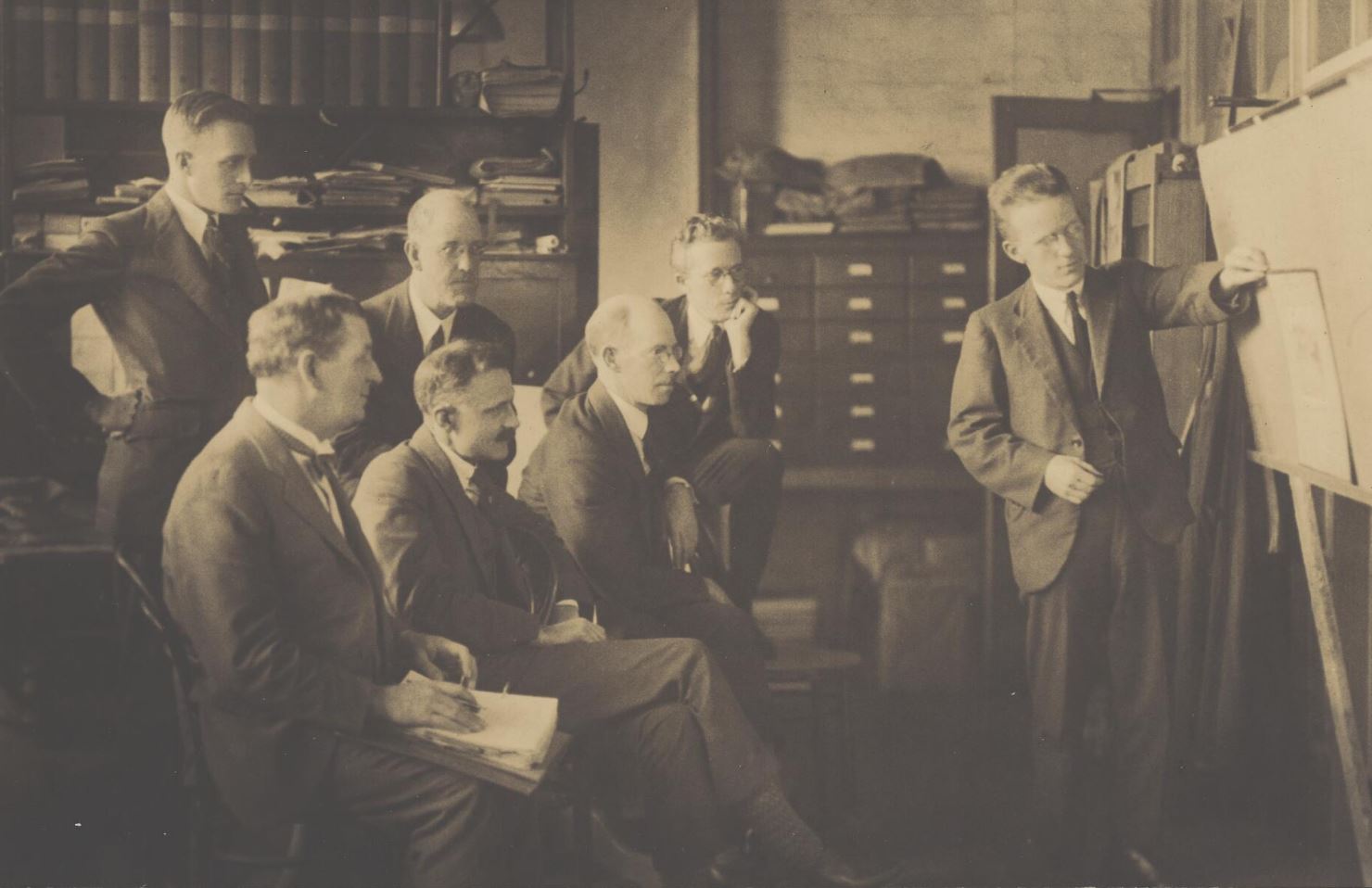
The Sydney Camera Circle circa 1924
Photographer - HAROLD CAZNEAUX
Monday 14th July 1924 Page 3 - The Newcastle Sun (NSW)
NEWCASTLE PHOTOGRAPHERS
ARTISTIC PRINTS
The wonderful progress of photography as a branch of the fine arts will be shown at the exhibition, promoted by the Newcastle Photographic Society, which will be opened in Messrs. W. Winn and Co. Ltd.'s new exhibition hall tomorrow afternoon.
The catalog has been compiled, and it shows that there are 231 pictures.
Of the total number of pictures 160 represent the work of members of the society and although the society is modest in its claims, and only exists for educational purposes, it is confidently hoped that many of the local prints will rank as really artistic. At the same time it has been felt desirable, as far as possible, to include work by most of the members as an indication of the progress made during the past 12 months.
SALON HONORS
Pictures forwarded by the president and members of the Photographic Society of New South Wales and the The Sydney Camera Circle, are of a high class. Mr. Monte Luke is sending 19 pictures, nearly all distinguished by salon honors in England and America. Mr. Arthur Smith is forwarding 15 pictures, seven of which are salons and some of which depict Newcastle subjects. Mr. Douglas R. Hill, president of the Photographic Society of New South Wales, is sending two pictures which have scored honors in the London and Australian salons and the British Empire Exhibition. Mr. Harold Bedggaad is sending five pictures, including salon pictures. Other Sydney artists of repute will be represented by Messrs. Tindale, Potter, H. Jones and E.F. Pollock.
POPULAR PRINTS
Mr. Pollock is a famous animal and bird photographer. His pictures are small, clever and dainty, and include miniature prints of the famous horses Beauford, Gleaming and The Hawk, as well as many beautiful studies of animals and birds.
With the exception of Mr. Luke's work, which is not for sale, most of the pictures from Sydney may be purchased on application to Messrs. W. Winn and Co. Ltd., or to officers of the Newcastle Photographic Society. There will be no duplicates for sale, as most of the pictures cannot be reproduced, being in bromoil. In the case of Mr. Pollock's popular work, however, duplicates may be ordered. The opening of the exhibition will be presided over by the Mayor (Alderman Kilgour). Other speakers will be Rev. Dr. Crotty (Dean of Newcastle). Rev. Joseph Lundie and Mr. H. Morris Cohen.
As an indication of the position which some Newcastle camera men occupy, reference may be made to Messrs. G. Daniel and A.E. Bainbridge, who carried off the gold medals for bromoil and bromide enlargements at the last show.
ALDERMAN ROBERT GEORGE KILGOUR
Alderman Robert George Kilgour was a member of the Newcastle City Council, with one brief break of a few months, for 28 years. In that time he was Mayor seven times; no other member has sat on the city's Mayoral chair for so many terms.
Born in Cooks Hill on 31st January 1867, his father was Mr. James Kilgour, one of the first school teachers of the district. Selected as the Mayor 1915, he was described as a "straight goer and an upright honorable citizen". He was elected with hopes to complete the construction of the Ocean Baths and Hunter Street this being a great feature for Newcastle, as the city was destined to become one of the most popular watering places in the state.
Alderman Kilgour along with his wife took a most active and honorable part in the local government life of the Newcastle District. His contributions were widespread due to his enthusiasm and devotion to his community in difficult periods. During Alderman Kilgour's occupancy of the chair, the Pneumonic influenza epidemic was spreading all around the world. Largely forgotten, the toll was 31 million globally.

ALDERMAN ROBERT GEORGE KILGOUR
Wednesday 5th November 1924 Page 3 - The Newcastle Sun (NSW)
NEWCASTLE SOCIETY'S MEETING
The Newcastle Photographic Society held its usual fortnightly meeting in Mr. G. Daniel's studio last night.
The schedule for the next Newcastle Show (24th to 28th February inclusive) is now in print and will be ready for issue early in December.
The photographic section includes a number of classes open to all amateurs, certain classes for pictorialists from the Photographic Society of New South Wales, the Newcastle Photographic Society and the The Sydney Camera Circle and a few prizes open to members of the Newcastle Photographic Society only.
The prize-money in these Newcastle classes has been given by Mr. J. Lance Lawson (President of the Newcastle Photographic Society and Messrs. R.D. Browne (Hon.Secretary) and E.J. Dann (Hon.Treasurer).

A DRESS FOR DOLLY
by Arthur Ford
1925
12th to 20th June - Twelve members exhibit in the Exhibition of Camera Work by members of the Photographic Society of New South Wales at Harringtons Gallery, Sydney.
17th August - At the meeting "a very interesting discussion took place as to whether it is desirable or permissible to sacrifice truth in a picture in order to gain or produce the desired result. Opinion was expressed that discussions of similar nature would be both educating and interesting at future meetings".
17th August - It was also decided at this meeting to compile an album containing portraits of The Sydney Camera Circle members, supplemented by snapshots of group outings.
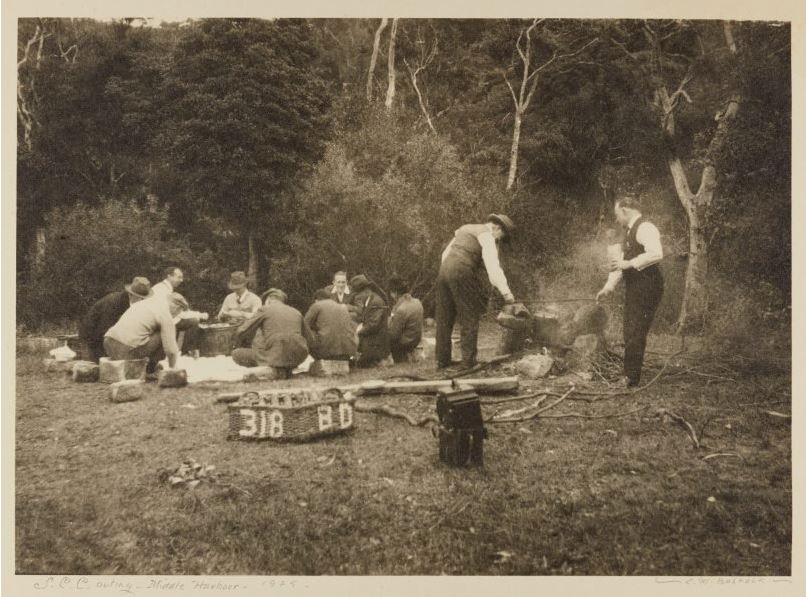
Sydney Camera Circle outing to Middle Harbour 1925
1926
8th March - Mr. Harold Cazneaux elected as President. Mr. Morris elected as Hon.Secretary and Hon.Treasurer.
8th to 19th June - The second and last Australian Salon of Photography is held at the Farmers Exhibition Hall, Sydney. Twelve members contributed 71 prints to the exhibition.
Cameragraphs is launched by Harrington's. Mr. Cecil Bostock designs and edits the publication and Mr. Harold Cazneaux and other members contributed articles.
1st June 1926Page 38 - Harringtons Photographic Journal
THE SYDNEY CAMERA CIRCLE
LOSES PROMISING MEMBER
The "Diogenes" which left port on the 30th April 1926, took away as passengers Mr. Peter Lawrence and his family. Mr. Lawrence actually was the youngest member of that little band of photographic pictorialists, the "Camera Circle" and although having only recently qualified for membership, his work will be missed at the monthly meetings.
Mr. Lawrence's favorite medium is bromoil and his outlook of Australian subject matter was always feelingly interpreted. His ability to represent Australian outback, considering that his stay in Australia was barely four years, is to be commended.
We understand that Mr. Lawrence is going home for a short visit and we hope that the absence of sunlight and the dull wintry conditions in Europe will help to make his stay a brief one and that his many friends who sadly said farewell will, ere long, have the pleasure of welcoming him back amongst them.
1927
28th March - Mr. Harold Cazneaux elected as President.
28th March - Mr. Morris elected as Hon.Secretary and Hon.Treasurer.
2nd May - At a meeting it is resolved to submit 12 prints by Members to "Mr. Tilney for criticism at his usual rates". The The Sydney Camera Circle eventually sends £5 to Mr. Tilney to be drawn on from time to time in payment for criticism of members prints mailed to him.
16th to 21st May - Members work is included in the Exhibition of Camera Work by members of the Photographic Society of New South Wales at Kodak Salon, Sydney.
1928
27th February - Mr. Harold Cazneaux elected as President.
27th February - Mr. Morris elected as Hon.Secretary and Hon.Treasurer.
1st to 14th March - Mr. Harold Cazneaux holds a solo exhibition at the Grosvenor Galleries, Sydney.
Monte Luke and Peter Lawrence are elected Associates of the Royal Photographic Society of Great Britain.
At the Fifth San Francisco International Exhibition the The Sydney Camera Circle is represented by two exhibitors.
Wednesday 27 June 1928Page 8 - Evening News (Sydney, NSW)
HONOR FOR AN AUSTRALIAN
Mr. MONTE LUKE is receiving congratulations all round on having been admitted as an Associate of the Royal Photographic Society, which represents to photographers what the Royal Academy is to painters: the hall mark of art. Apart from knowledge of his work by Authority in Australia. Mr. Luke has come directly under notice by having examples of his art hung in London salons, where they attracted special interest ranged alongside the finest accomplishments in photography. The new ARPS, is president of the Photographic Society of New South Wales, member of the The Sydney Camera Circle, and executive member of the Australian Salon of Photography. He is an Australian of the second generation, on which fact he is awarded an extra cheer.

MONTE LUKE
1929
28th January - Mr. Morris elected as Hon.Secretary and Hon.Treasurer.
16th to 23rd July - Members work is included in the Exhibition of Camera Work by members of the Photographic Society of New South Wales in the Education Department Gallery.
Anna Pavlova makes a much publicized tour of Australia. She is photographed by both Harold Cazneaux and Monte Luke.

ANNA PAVLOVA
by Harold Cazneaux, c.1926
1930
24th February - Harold Cazneaux elected as President.
24th February - Mr. Morris elected as Hon.Secretary and Hon.Treasurer.
20th to 25th January - Harold Cazneaux is judge at the Fourth Annual Kodak International Salon of Photography held at the Auditorium, David Jones, Sydney.
15th to 26th July - Members work is included in the Victorian Salon of Photography Exhibition of Camera Pictures, Fine Art Society Gallery, Melbourne.
The Committee gave permission "to destroy any vouchers or papers not likely to be useful prior to 1929".
Arthur Ford is awarded a commemorative plaque at the 21st annual exhibition of the London Salon of Photography.
Photographs by Harold Cazneaux were included in "The Bridge Book" published by Sydney Ure Smith.
1931
The The Sydney Camera Circle writes to F.C. Tilney asking him to put together a selection 'of prints from prominent workers', for which they will pay. In 1932 F.C. Tilney offers 'his whole collection of photographic prints to the The Sydney Camera Circle to mark his departure from the realms of photography and to show his appreciation of the good fellowship existing between the The Sydney Camera Circle and himself.'
Monte Luke publishes "Under Sunny Skies" which is a magnificent pictorial, scenes depicting the beauty of city and country in NSW. The Corinthian Press in Sydney.
August - Monte Luke contributes an article on "Australian Photographic Art" to the American periodical Camera Craft.
1st to 12th September - Work by members is included in the Exhibition of International Camera Pictures, Athenaeum Gallery, Melbourne.
9th November - An Exhibition of Camera Pictures by Monte Luke opens at his Studio in Sydney.
MONTE LUKE
1932
January - Several members exhibit at the Camera Pictorialists of Los Angeles 15th International Salon.
At the L'Art Photographique Anglais exhibition in Paris, arranged by Mr. F.J. Mortimer, 43 panels by well-known Empire pictoralists are shown. The The Sydney Camera Circle contributes two.
19th September to 1st October - Members work is included in the Photographic Society of New South Wales Interstate Exhibition of Pictorial Photography, David Jones Gallery, Sydney.
The The Sydney Camera Circle included a Memorial panel of work from their late Founding Member Mr. William Stewart White who had committed suicide in January 1932.
WILLIAM STEWART WHITE
c.1890 - 7th January 1932
AN APPRECIATION by HAROLD CAZNEAUX
The passing of William Stewart White, who was a member of the The Sydney Camera Circle and also a member of the Photographic Society of New South Wales, has left a space in the ranks of the pictorialists of Australia and all who knew him and what his work stood for will mourn him deeply.
W.S. White, a modest worker yet a deep thinker, his knowledge of "art" and "books" was wide and broad. He always stood for the ideal, for simplicity in pictorial photography, avoiding publicity and stunts. He was quick to read merit in the work of others, the last to draw attention to his own. What work he has done has been done well and will stand the test of time.
A quiet bend of the river, the secluded corner of the woods, a mountain top, the bush in sunshine, mist or grey day, a Sydney by-way, the beauty of an old garden, all gave him endless themes for pictorial expression. A straight-out worker in Bromide, his prints were always a tribute to his cleverness in handling and technique. A casual observer might pass his pictures, but to those who could see they stood out in quiet beauty ever full of the joys of nature. Whatever message he intended in his picture could be read and felt.
Such titles as "Barred Light" and "Melody of Morn" will serve to describe his simplicity of purpose.
A strange contrast in the placid mood of W.S. White was the display now and again of a dramatic touch, but when used it was always subtly planned to stir the imagination. There is little need to relate his successes at practically every exhibition of importance over a great number of years in Australia and even overseas or to dwell further on the spirit of his work and his actions, together they will make the name of W.S. White stand for all time in the records of pictorial photography in Australia. Now that he has passed and left us mourning his spirit will live and his sincerity never be forgotten.
1933
21st April to 6th May - Members work is included in the Victorian Salon of Photography Exhibition of International Camera Pictures, Athenaeum Gallery, Melbourne.
July - Members work is included in the Queensland Camera Club 8th International Exhibition.
Mr. Harold Cazneaux represents the The Sydney Camera Circle with six photographs in the IV Salon Internationale Di Fotografia Artistica Dilettanti in Turin, Italy.
Mr. Harold Cazneaux photograph "The Anaesthetist" was a prize winning exhibit at the World Photographic Exhibition in Montreal, Canada.
1934
Members work is included in the 5th Victorian International Salon of Photography for the Centenary of Melbourne. Mr. Harold Cazneaux is awarded a silver medal at the exhibition.
30th October - 10th November - Members work is included in the Victorian Salon of Photography Exhibition of International Camera Pictures, Athenaeum Gallery, Melbourne.
12th to 24th November - Members work is included in the Exhibition of selected pictures to be exhibited in the International Exhibition of Professional Photography, Melbourne Centenary 1934, Athenaeum Gallery, Melbourne. Circle members who exhibited were: Arthur Ford, E.B. Hawkes, Harold N. Jones, Peter Lawrence, Monte Luke, Henri Mallard, W.H. Moffitt, R.V. Simpson, S.W. Eutrope, and Harold Cazneaux the latter gaining a silver medal award and subsequently attending the show; at the same time he judged the International Centenary Exhibition of Professional Photography.
Mr. Harold Cazneaux has 100 photographs published in the Frensham Book by Sydney Ure Smith.
1935
August - Mr. Harold Cazneaux contributes an article on Artistic Photography in Australia to the periodical Art in Australia. Sixteen full page reproductions of members work accompanies the article.
September - Monte Luke holds a solo exhibition of 47 photographs at his Studio in Sydney.
18th November - An exhibition of 60 photographs by Mr. Harold Cazneaux opens at the Kodak Gallery, Melbourne and is afterwards shown in the Kodak Gallery in Adelaide.
December - Richard Simpson is nominated for membership of the The Sydney Camera Circle. His acceptance causes Cecil Bostock and George Morris to resign. George Morris withdrew his resignation in early 1936.

THE ARGYLE CUT, SYDNEY
by ARTHUR FORD
Tuesday 20 August 1935 Page 8 - Sydney Morning Herald (NSW)
ART in AUSTRALIA
FEATURES OF NEW ISSUE
The new Issue of Art in Australia contains reproductions in color of three interesting paintings. One is Mr. Will Ashton's picture of the Kanimbla Valley in the Blue Mountains, which has been done for Messrs. McIlwraith, McEacharn, Ltd's., Kanimbla, now being built in Belfast and will form part of the decoration scheme of the vessel. The others are Mr. J.R. Eldershaw's "Spanish Landscape", a watercolor; and Streeton's "Cutting the Tunnel". These are excellent prints of works of those artists. A fourth piece of color work is "British Pottery", designed by Dame Laura Knight, which will be shown in an exhibition of pottery by British artists, to be held in Sydney next month. A section of the publication is devoted to a number of full-page photographs of works by Mr. Rayner Hoff and there are some interesting pictures of sculptures in sandstone. Melbourne's new Rembrandt, "The Philosophers", is presented with pictures of the original studies and an article by Mr. Lionel Lindsay, in which he goes extensively into the history of the picture. Among the other photographs is one of Epstein's "Behold the Man". There are also plates of French paintings to be shown at the Society of Artists' annual exhibition in Sydney in September, the artists including Matisse, Andre Derain, Pisarro, Dufresne and Utrillo. A number of studies from the The Sydney Camera Circle show beautiful work by Messrs. Cazneaux, Arthur Ford, H.N. Jones, J. Metcalf and others. The letterpress includes articles on "Knowledge or Feeling in Art", by Gladys Osborne; "At Home and Abroad", by William Moore; and one by Alleyne Zander, who writes on Negro art, Vlaminck, and Epstein. There is also one on a 16th century Italian painting, "The Holy Family and St. John", a work in the possession of a Sydney collector, of which a reproduction is given in color.
Friday 30 August 1935 Page 14 - Newcastle Morning Herald & Miners' Advocate (NSW)
ART in AUSTRALIA
A noteworthy feature of the current issue of Art in Australia, published by the Sydney Morning Herald, is a reproduction of Will Ashton's painting of the Kanimbla Valley, executed under commission from the firm of McIlwraith, McEacharn Ltd., in commemoration of the construction of a new steamer to the order of the company for the Australian coastal passenger service and to be named the Kanimbla. The painting is being sent home to the builders, to be included in the interior decorations of the new vessel. The work was painted from Hampton, situated half way between Mount Victoria and the Jenolan Caves and gives an extensive view of the valley looking towards the distant range of the Blue Mountains. Other interesting features of Art in Australia are reproductions of sculpture work by Rayner Hoff and a number of black and white studies, including some from the The Sydney Camera Circle.
1936
17th April to 2nd May - Members work is included in the Victorian Salon of Photography Exhibition of International Camera Pictures, Athenaeum Gallery, Melbourne.
May - Harold Cazneaux and Monte Luke contribute work to the Camera Club of New York 3rd International Invitation Salon.
Arthur Ford is awarded a medal at the 5th South African Salon of Photography in Johannesburg.

THE RAZZLE DAZZLE
by Harold Cazneaux
Saturday 16 May 1936 Page 16 - Sydney Morning Herald (NSW)
ART IN AUSTRALIA
THE MAY ISSUE
A number of matters which have assumed importance in the art world recently are dealt with in the latest number of Art In Australia. Mr. Sydney Ure Smith writes concerning the position of adviser to the Felton Bequest, This bequest, as is generally known, is gradually building up for the National Gallery in Melbourne a splendid collection of pictures, among which figure such artists as Rembrandt, Turner and Van Dyck. The bequest needs an adviser in Europe and applications are now being received for this important post.
Kenneth Wilkinson gives an account of Mr. A.J.L. McDonnell's collection of pictures, which Mr. McDonnell has placed on loan at the University Union building during his absence in Queensland. This attractive series comprises work by recent English painters of note, and by Australians of the more progressive and experimental type. Two articles of general interest are "The Function of Art in Human Society", in which Eleonore Lange makes an excursion into philosophy, and "Rembrandt versus Kalsomine", in which Lionel Lindsay writes with his usual vivacity concerning interior decoration. William Moore contributes his usual miscellaneous notes, "At Home and Abroad" W.T. Owen deals with the Melbourne Camera Circle, and there are brief references to the New South Wales National Gallery, and to the painting of Harley C. Griffiths. On the 14 pages of the architectural section, edited by J. L. Stephen Mansfield, are illustrated various domestic and commercial edifices in Sydney and Melbourne.
Camera Club of New York (U.S.A.) Third International Invitation Salon
Held in May 1936—a salon of invitation type in which the Club extended invitations to a limited number of recognized pictorial workers “to present each one a single for exhibition”. Australian workers invited were Dr. Julian Smith, Monte Luke, Harold Cazneaux, and John B. Eaton; also Gerald E. Jones (New Zealand). Thirty-four countries were represented by 212 prints.
1937
10th February - New Rules are adopted at a meeting.
18th to 30th October - Members work is included in the Victorian Salon of Photography Exhibition of International Camera Pictures, Athenaeum Gallery, Melbourne.
Mr. Harold Cazneaux is made an Honorary Fellow of the Royal Photographic Society of Great Britain.
December - The The Sydney Camera Circle sends work by Cazneaux, Moffitt, Morris, Simpson, Luke, Mallard and Lawrence to the Adelaide Centennial exhibition.
Saturday 25 September 1937Page 6 - News (Adelaide, SA)
SEEN THROUGH THE LENS
The Photographic Society of New South Wales, in association with the The Sydney Camera Circle and the Professional Photographers Association of New South Wales, is organizing the Australian Commemorative Salon of Photography; to be held in Sydney from March 23rd to April 10th, 1938. This Salon is part of the official program of events to be held in connection with the 150th anniversary celebrations.
There will be six sections, as follows:
(1) Pictorial prints; any process except hand colorings.
(2) Historical prints, Australian historical buildings, events and sites.
(3) Scientific and technical photography.
(4) Professional portraiture, open only to those earning their livelihood by photography.
(5) Commercial, advertising and press photography, open only to those earning their livelihood by photography.
(6) Color transparencies.
AWARDS
In each of the six sections three silver medals will be placed at the disposal of the judge, together with one silver medal in each class for Australian entrants only (class 2 excepted). The entry fee is 5/, which covers a maximum of four prints, with the exception of sections 2 and 6, in which eight entries may be submitted.
The last day for receiving entries is February 25th. Entry forms are obtainable in Adelaide from the secretary of the Adelaide Camera Club, or from Kodak Pty. Ltd., or Harringons Ltd. There is certain to be a large number of prints submitted for this salon, and the early issue of entry forms and conditions is therefore very welcome, as serious workers will have ample time and opportunity of preparing some really good photographs to represent South Australia.
It would be appreciated if all those who intend to enter prints will advise the club's secretary, as it may be possible to arrange for all entries to be sent to Sydney in one consignment.
Friday 11th February 1938 Page 3 - The Mercury (Hobart, Tas)
PHOTOGRAPHY SALON
ESTABLISHMENT IN SYDNEY FOR ANNIVERSARY CELEBRATIONS
An Australian Commemorative Salon of Photography has been established as part of the celebrations associated with the 150th anniversary of Australia. The salon is the result of collaboration by the Photographic Society of New South Wales affiliated with the Royal Photographic Society of Britain, the The Sydney Camera Circle, and the Professional Photographers Association of New South Wales. The salon solicits entries from all States for its exhibition to be held in the Commonwealth Bank Buildings, Sydney, from March 23rd to April 10th.
There are six sections, one each for pictorial prints, historical prints, scientific and technical photography, professional portraiture, commercial, advertising and Press photography and color transparencies. In each section three silver medals will be awarded and one silver medal in each class of Australian entrants only with section two excepted.
The entry fee is 5s, for which each entrant may submit not more than four prints in every class, except classes two and six, in which eight entries may be submitted. Particulars may be obtained from and entries must be sent to the Australian Commemorative Salon of Photography, c/o Mr. H.V Leckie, Box 829G, G.P.O., Sydney, before February 25th.
1938
23rd March to 9th April - Members work is included in The Australian Commemorative Salon of Photography included in the Official program of Australia's 150th Anniversary Celebrations, Commonwealth Bank Chambers, Sydney. William Moffitt is awarded the silver medal and Charles Walton the bronze for pictorial photography.
22nd September to 13th October - Keast Burke held a One-Man-Show of Photographs in the Kodak Salon, Sydney.
November - The Contemporary Camera Groupe is formed in Sydney by Douglas Annand, Harold Cazneaux, Max Dupain, Damien Parer, Cecil Bostock, Olive Cotton, Laurence Le Guay, Russell Roberts. William Buckle, A. Dodd, George Morris and Louis Witts.
Saturday 26th March 1938 Page 7 - The Sydney Morning Herald (NSW)
ART OF THE CAMERA
ITS AMAZING GROWTH
by HAROLD CAZNEAUX
The photographic art in Australia is comparatively young, but it has made remarkable progress, and is destined to achieve much greater distinction. Until a few years ago Australia was practically unknown in the photographic world, but today, at the time of our 150th Anniversary, the work of Australians is recognized in all the noted salons overseas.
The Photographic Society of New South Wales, in association with the The Sydney Camera Circle and the Professional Photographers Association of New South Wales, has organized the Commemorative Salon of Photography, which is now open in the gallery of the Commonwealth Bank building. This important salon, which is officially recognized by the Anniversary Celebrations Council, includes examples of photographic art by amateur and professional workers from all over the world and illustrates the tremendous advance which photography has made. The beauty of the pictures and the wide range of subject matter render the exhibition of unique interest to the public.
THE VELVET COAT
Photography had not been invented when Governor Phillip landed at Sydney Cove. It is a little over 100 years ago since Daguerre and Fox Talbot worked out the difficult experiments which led to the discovery of photography.
The real development of photography occurred only in our parents day and there are many old but well-preserved "Daguerreotypes" and even old silver prints still in existence which belonged to them. There came a change-over from the "wet plate" to the "dry plate " and the old and cumbersome process slowly gave way to the new and lighter method. Studios were opened in greater numbers in the cities and spread to country towns. The photographer, garbed in his velvet coat and perhaps a velvet cap was a personage in those days. He worked "by appointment only" and his studio bore the appearance of "back stage" of the old-time theatre, for he had to supply the accessories for his sitters — backgrounds that would provide interiors of mansions, churches, seaside scenes, and landscapes. His stock-in-trade included fake terraces, staircases, ship's masts, boats, elaborate furniture and huge clam shells for the baby. Some possessed stuffed birds and animals and children were often specially dressed up to fit in with the photographer's ponderous accessories.
All this passed away. The accessories and velvet coats were sold as junk, heavy cameras and huge old-fashioned lenses were bundled out of the way and a newer era was ushered in. Young Australians got hold of newer cameras, lighter and more efficient lenses and simpler studio equipment. Electric light appeared, and daylight was considered out of date. The photographer today works in a modern studio, he takes your portrait while you are chatting to him, he touches buttons and switches, and lights appear from all angles of his studio, and he uses thin sensitive films instead of heavy glass plates.
Australia is up to date in photographic matters, although it must still rely upon world centers for high-grade cameras and equipment. For many years, however, quality sensitive film, plates printing papers and much other photographic material have been manufactured in Victoria and New South Wales, and eventually we may hope to produce cameras, lenses and other delicate equipment.
AUSTRALIANS FINE WORK
Australia has photographers whose work compares very favorably with that done overseas. It is being accepted and hung in the noted salons of the world, such as the annual show of the Royal Photographic Society of Great Britain and the London Salon of Photography, and many foreign salons exhibit Australian pictorial photographs, which become a splendid advertisement for this country.
The amateur photographer has been responsible for a great deal of the progress of artistic photography in Australia. His independent and individual outlook has enabled him to produce pictures without thought of sales, and much of the artistic quality apparent in today's photography has developed from the amateur's sound and natural outlook. We have throughout Australia many amateur photographic clubs and societies who work purely for the love of advancing artistic photography. The Photographic Society of New South Wales, which is affiliated with the Royal Photographic Society, was founded over 40 years ago, and it continues its good work.
Photography is one of the worlds great hobbies and our workers have shared in the international interchange of the best examples of pictorial art.
Commercial and advertising photography, like press photography has undergone a transformation, and the old-time inartistic type of cameraman has no value to-day. The new work is exacting and only men and women of the highest artistic ability and photographic technique can hope to succeed. Photography for the million is a great teacher it compels attention to detail, develops the powers of observation, imagination and patience, and brings out latent artistic talent. Above all, it encourages a love of our great Australian outdoors. Whatever is spent on photography as a hobby is returned to the discriminating user tenfold.
A remarkable fact about photography is that while it is capable of being employed by scientists for record and other work, the artist, using the same materials, can produce a picture which will portray a subject arranged with pleasing composition and rendered in beautiful tonal quality — a picture which can be justly looked upon as a work of art. Critics who say that photography is only a mechanical means of producing a picture know little of artistic photographic technique. A first-class photographer who possesses depth of feeling, an eye for artistic selection and a creative mind can give lasting joy to the beholder of his work and elevate photography to the realm of true art.
1939
18th to 28th April - An Exhibition of Photographs by Members of the The Sydney Camera Circle is held at the David Jones Gallery, Sydney.
7th to 19th August - Members work is included in the Victorian Salon of Photography Exhibition of International Camera Pictures, Athenaeum Gallery, Melbourne.
1940
The activities of the The Sydney Camera Circle are suspended during the Second World War.
The Miniature Camera Groupe is established by 32 amateur and professional photographers and holds its first exhibition in Sydney in April.
23rd September to 5th October - Members work is included in the Photographic Society of New South Wales 1940 Exhibition of Photography, Farmer's Blaxland Galleries, Sydney.

The Sydney Camera Circle circa 1900 and 1940
James E. Paton, William H. Moffitt, Douglas R. Hill, William S. White, Edgar Poole, George Morris,
H. Bedgood, Henri Mallard, Stanley Eutrope, John W. Metcalfe, Cecil Bostock
Saturday 10th August 1940 Page 4 - The Newcastle Sun (NSW)
NEWCASTLE PHOTOGRAPHIC SOCIETY
The next meeting of the Newcastle Photographic Society is on Monday 12th August, at 8pm, when there will be a talk and demonstration by Mr. J. Houghton on "Paper Negatives" and an exhibition of 20 bromoils by Mr. W.H. Moffit, of the The Sydney Camera Circle. Further details may be had from Mr. Geoff. Garside, of Kodak (Australasia) Pty. Ltd., Wolfe-street, Newcastle.
1945
Tuesday 25th September 1945 Page 5 - The Daily News (Perth, WA)
PHOTO EXHIBITION
Exhibition of camera pictures opened in Kodak Salon, Perth, yesterday presented work of many well-known Australian photographers.
Perhaps one of the most startling pictures was "Pals", picturing an armored skeleton beside a man in modern respirator.
The late Damien Parer's strong personality smiles from a camera picture by Max Dupain. Youth and age are shown in attractive pictures, while landscapes, towns, river scenes go to make a versatile and extremely attractive gallery.
Exhibition is the work of members of the The Sydney Camera Circle, Photographic Society of New South Wales and the Miniature Camera Group, it was officially opened by Chief Public Librarian Dr J.S. Battye and is open, to the public.
Tuesday 25th September 1945 Page 8 - The West Australian (Perth, WA)
Wednesday 26th September 1945 Page 3 - The West Australian (Perth, WA)
PHOTOGRAPHIC DISPLAY
N.S.W. CAMERA STUDIES
An exhibition of camera pictures by members of the Photographic Society of New South Wales, The Sydney Camera Circle and the Miniature Camera Group was opened by the Chief Librarian of the State Public Library (Dr J.S. Battye) in the Kodak salon yesterday.
Although lighting facilities were hampered to a certain degree, the exhibition was well attended by Perth photographers and others connected with the photographic profession.
In introducing Dr Dattye, the manager of Kodak Pty, Ltd (Mr. A. Wonson) said that credit was due to Mr. Monte Luke FRPS, portrait photographer of Sydney, who was responsible for the organization of the exhibition.
Dr Battye, in declaring the exhibition open, traced the development of photography from the Daguerreotype of 1839 to the present and commented that if this exhibition was an indication of the of the development of photography over 100 years then he wondered what progress could be made in the future.
WILLIAM HEATH MOFFITT
6th April 1948
This year has witnessed yet another gap in the ranks of Australia's internationally, recognized pictorial photographers.
I had known Mr. Moffitt and his work for many years, but it was really only when he was elected as a member of the The Sydney Camera Circle that his fine pictures became generally known to most amateurs. He. was always of a quiet and retiring nature, one who never sought the limelight, yet as an artist with the camera and pigment he established himself as one of Australia's most individual and brilliant exponents of pictorial photography.
More recently, especially with the arrival of the so called Modern Trend in Photography, there has been considerable criticism of the Bromoil process. I, for one, was particularly pleased when Mr. Moffitt accepted your editorial invitation to answer that criticism.
This he did in a convincing and impressive manner when his article duly appeared in the magazine; the answer was sound and logical, which was only to be expected, for as a critic and speaker on pictorial photography, William Heath Moffitt was always worth listening to. His instinct in assessing the pictorial content of a print was always clear cut and dependable and what is more important, ever of value to those who showed him their work.
His chosen subject matter was always the Australian Landscape; on his trips to the country he would wander hand in hand with nature and her varying moods. Just how successful he was in his many interpretations may be judged from the splendor of the portfolio which accompanied his article; I feel that every reader must treasure this magnificent offering, the more so by reason of the fact that it represents, I believe, the most complete and representative group of his work yet to be published.
HAROLD CAZNEAUX
May 1948 Page 283 - Australasian Photo-Review
May 1949 Australasian Photo-Review - Page 325
The Sydney Camera Circle
A feature article in the Sydney press during March related to the activities of the National Co-operating Body for Visual Arts, which had been organized by the Commonwealth of Australia Office of Education in pursuance of an agreement with UNESCO. As one of the aims of this body appeared to be the lessening of customs restrictions on the interchange of artistic matter we felt inclined to pursue the matter further. An enquiry to the Office of Education brought a ready and comprehensive reply explaining in detail the membership and the activities of the aforesaid National Co-operating Body for Visual Arts.
Imagine our surprise when we found that UNESCO did not consider pictorial photography to be one of the visual arts!
No time has been lost in the direction of putting the claims of pictorial photography before UNESCO through all readily available channels, witness the following:
H. Cazneaux Hon. FRPS, writes:
Thanks for your letter and copy. I will write the Royal Photographic Society Council and place your suggestion to me before them and to ask them to bring the matter (of overlooking pictorial photography) before the UNESCO Headquarters.
It is unfortunate that a gap has existed in the shape of the non-recognition by National Galleries and other art bodies of pictorial photography—the gap has existed practically ever since photography was discovered. This same gap seems to have appeared in this UNESCO matter, e.g., the present non-inclusion of pictorial photography in the program of the Visual Arts National Co-operating Body.
It may prove a good plan to write Hal Missingham on this matter, as he has been invited to join that body. Mr. Missingham seems to have some leaning towards the art of photography — in this respect you may recall his “Foreword” to the pictures in the 1947 Annual of Australian Photography.
Many years ago the The Sydney Camera Circle approached the trustees of this Gallery on the question of the recognition of pictorial photography, and we were invited to attend a meeting of trustees at the Art Gallery and to bring a collection of our pictures. They were certainly impressed by the pictorial photographs and some of our arguments for recognition. But in the end they played safe, using these words; “When the National Art Gallery in London admits the Art of Photography, we here will do the same”.
This UNESCO body should certainly cast aside all doubts and definitely include pictorial photography as one of the Visual and Cultural Arts on their fine program.
August 1949 Australasian Photo-Review - Page 526
The Sydney Camera Circle
Regarding that UNESCO matter (page 323, May issue), we have now received a reply from L. Whitney Standish, Chairman Photographic Society of America International Relations Committee. An extract follows: "One way or another we have been corresponding with UNESCO for the past year and one-half. We have, however, not been able to sufficiently untangle the maze of red tape within UNESCO to produce any appreciable results. Accordingly, we decided several months ago that we would go along on our own in our various activities.
The first stumbling block with UNESCO appeared to be their ruling that they would only deal with international federations and would not deal with national societies such as the Photographic Society of America, irrespective of the fact that we have a very substantial international membership. As you probably know, there is in existence an Federation Internationale De L'art Photographique headed by Dr. Van de Wyer, of Belgium. The Photographic Society of America is not a member of this organization, but we have been in close touch with Dr. Van de Wyer. Whether or not he has made any overtures to UNESCO I do not know, but if I hear anything from him on this point I will keep you informed”.
October 1949 Page 656 - Australasian Photographic Journal
HENRI MALLARD writes
The 4th September, saw the passing of DOUGLAS RALEIGH HILL, member of the The Sydney Camera Circle and of the Photographic Society of New South Wales. D.R.H. was for many years an enthusiastic pictorialist. He specialized in small sized work and seldom made a print larger than whole plate, his chosen medium being the enlarged paper negative process. His favorite subjects were figure studies. Very frequently these were nude studies of the male subject and some of his torso prints of youths in athletic poses will be long remembered by many of his associates who derived much pleasure from viewing them. He possessed a keen sense of humor mingled with a dry wit, which faculties were always appreciated by photographic audiences.
EDITOR D.R. Hill was a regular contributor to the "Australasian Photographic Journal" in the early 1920's. Examples of his figure photography will be seen on page 249 of the volume for the year 1924 and on page 350 of the year 1926. Reproduced below.
May 1924 Page 249 - Australasian Photo-Review
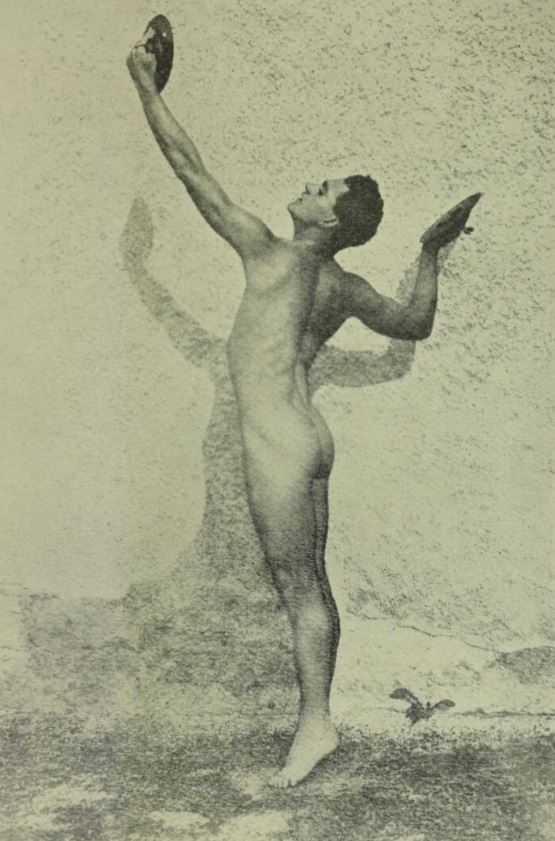
YOUTH
From the Exhibition of the Australian Salon of Photography
Douglas R. Hill, Sydney, N.S.W.
July 1926 Page 350 - Australasian Photo-Review
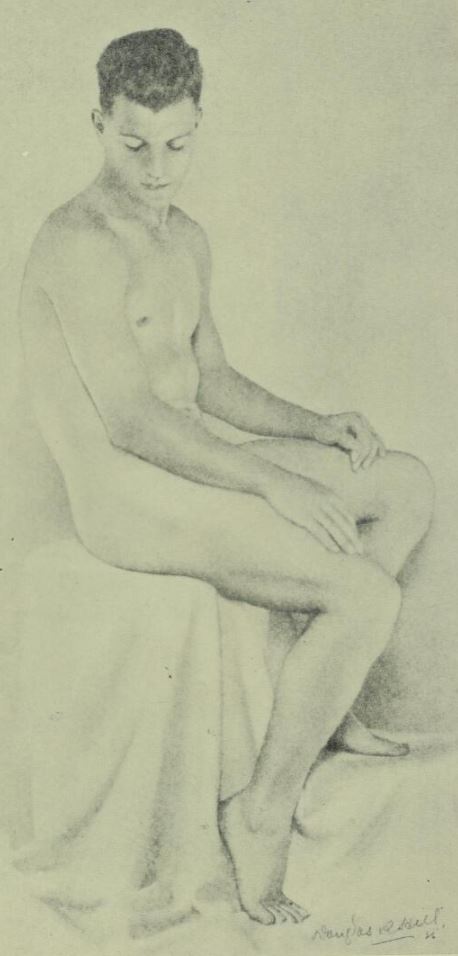
THE MODEL
From the Australian Salon of Photography
Douglas R. Hill, Sydney, N.S.W.
October 1949 Page 656 - Australasian Photo-Review
HAROLD CAZNEAUX Hon.FRPS writes
Another well known pictorial worker has passed away; this is Adam Forrest Grant, who was a prominent figure in the early days of pictorial photography - those pleasant years before the advent of World War No. 1, in which he served with an engineer unit. He was connected with the Photographic Society of New South Wales for over thirty-five years and later with the the The Sydney Camera Circle. His work was to be seen in many exhibitions and salons over a long period of years; it was mostly in landscape, though later he also became an expert in technical photography. He died on 27th August 1949. So passes another worker who will be remembered as a fine photographer and a sincere friend - one who often lent a helping hand to many along the highways and byways of life.
1950
Laurence Le Guay edits A Portfolio of Australian Photography and includes some examples of work from the The Sydney Camera Circle.
April 1950 Page 257 - Australasian Photo-Review
The Sydney Camera Circle
JAMES E. PATON
MARCH 10th, 1950
It is with sincere regret that we record the death of Mr. James E. Paton, whose passing marks the loss of yet another link with the great 'twenties. He was one of those who, with enthusiasm and painstaking care, might be said to have watched over the cradle of photographic pictorialism in Australia. An active member of the Photographic Society of New South Wales and a foundation member of the The Sydney Camera Circle, he soon became a driving force in both organizations.
As a comparatively young and very keen snapshotter, he arranged for a preliminary course of instruction from Harold Cazneaux, after which he very quickly acquired the fullest technical and pictorial ability. His high standard was evidenced by the acceptance of his prints at both the London Salon of Photography and the Royal Photographic Society for many years. His photographic work possessed an individuality and freshness of outlook all its own, and to his credit are many out standing prints that will be long remembered. He particularly favored landscape work. He became a master of the bromoil process at a time when that process was little known in Australia.
Through pressure of business interests, he had given up active work with the camera, but nevertheless he always kept in close contact with his fellow workers. To his wife and family, his friends both here and abroad offer their sincere sympathy.
HENRI MALLARD
April 1950 Page 263 - Australasian Photo-Review
The The Sydney Camera Circle has been invited to provide a House Exhibition of Members Work in the rooms of the Royal Photographic Society of Great Britain during July, 1950.
1952
THE SYDNEY CAMERA CIRCLE
AUSTRALIA’S TRIBUTE TO HAROLD CAZNEAUX Hon. FRPS
On 27th October 1952, at the Assembly Hall, Sydney, the The Sydney Camera Circle in association with the Photographic Societies of Australia, is sponsoring an evening of public tribute to this great man of pictorialism in Australia. Circular letters have been issued by joint Hon.Secretary's, Monte Luke FRPS, and H.N. Jones ARPS, to Australia’s one hundred odd societies and early replies have indicated that the occasion is certain to be afforded universal support. Jack Cato FRPS, has agreed to take the Chair and compere the occasion, and there will be a screening of some fifty lantern slides characteristic of Caz’s best known pictorial works. Readers are urged not to miss attendance on this evening which promises to be the most important pictorial photographic occasion the century. The evening will conclude with a color screening.
1953
July 1953 Page 446 - Australasian Photo-Review
The Sydney Camera Circle
HAROLD PIERCE CAZNEAUX
(1878-1953)
It is with sincere regret that we record the passing, late on the morning of June 19th, of Australia’s veteran pictorialist and grand old man of photography.
At the funeral there was a full representation of members of the The Sydney Camera Circle, with which group our good friend had been associated from its inception, while the profession was represented by Val Waller, Monte Luke and Laurence Le Guay.
In the memorable words of Jack Cato on the occasion of The Nation's Tribute of October last . . . “He became, for this country, photography’s chief spokesman — its leading lecturer, teacher, adviser, demonstrator and judge. He was forever writing articles, reviews and commentaries and reporting abroad on the work and the standards of the year. In all this he never hoarded a secret nor sought an advantage . . . 'Caz' has had a full and a wonderful life; he’s a kindly modest soul who never made an enemy or lost a friend. He has known struggle and tragedy and loss and he has also known great achievement, though modestly disinclined to admit the latter. When one begins to talk of 'Caz' one always finds oneself returning to the man himself, to the gentle, modest, kindly man who ever gave so much of himself to others”.

Photograph by Monte Luke FRPS
Tuesday 17th November 1953Page 4 - The Canberra Times (ACT)
PHOTOGRAPHIC SOCIETY SEES RARE PRINTS
An interesting visitor to the Canberra Photographic Society for the November meeting was Mr. J.W. Metcalfe, from Sydney. Mr. Metcalfe brought with him a collection of prints by once famous European photographers, donated to the The Sydney Camera Circle by noted art critic Tilney. Some of the prints were made before the turn of the century by techniques rarely used in present day photography. In addition to the Tilney collection, Mr. Metcalfe brought full color prints processed in Germany from film taken on the recent Everest expedition. Most of these were taken at the 22,000 feet camp and included studies of Sir Edmund Hillary and Tensing. Mr. Metcalfe also judged the competition for the month. Leading points were allotted to C.S. Christian, C.L. Leslie and K. Bogg.
April 1954 Page 248 - The Australasian Photo-Review
THE SYDNEY CAMERA CIRCLE
At the invitation of Miss A. Stening, A.J. (Mons) Perier has been working on the cataloging of the photographic equipment and negatives of the late James Stening. Of special interest were the thirteen (and perhaps more) medals which J.S. Stening gained for his photography in England, India, Australia and New Zealand over the years 1899-1910. It is planned to donate this fine collection of awards to The Mitchell Library, Sydney.
August 1954 Page 514 - Australasian Photo-Review
PHOTOGRAPHIC SOCIETY of NEW SOUTH WALES
FRANK D. COLLINS
1883-1954
It is with regret that record the death on 12th July of Frank D. Collins at the age of 71. Born in England, he came to Australia as a young man and was for some years a member of the Photographic Society of New South Wales. At the time of his death he was an an active member of the The Sydney Camera Circle, with which body he had been associated for many years. Of an artistic nature, Mr. Collins was very interested in the pigment processes (especially bromoil transfer) as an aid to pictorial effect. He also experimented extensively in three-color bromoil transfer prints. He will be greatly missed in Sydney photographic circles.
1955
The 1st John William Metcalfe Medallion is awarded to Henri Mallard.
1956
December - The last issue of the Australasian Photo-Review is published.
1958
The 3rd John William Metcalfe Medallion is awarded to Henri Mallard.
1962
12 May - The Australian Photographic Society holds its inaugural meeting in Sydney.
June - The The Sydney Camera Circle begins meeting at the Lyceum Club, Sydney.
1963
The Executives of the Photographic Society of New South Wales the Camera Club of Sydney and the The Sydney Camera Circle are chosen as a Committee to manage the John William Metcalfe Memorial Fund.
August - Robert Masmyth is appointed Custodian of the The Sydney Camera Circle records and property.
1965
September - "Old and unimportant" correspondence of the The Sydney Camera Circle is destroyed.
The John William Metcalfe Medallion is awarded to Keast Burke.
1967
The The Sydney Camera Circle, in association with the Photographic Society of New South Wales, presents a tribute evening exhibition to Henri Mallard.
1968
January - Richard Simpson bequeaths two of his bromoil prints to the The Sydney Camera Circle for their permanent collection.
Norman Deck and Harold Jones are made Honorary Life Members of the Australian Photographic Society.
1969
July - At a meeting of the The Sydney Camera Circle the members discuss at length "the possibility of having Pictorial photography recognized and accepted by the Art Gallery of NSW".
1970
February - A Retrospective Exhibition of the Work of Bill Gale is held at Clarence Street, Sydney.
May - The The Sydney Camera Circle ceases to hold their meetings at the Lyceum Club and begin to hold them in the rooms at the Catholic Women's League Marian House, Castlereagh Street, Sydney.
1972
Prints are submitted for the first time by members of the The Sydney Camera Circle for approval or otherwise in connection with a Merit Print. It is envisaged that an award will be bestowed by the The Sydney Camera Circle on photographs which receive a favorable vote from 75 percent of The Sydney Camera Circle members.
September - Norman Deck holds a solo exhibition at the National Library, Canberra.
1973
1st March to 1st April - The Art Gallery of NSW shows Bill Brandt, its first major exhibition devoted to the work of a photographer.
1974
January - The The Sydney Camera Circle begins to hold its monthly meetings at the Sabemo Center in North Sydney.
August - The The Sydney Camera Circle discusses "the possibility of acceptance of lady members". The name of Mrs Nell Griffin was raised and who is a member of the Photographic Society of New South Wales and whose first husband was Dr Chaffer, a prominent member of the The Sydney Camera Circle. Nell Griffin is accepted as a Member of the The Sydney Camera Circle in October 1974.
The daughters of Mr. Harold Cazneaux present an extensive collection of their father's photographs to the National Library of Australia.
1975
30th August to 28th September - The Art Gallery of NSW shows Harold Cazneaux 1878 - 1953, its first exhibition devoted to the work of an Australian Photographer. The family of Mr. Harold Cazneaux give over ninety works to the Art Gallery of NSW at the time of this exhibition, providing an important foundation for the photographic collection of the Art Gallery of NSW.
1976
Building the Sydney Harbour Bridge: The Photography of Henri Mallard is published in Sydney.
1977
March - Gael Newton from the Art Gallery of NSW is invited to a meeting of the The Sydney Camera Circle to collect "information in relation to the history of the The Sydney Camera Circle and the work of its earlier members, so that a collection of outstanding prints could be arranged for display and retention by the Art Gallery of NSW".
1978
March - "Owing to the very few members remaining and to the poor prospect of any increase, the question of possible disbandment should be considered".
8th March - An exhibition of the work of Norman Deck opens at the Art Gallery of NSW.
The Australian Centre for Photography is established in Paddington, Sydney "to promote photography as a visual art".
29th April to 28th May - Sydney, 1904 - 1934: Photographs by Harold Cazneaux (1878 - 1953) is shown at the Art Gallery of NSW.
26th November - The The Sydney Camera Circle is disbanded and the remaining operating funds are donated to the Salvation Army.
Tuesday 23rd May 1978 Page 16 - Tharunka (Kensington, NSW)
BUILDING THE SYDNEY HARBOUR BRIDGE
For some the Sydney Harbour Bridge represents a daily peak-hour hassle, for others a tug at the heart strings on return to Sydney after an absence.
For Henri Mallard it represented five years of work between 1928 and 1932, during which he photographed the Bridge at every stage of its construction.
You can see this fascinating exhibition in the John Clark Gallery, top floor, Stage III Union building weekdays from 22nd to 30th May inclusive.
Gallery Hours: Monday to Friday 10am to 4pm, Wednesday 12 noon to 8pm.
The exhibition is on loan from the Australian Centre for Photography and is presented by the University Union. Enquiries C. Hartgill.
HENRI MALLARD
1884 Born Sydney
1900 Joined the photographic retailing firm of Harringtons in George Street, Sydney as junior boy and became General Manager.
Harringtons was later bought out by Kodak and Mallard continued to work there until his retirement.
Early associations with Harold Cazneaux, Monte Luke and Mons Perier.
EXHIBITED OVERSEAS
Exhibited with other Australians at the London Salon of Photography Exhibition. Also exhibited in the Netherlands East Indies.
Photographed throughout Balie, Jave, Papua New Guinea and Fiji.
1928 For five years he photographed the building of the Sydney Harbour Bridge until its opening in 1932.
1958 Received the J.W. Metcalfe Memorial Award.
Volunteer judge for many camera clubs.
Foundation member of the Sydney Camera Circle
Vice President of the Photographic Society of New South Wales
1963 Life Member of the Australian Photographic Society
"INCREDIBLY ENTHUSIASTIC"
"PHOTOGRAPHY WAS HIS LIFE"
COLLECTIONS
National Library of Australia.
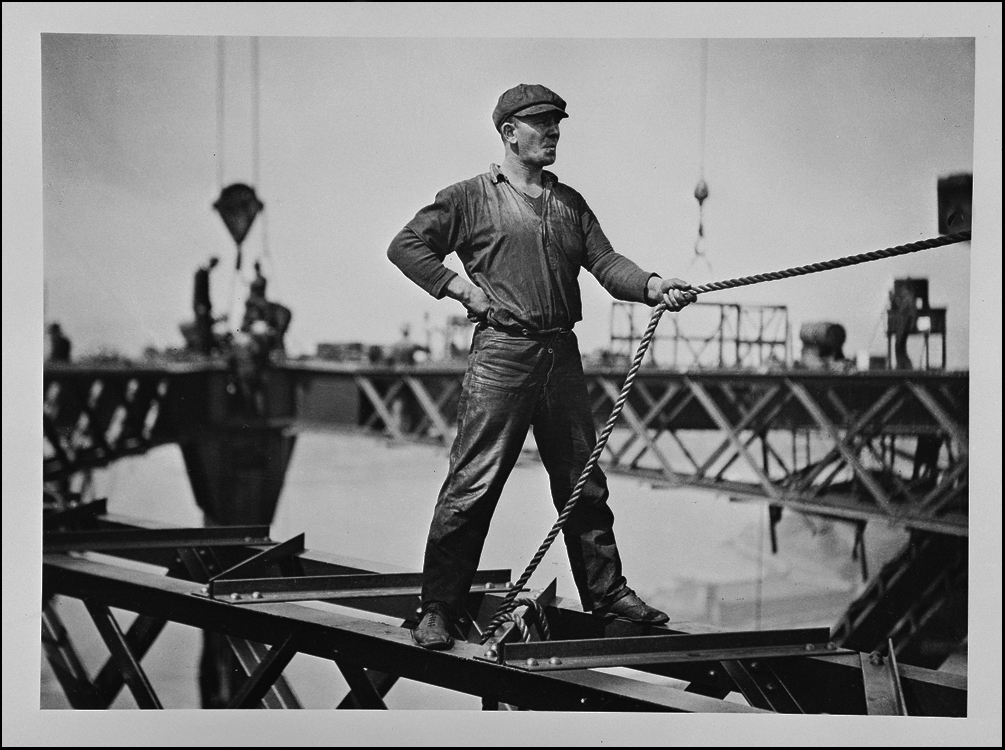
1979
9th May - Gael Newton is appointed the first Curator of Photography at the Art Gallery of NSW.
12th June to 8th July - The exhibition Australian Pictorial Photograph, organized by the Art Gallery of NSW, is held at the S.H. Ervin Gallery, Sydney.
1984
14th January to 1st April - The exhibition Sydney Camera Circle: The Early Years, 1916 - 1938 is shown at the Art Gallery of NSW.
