
THE WESTERN AUSTRALIAN CAMERA CLUB
FORMED
22nd JUNE 1917
Saturday 27th January 1940 The West Australian (Perth, WA) - Page 16
A large attendance of members of the The Western Australian Camera Club enjoyed an informative lecture entitled "A Short Cut to Success", delivered by Mr A.L. Hefren at their meeting on Thursday night. The lecturer stressed the fact that many young members attempted a wide variety of subjects instead of concentrating on a limited variety and studying the results of their efforts. He urged the necessity to standardize the process of development and printing and by way of illustration showed members an ingenious home-made enlarging focuser.
The President (Mr Steele) thanked the lecturer for his expert advice. During the evening a competition for the best print submitted by members was judged and resulted in Mr F. Richards winning by one point from Mr R. Houghton, with Mr W.F. Hooton two points less than the winner in third place. Over 30 prints were exhibited and they covered a wide variety of subjects.
Thursday 15th February 1940 The West Australian (Perth, WA) - Page 8
WILD FLOWER STUDIES AT ART GALLERY
Twelve fine black-and-white photographic studies of West Australian wild flowers, prepared by Miss Hilda M.F. Wright, a teacher at the Perth Technical College, were placed on exhibition in the watercolor room of the Art Gallery yesterday. They will remain on view for three months. The flowers represented include kangaroo paws, Sturt peas, everlastings, orchids and other species. The Curator of the Art Gallery (Mr G. Pitt Morison) said that from a technical photographic standpoint the pictures were perfect. They were artistically composed and showed considerable taste on the part of the artist. Miss Wright exhibited the photographs in England and in view of their excellence, was elected an associate of the Royal Photographic Society of Great Britain. In 1938 she was awarded the Grenfell Medal, the second highest award of the Royal Horticultural Society, for an exhibit of wild flower photographs. She is a member of the The Western Australian Camera Club. A large collection of her photographs was taken to England by Mrs H.B. Lefroy last year and received generous praise in the London Press when exhibited.

THE GRENFELL MEDAL
Instituted in 1919 in commemoration of
Field Marshal Lord Grenfell
President of the Society from 1913 to 1919.
Awarded for exhibits of pictures, photographs or objects of
a similar nature of horticultural or botanical interest.
Also awarded for floral arrangement and floristry exhibits.
Saturday 6th April 1940 The West Australian (Perth, WA) - Page 18
Members of the The Western Australian Camera Club were entertained at their last meeting with a lecture and demonstration of the art underlying Dufay color films by Mr J. Jeffrey. The attendance was one of the largest in the history of the club and following the demonstration many questions were asked of the lecturer. Mr Jeffrey outlined the technique attached to the work and illustrated many pitfalls that the amateur might encounter and the means to over come them. Mr Jeffrey then displayed a large number of color pictures indicating the work of composition and color rendering. Before the meeting closed several members were able to see their own films projected on the screen through a lantern and were able to receive expert advice concerning the subjects presented.
Monday 13th May 1940 The West Australian (Perth, WA) - Page 9
The art of spotting and touching up of prints - was the subject of a lecture given by the President of the The Western Australian Camera Club (Mr R.C. Steele) last week at the general meeting of the club. Twenty-four members submitted entries for the photographic study, "Pets" and Mr A.L. Hefren was successful, with Miss H.M. Wright as runner-up. Several members submitted samples of Dufay Color work, being experiments carried out since the previous meeting, when Dufay work was introduced. Members of the Miniature Camera Club were guests for the evening.
Thursday 30th May 1940 The West Australian (Perth, WA) - Page 5
Photographs of a church in St. George's-terrace, some of high quality, were the subject of displays at the last meeting of the The Western Australian Camera Club. The print judged to be the best was exhibited by Mr R.C.S. Steele, while Mr P. Richards staged photographs which gained second and third places.
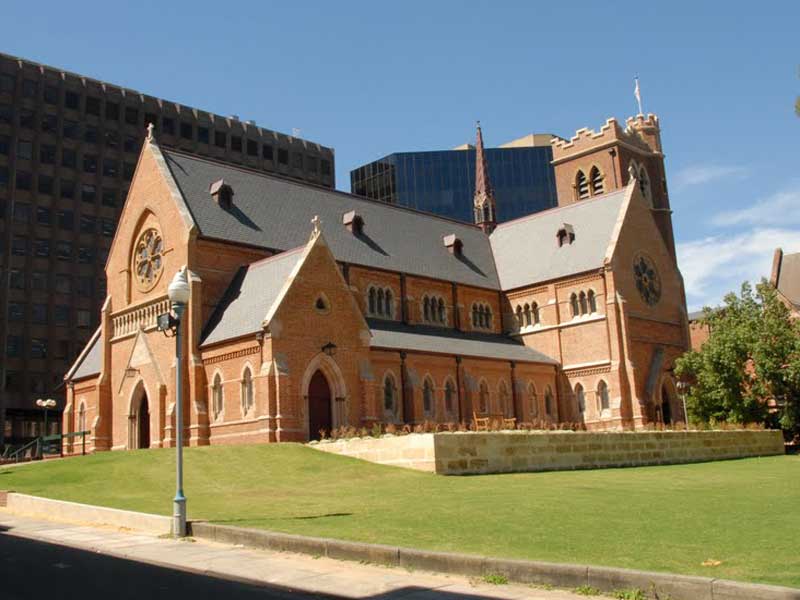
ST. GEORGE'S CATHEDRAL
St. George's Terrace, Perth, Western Australia
Saturday 29th June 1940 The West Australian (Perth, WA) - Page 17
The photographing of flowers was the principal subject discussed at the monthly meeting of the The Western Australian Camera Club on Thursday night. Miss H.M. Wright gave an address on the subject and a number of prints made by members were submitted for criticism. The two adjudged the best were shown by Mr F. Richards, Mr A.L. Hefren gained third place.
Friday 2nd August 1940 The West Australian (Perth WA) - Page 14
ADVENTURES WITH A CAMERA
Nearly 100 members of the Van Raalte Club, Perth, Miniature, Y.M.C.A. and The Western Australian Camera Clubs enjoyed an interesting and instructive talk on experiences with a camera in unusual places by Captain Frank Hurley on Wednesday night at McNess Hall. The President of the The Western Australian Camera Club (Mr R.C.S. Steele) presided. The South Polar expedition under Sir Douglas Mawson was used to indicate the many difficulties facing a photographer where the very low temperatures affected the films and the operation of the camera and opened up a new technique for the man with the camera. Captain Hurley said that he had the unique experience of seeing the ship's dip needle stand up on end when they were at the south magnetic pole. He related thrilling experiences during the return trip with gales at 70-80 miles per hour, blizzards and storms Which drove the ship 70 miles off its course. A trip across Australia was the next experience, totally different to that of the polar trip, described by Captain Frank Hurley. A trip south with Shackleton again gave the audience some vivid experiences of the work associated with these explorations. "Comradeship among the members of the crew was my greatest recollections of this trip", said the lecturer.
CAPTAIN FRANK HURLEY
Saturday 24th August 1940 The West Australian (Perth WA)
The 23rd annual meeting of the The Western Australian Camera Club was held at the Lattice Tearooms on Thursday. After receiving the report and accounts and dealing with some general business, the meeting was entertained by several films (by courtesy of the Kodak Company, Perth).
The following officers were elected for the ensuing year: Patron, Professor Alexander David Ross; President, Mr R.C.S. Steele; Vice-President, Mr W.F. Hooton; Hon.Treasurer, Mr A.D. Sinclair; Hon.Secretary, Mr F.R. Berry; committee, Messrs. L.T. Walsh, A.L. Hefren, W.A. Smith, R.S. Temple and K. Ottaway.
Professor Alexander David Ross
Born 7th September 1883 Glasgow, Lanarkshire, Scotland
Died 14th December 1966 Western Australia
UNIVERSITY VICE-CHANCELLOR
Friday 27th September 1940 The West Australian (Perth WA) - Page 12
An exhibition of photographs taken by members of the The Western Australian Camera Club will commence at the art gallery, Newspaper House, on Monday. The exhibition will remain open for a week. The official opening will be performed by the Lord Mayor of Perth (Dr. T.W. Meagher) at 8pm on Monday night.
Tuesday 1st October 1940 The West Australian (Perth WA) - Page 11
The high standard of photographic art attainable with modern equipment and materials, combined with skill in exposing, developing and printing, is illustrated in an exhibition by the The Western Australian Camera Club which was opened by the Lord Mayor (Dr. Thomas W. Meagher) in the Newspaper House art gallery last night. The subjects dealt with include landscapes, seascapes, still life studies, action pictures, portraits, child studies, wild flowers and a number of excellent night pictures. All show a good deal of artistic merit.
One of the outstanding pictures of the exhibition is W.F. Hooton's "Magnolias", which by a perfect judgment of light and exposure, seems to hold in the print the very texture of the big magnolia petals. This exhibitors versatility is shown in a number of other pictures, including "Evensong", "Our City", "The Breaker", "Flight" and "Charlie". Among the best examples of still life are two pictures by Miss Birmingham, "Potatoes" and "Still Life". In an excellent composition entitled "Quiet Moorings," A.L. Hefren has captured the peaceful solitude of a quiet river. "Childhood", by the same photographer, portrays a toddler engrossed in her play on the beach. One of the best cloud studies is R.C.S. Steele's "Sunset", in which the sun, from behind a cloud, sends its rays down into the sea and lights up the surrounding clouds. This exhibitor also has an interesting night view of Perth, taken from a low altitude across the water.
There are two excellent night pictures of the University, "The Floodlit Gate" by R.C.S. Steele and "Silvery Plumes" by A.L. Hefren. The last named shows two poplars silhouetted against the light streaming from an open doorway and the light has been caught by the leaf surfaces on the tops of the trees. It is a remarkable exposure. Miss H. Wright is responsible for a unique collection of wild flower studies, most of them West Australian wild flowers. Among other exhibitors are K. Ottaway, J.A. Jeffrey, L.T. Walsh, A.G. Parker, H. Papprill, B. Southern, W.J. Mannix, F. Richards, F.R. Berry, A.D. Sinclair, R.S. Temple, F.B. Houghton. P. Sands and N. Norman. The exhibition will be open each day from 10am to 9pm until Friday.
Wednesday 24th September 1941 The West Australian (Perth WA) - Page 7
Steps are being taken to establish a permanent salon of photography in Perth, where the public may study examples of camera art. It is proposed to invite camera clubs all over Australia to contribute to the standing exhibition from time to time. This announcement was made at the monthly meeting of the Miniature Camera Club on Wednesday night by the President of the The Western Australian Camera Club (Mr R. Steele), who was an official visitor.
Another visitor, Mr J.A. Jeffery, of the Van Raalte Club, Perth, gave a lecture on the functions and behavior of certain chemicals in photography.
The awards in the monthly competitive exhibitions were as follows: Schedule subject (cloud study): G.A. Parker, 1; T.J. Lambert, 2; M.S. Morris 3. Open subject: M.S. Morris, 1; R. Hartwig, 2; S. Bannister, 3. By invitation, Messrs. Steele and Jeffery criticized the prints for members instruction.
It was announced that the club would conduct a members photographic outing in King's Park on September 27 and that the schedule subject for next month's competitive exhibition would be wild flowers,
Monday 26th April 1943 The West Australian (Perth WA) - Page 2
Mr August Knapp who was an optician in Perth for many years and the founder of the optical firm of Messrs A. and Master Karl Knapp, of Barrack-street, died on Friday after a long illness at the age of 69 years. Mr Knapp was born in England and came to this State over 44 years ago. He was the founder of the WA Optical Association. Keenly interested in motoring, he was one of the founders of the Royal Automobile Club in Perth. In the early days of motoring in this State. when traveling extensively, he sign-posted many roads and also drew many maps, which were later published by the RAC. He also was the organizer of the motoring reliability trials. As a result of these and other activities he was held in high esteem by the RAC. Mr August Knapp was also very active as an amateur photographer and he founded the Van Raalte Club, Perth. He is survived by his widow and one son.
Mr W. Davies, a member of the firm of Messrs Ford, Rhodes and Davies, died at his home in King's Park-road, West Perth, yesterday, at the age of 75 years. He was born in Bendigo and had lived in this State for over 40 years. He is survived by his widow.
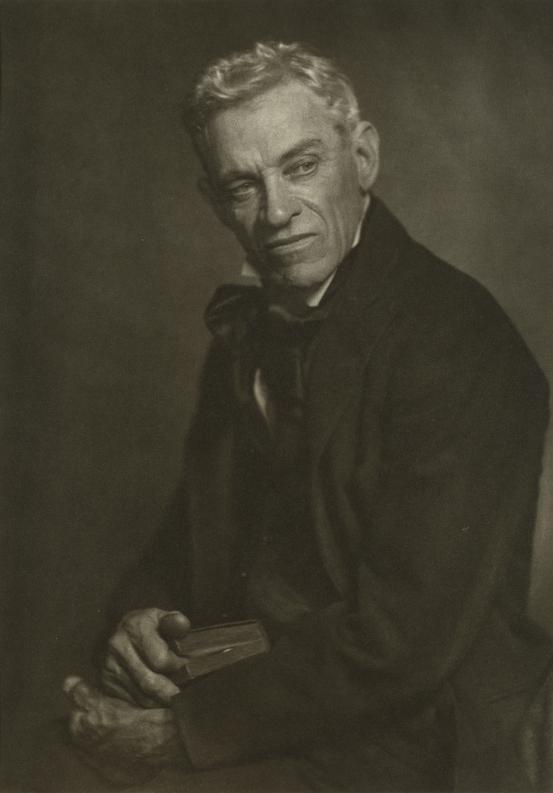
August Knapp
Born 31st August 1873 Manchester, England
Died 23rd April 1943 Perth, Western Australia
OPTICIAN
Perth, Western Australia
Friday 31 December 1943 The Daily News (Perth WA) - Page 8
JUNGLE TRIALS FOR SIGNALLERS
News of several West Australian signalers in New Guinea provides a reminder of the varied and often unusual roles that fall to them in the jungle. A case in point is that of Bicton man Sergeant Jim Hough. Hough and his men are equipped with climbing irons. With these they are able literally to walk up the big timber. With more than a year's service in the islands to their credit Hough and his section have done fine work. In maintaining communications in the Milne Bay area they had many hectic experiences. Joining up early in 1940 Corporal Tom Armstrong of Mt. Lawley, served with a medical unit in the desert campaign as well as in Greece and Crete. At the time of the Greece evacuation he and others were pursued for six days and nights but got aboard a British destroyer and transferred to a cargo vessel bound for Crete. Bombers attacked the ship and the men were forced to take to the boats. The same destroyer rescued them and took them on to Crete. They finally got back to Alexandria. At latest Armstrong was manning a regimental aid post with a signals unit.
Sig. Ron Temple, another signaler in New Guinea, has become an artist of no mean ability. Last year and again this year he won the Christmas card contest for the area and members of his unit have deluged him with orders. Before the war he was well-known in local amateur photography circles and was a member of the The Western Australian Camera Club. Former Merredin identity John Gilbert is a signals unit despatch rider. He foresees the end of motor cycling in New Guinea. "The Jeep is the thing for this country", he stated. "At Milne Bay where it rained daily it was proved that the Jeep was essential for despatch work. Even then we sometimes failed to get through. It rained so heavily it was almost a solid wall of water which made sluggish streams raging torrents and reasonably good roads impassable in a matter of minutes.
1947 The members decided that in addition to the judges awarding places to competition entries, the members would do so too. Members would vote on their selection of place-getters on all competition entries. This is still done today and although it makes the competition night a bit messy, it is something much cherished by the members and they would not think of relinquishing this privilege.
January 1947 Australian Photographic Journal - Page 52
The monthly meeting of the The Western Australian Camera Club was held in the Club Rooms on the 28th November 1946. There was a large assembly present and the set subject "Scene with Boats" (excluding yachts racing) attracted a large number of entrants. The criticisms were handled expertly by the President (Mr R. Steele) and Mr F.E. Taylor. The voting was as follows: 1, N.B. Snell; 2, R.C.S. Steel; 3, N.B. Snell.
Instead of the usual lecture, members were treated to a very delightful display of Kodachrome slides made by Messrs. R. Steel, R.F. Berry and G.A. Parker. Many interesting shots were shown of the Victory March, Perth Royal Show and show places in and around Perth and Albany.
In a short talk (with demonstrations) on using Kodachrome film, the President drew attention to the fact that the best results were obtained by using the exposure chart included with each roll of film. The Kodak beaded screen (kindly loaned by Kodak Ltd.) also proved superior for showing color film as against the original silvered screen.
January 1947 Australian Photographic Journal - Page 52
The Christmas meeting of the The Western Australian Camera Club was an informal one; no lecture was scheduled, but the monthly print contest was conducted as usual. The subject was "Own Choice" and this resulted in a very large number of entries. In consequence, the committee divided the prints into two groups, Portraiture and General. In the first section the awards were: 1 and 2, R.D.W. Matthews; 3, J.H. Watson. Mr Matthews entries were studies of aboriginals at Canulup Settlement, Kattanning and attracted much interest. In the second section, placing was: 1, S. Bannister; 2, Mrs G.A. Parker; 3, G.A. Parker.
The Rt. Rev. L.A. Knight showed a number of prints toned with hydrochloric acid by reduction [January 1943, Australian Photographic Journal] and spoke enthusiastically of the process. Mr W. Smith showed a series of aboriginal subjects made during the search for the Kingsford Smith plane back in the twenties. Mr S. Bannister displayed a group of aerial views of Perth made during the war and Mr R. Benny contributed a 16mm movie program of his own films.
February 1947 Australian Photographic Journal - Page 107
At the January meeting of the The Western Australian Camera Club a very instructive demonstration was given by Mr J.R. Sunter on Print Retouching and Finishing. Members watched with interest while he changed a mediocre print into "something like it" with the aid of oil pencil and lamp black. Mr Sunter stresses the usefulness of ferricyanide in the treatment of prints by giving clever demonstrations. The Set subject for the month was "Beach Scenes with or without Figures" and resulted: 1, Mr Johnston; 2, Mrs Parker; 3, Mr J. Devereux. The criticisms of the prints were handled by Messrs. Taylor and Snell.
April 1947 Australian Photographic Journal - Page 224
The set subject for the February meeting was "Shop Window by Night". Results were: 1, Mr Johnstone; 2, Mr Snell; 3, Mr Berry. The criticism was capably handled by Messrs. Orriss and Richards. In the absence of the President (Mr R. Steele) who was unfortunately in hospital, Mr Walsh collaborated with Mr Berry in giving a practical demonstration in the making of lantern slides. During the lecture Mr Berry stressed that a good slide must have plenty of detail, its highlights must be absolutely clear and unveiled, its shadows luminous and it must show the result of correct exposure and development. To obtain satisfactory slides, one must have satisfactory negatives; scrupulous care being required in the matter of dust specks, pinholes, etc. The best cure for these is prevention, but if an accident does occur the slide can be retouched with a fine brush and water down to match. The slides made by Mr Walsh were generally admired.
May 1947 Australian Photographic Journal - Page 284
An enjoyable meeting was spent by members at the monthly meeting in the clubrooms on March 27th. An outstanding feature of entertainment was the screening of a series of Kodachrome slides by Mr Ivan Berry of Whittenoom Gorge in the Hammersly Range. Slides made by members were also screened and admired. An outstanding slide was one in sepia tones made by Mr J. Watson, who later demonstrated what could be done by control in contact printings. The set subject for the month was "St John of God Hospital, Subiaco". A large number of entries were on the board and the voting was as follows - 1, Mr Marks; 2, Mr Lindney; 3, Mr Walsh. The criticisms were handled by Messrs. Sunter and Schock. It was also decided to purchase from club funds a set of three lights for use by members. Mr Sunter officiated in the absence of the President (Mr R. Steel), who is at present in Melbourne.
June 1947 Australian Photographic Journal - Page 296
At the April meeting Mr K. Ottaway gave a very instructive and humorous lecture on "The Beginnings of Bromoil". After the lecture members "felt the urge" to try their hands at making bromoils. The photo subject "Typical Australian Landscape, Featuring Gumtree or Blackboy" attracted a large number of entries. The voting was as follows: 1, L.T. Walsh; 2, Rev. A.L. Knight; 3, W. Berry. the criticisms were handled by Messrs. Snell and Sinclair. the Rev. Knight exhibited some high quality prints of interiors which were much admired.
July 1947 Australian Photographic Journal - Page 398
The meeting for May was fairly well attended, the subject for the month being "High Key Still Life". The voting was as follows: 1, Mr Devereux; 2, Mr Angove; 3, Mr Walsh. The lecture and demonstration on "Handling Bromesko Paper" was given jointly by Messrs. K. Ottaway and L.T. Walsh. the former spoke about the papers of long ago, when there were only two surfaces available, matte and glossy. Despite this drawback, many excellent prints were made, thus reflecting on the ability of the amateur photographer of today, who, with such a wide range of papers at his disposal, has often shown no marked improvement. Mr Walsh stressed the wonderful versatility of Bromesko paper and exhibited a collection of 15 prints made from two grades. These were developed in D72 (for black tones) and D166 and D155 (for warm tones). They were given different exposures, but all were developed for the same time. On a general summing up it was agreed that Bromesko paper possesses a remarkable latitude and considered very easy to handle. The evening closed with a hearty vote of thanks to the respective lecturers.
August 1947 Australian Photographic Journal - Page 463
The monthly meeting was tinged with regret owing to the resignation of Mr Roy Berry from the position of Hon.Secretary. Mr Berry has worked long and hard for the club and he will be greatly missed. Until the re-election of officers at the Annual Meeting in August, Mr Snell has consented to act as Hon.Secretary. Unfortunately, the President was absent ill and Mr W. Sunter officiated in his stead. The set subject for the month was "Railway Scene (including track)" and it attracted a large number of entries. The voting was as follows: 1, Mr Walsh; 2, Mr Johnstone; 3, Miss Emery. At the conclusion of the judging, Mr E. Parlato delivered a very instructive lecture with demonstrations on "My Views on Pictorial Composition". He stressed that it is not wise to utilize the entire film area with the subject being photographed, as a margin of space should be included to allow for necessary trimming. He went on to say that composition is the arrangement of the pattern of "lines" and tones within the picture. A line need not necessarily be continuous, as iin a photograph actual lines are seldom present. These so called "lines" are formed by the edges between two distinct areas of tone. If the compositional lines in a picture are horizontal and vertical, the effect is one of calmness. Similar remarks apply to long flowing curved shapes. On the other hand, short abrupt lines give a feeling of restlessness. Lines radiating from a point in a picture will lead the eye to that point. It is far better to have the lines leading into the picture than out of it. Avoid straight lines if possible and work on the diagonal. A good plan before making the exposure is to view the scene through a piece of blue glass. This trains you in "seeing" possible pictures in monochrome. On or about 30th September an "Exhibition of Work" by members of this club will be held. All workers are asked to co-operate by submitting a few entries. Full details from the Hon. Secretary.
September 1947 Australian Photographic Journal - Page 523
The monthly meeting was held in the club rooms on 24th July. Members were treated to an illustrated lecture on night photography prepared by Mr G. Mills. Unfortunately, Mr Mills was not able to be present and the lantern slides were operated by Mr J. Watson and the lecture read by Mr K. Ottaway. The pictures exhibited included many taken at night in the streets of London in 1930, as well as a selection of fine indoor photographs. Perhaps the greatest of the benefits conferred upon the photographer by the introduction of fast color sensitive negative material, is the great simplification of night photography. A whole host of new subjects and new applications of photography have been made possible by the supersensitive Panchromatic range of negative materials. It is true to assert that most night photographs are made by the light of gas-filled incandescent filament electric lamps, or "half watt" lamps as they are sometimes loosely termed. These "white" lights are mixtures of the rainbow colors, whereas artificial light is much richer than daylight in red and orange rays.
Therefore it will be appreciated that the light by which nearly all night photographs are made is principally red and orange, although the small proportion of blue and green rays contained in it cause the light to appear as more or less white. For snapshot photography outdoors at night, a wide aperture lens, at least f6.3, is at present indispensable. In a well lighted street, 1/5 second at f4.5 will give a sufficiently exposed negative. When photographing brilliantly lighted buildings, 1/10 or 1/25 second at f6.3 might be found adequate, although it is always preferable to give more exposure if possible. Take care that brilliant light does not shine directly into your lens, or there will be a risk of fog. At the conclusion of the illustrated lecture, intending entries for the forthcoming Members Exhibition were previewed and members "enjoyed" themselves showing each other "where they were wrong".
October 1947 Australian Photographic Journal - Page 544
The 30th Annual General meeting was held on the 28th August 1947. the report of the committee of management and the bank balance sheet were read.
The election of officers was as follows: President, Mr Keith Ottaway; Vice-Presidents, Messrs. W. Sunter and Reg Steele; Hon.Treasurer, Mr W. Smith; Hon.Secretary, Mr N.B. Snell; Committee, Messrs. Walsh, Orriss, Taylor and Parker.
Presentations of cheques were made to the retiring President (Mr Reg Steele) and the past Hon.Secretary (Mr Roy Berry) by Mr W. Sunter on behalf of the club. Mr Steel was President for nine years and Mr Berry Hon.Secretary for ten years. Both gentlemen responded with suitable speeches, whilst the Rt. Rev. L.A. Knight, Bishop of Bunbury, also made a congratulatory speech.
The presentation of prizes was made by Mr Jack Watson to the following prizewinners in the point score competition: 1, Mr L.T. Walsh, 26 points; 2, Mr R. Johnson, 21 points; 3, Messrs. R.C.S Steele and J. Devereux, 16 points each. At the conclusion of formal business, a movie film was screened (by courtesy of Messrs. Campbell and Uren).
November 1947 Page 597 - The Australasian Photo-Review
The Western Australian Camera Club
The monthly meeting was held in the new club rooms in Padburry Buildings on Thursday, October 19. The President, Mr K. Ottaway, in a speech welcomed members, new members and visitors.
The monthly competition ("Open Subject") attracted a fairly large number of entries. The judging was as follows: l, Mr J. Watson; 2, Mr K. Ottaway; 3, Mr J. Devereux. The criticisms were conducted by Mr E. Orriss and Mrs M. Collier. A lengthy discussion took place regarding the method of voting. It was ultimately decided that all prints on the board should be put up and voted for. The old method of judges selecting the three best prints and submitting them to members for voting was ruled out.
A happy time was spent afterwards in a Qµiz Session which took the form of a questionnaire. Mr R. Steele topped the poll with 24 out of the 25 marks. Mr Sunter and Mr Martin tied for 2nd place with 22 marks each and had to be submitted to a further quiz which resulted in Mr Martin 2nd, and Mr Sunter 3rd. Prizes were given to the three successful candidates.
December 1947 Page 699 - The Australasian Photo-Review
The Western Australian Camera Club
At the November meeting, the monthly contest (Christmas Cards) was judged. Out of a small entry the voting was as follows: l, Mr Parker; 2, Mrs Parker; 3, Mr F. Taylor.
Mr N.B. Snell (Hon.Secretary) then gave an excellent lecture on "Print Fixing and Washing". Continuing, he said: Fixing and washing go hand in hand and if not properly done will result in spoiling the best of pictures. Be sure your fixing bath is not exhausted, otherwise it will not remove all the unexposed silver salts. Do not put your fingers in the fixing bath; rinsing will not entirely remove the hypo from them and you are liable to cause discoloration and spots when handling unexposed paper, to say nothing of possible contamination of the developer.
"If you are handling a large number of prints, do not allow the hypo dish to become choked with a solid mass of prints. It is a good plan to have a second dish of hypo, transferring prints to it after a few minutes immersion in the first one. Each print should be fixed for at least ten minutes. Prints can be washed in a dish, provided that the flow of water is vigorous enough to ensure that the heavy hypo fluid does not remain stagnant in the bottom of the dish and provided that the prints are turned over from time to time during the operation, so as to ensure that they do not stick together and hinder diffusion of the hypo from the prints into the water. If running water is not available, keep changing the water in the dish every thirty seconds about ten or a dozen times. After thirty seconds fresh water is needed to continue the diffusion of the hypo from the emulsion of the film or paper".
Criticisms of prints were carried out by Roy Berry and Molly Collier.
February 1948 Page 104 - The Australasian Photo-Review
The Western Australian Camera Club
The December meeting was held in the Modern Woman's Club, Padbury House, on Thursday, 11th December, at 8pm. The competition for the month was "Domestic Animals", but, unfortunately, very few prints were submitted. The voting was as follows: 1, Mr W. Schock; 2, Mr Faulkner; 3, Mr Schock.
Mr T. Lambert gave a lecture and demonstration on "Control in Enlarging". He emphasized the importance of the lamp used and particularly advised the use of opal lamps for enlarging purposes. It was interesting to see how unwanted material could be deleted and other material printed-in during the exposure.
The January meeting was held in the Modern Women's Club Rooms on Thursday, 8th January. The Set Subject competition, "Angle Shots", judged as follows: 1, Mr Taylor; 2, Mr Parker; 3, Mr Devereaux. The criticisms were given by Mr Groom.
The visiting lecturer for the evening was Mr J. Jeffery, who spoke on "Development of the Negative", during the course of which he said "the main thing is to get a good negative. To do this it is necessary to 'develop' the exposed film to "reveal the latent or invisible image caused by the action of light. The chemicals which compose the developer are the reagents, such as pyro, hydroquinone, and hydroquinone with elon or metol. They affect the latent image by reducing to metallic silver those parts which have been affected by light. However, all reagents require the use of an alkali, such as sodium carbonate, to give them energy.
The restrainer most commonly used in retarding the process of development is potassium bromide. As a rule, little or no restrainer is used in negative development, except in isolated cases of known over-exposure. The preservative, sodium sulphite, preserves the solution and prevents it from oxidising whilst in use. If only a small quantity is used a contrasty negative will result, whilst an increased amount will produce a soft negative with greater detail.
Fixation is due to the dissolving action of the hypo, which removes the silver bromide not acted upon by light; until this is completed the emulsion is still sensitive. "After fixing, the negative must be washed thoroughly, or staining will result. "It is essential that all chemicals be of the same temperature".
March 1948 Page 159 - The Australasian Photo-Review
The Western Australian Camera Club
The monthly meeting was held in the Modern Women's Club Rooms on Thursday, February 12th, at 8pm. For the judging of the monthly competition, "Home Portraits", the entries were divided into two groups, A and B. The voting was as follows: Group A: 1, Mr Pryor; 2, Mr Watson; 3, Mr Devereux. Group B: 1, Mr Martin; 2, Mr Howell; 3, Mr Howell. The criticism of the prints was handled by Mr Wm. Sunter.
The visiting lecturer, Mr Norm Ellison, gave a very fine lecture entitled "The Approach to Portraiture". "In the approach to portraiture", he said, "one depends largely upon inspiration".
Some of the many points he emphasized are: Curtains are not good backgrounds, as they create unwanted lines and highlights; it is preferable to keep to plain backgrounds. Study the types of backgrounds most suitable to the sitter, as well as the sitter's age and coloring.
In photographing people with double chins, tilting the head slightly upward will help. A person with a square jaw should not face full on to the camera. Turn his head slowly away from the light and stop at the point where the outline of the head presents an oval form. Long thin-faced people should have the light directed upon the face so as to fall just below the cheekbones. For bald-headed sitters have your assistant hold a sheet of cardboard over the head between the light and the bright spot, just out of range of the lens. Secure sharp focus upon the eyes and avoid double "catch-lights". If including hands in the portrait, be careful that they are not out of proportion to the face. Always remember that the face is the most important part of your picture and all lines should lead up to it and all other parts should be subordinated. In arranging the lighting it is a good plan to remember to "wrap your lighting around your subject".
At the conclusion of the lecture Mr Ellison was warmly applauded; he then cheerfully answered the volley of questions fired at him by enthusiasts.
April 1948 Page 221 - The Australasian Photo-Review
The Western Australian Camera Club
The meeting for March was held in the Modern Women's Club on the 11th. The monthly print competition, "Harbour and Shipping", was divided into two groups, as there was such a large number of entries. In Group A the prizes were as follows: 1, Mrs. Parker; 2, Mr Parker; 3, Mr Angove. In Group B: 1, Mr Oakley; 2, Mrs O'Neill; 3, Mrs Howell. The criticisms of the prints were handled by Mr Devereux and Mr Snell.
The lecture for the month was given by Mr Keith Ottaway, who spoke on "Composition". The points of his talk were illustrated by slides, which added considerably to the interest of the lecture. In conclusion, Mr Ottaway summarized with this remark: "The main points to watch when composing a pictorial photograph are backgrounds, balance and simplicity". At the conclusion of the lecture Mr Reg. Steele proposed a vote of thanks and congratulated Mr Ottaway on a very fine lecture.
May 1948 Page 284 - The Australasian Photo-Review
The Western Australian Camera Club
On the invitation of Mr Arthur Fielding, two groups of members of the The Western Australian Camera Club have visited recently the Ruskin Studio, Perth.
After an interesting talk on lighting and the use of the various types of lights, Mr Fielding demonstrated with models the principles he had outlined in his talk. He also made a number of exposures. While these were being developed, members were allowed full use of the studio and lights and the models suffered the ordeal of more photography. After an inspection of the demonstration negatives, Mr Fielding commented on the suitability of the types of lighting he had used and answered many questions.
An inspection of the darkrooms completed what was unanimously agreed to have been a very instructive and enjoyable evening.
The April meeting was held in the Modern Women's Club rooms, on Thursday 8th of April. The voting for the monthly point competition, "Trees", was as follows: "A" Grade; 1, R. Steele; 2, Mr Johnstone; 3, Mr Blake. "B" Grade; 1, 2, 3, Mrs Howell. The criticisms were conducted by Messrs. Sutton and Martin.
The lecturer for the evening, Mr F. Dale, proved himself an expert in print finishing and the oil reinforcement process. He also delighted everyone with his very fine display of prints which he obtained on a walking tour of Northern Victoria a few years ago. With demonstrations, he showed how to tidy up a print, tone down areas, and bring a picture together.
He said: "It is a good plan to eradicate all black spots by means of a spotting brush dipped in a solution of 10 per cent hypo rubbed on a crystal of ferricyanide. Have a wad of wet cotton wool handy to wipe off the chemicals immediately. When dry, the white spot is then built-up to the surrounding tone by means of the spotting brush used with lamp black. The oil dope (three parts linseed to one of turps) is wiped over the print, allowed to soak in and then wiped off completely. The object is to be sure that there will be no edges showing in the pigment. Then, where required, dab on the lamp black with cotton wool and rub in lightly until satisfactory. If unsatisfactory, the whole can be washed off again with the oil dope. Should any white spots show up when finished, they can be filled up again with the spotting brush and medium".
July 1948 Page 409 - The Australasian Photo-Review
The Western Australian Camera Club
The May monthly contest was "A Print Made from a Box Camera Negative". Addressing the meeting, the President, Mr K. Ottoway, said the work on the board was excellent. The variety of subjects tackled by the box camera showed its wonderful versatility.
The judging was as follows: (A) 1, Mr D. Evans; 2, Mr Johnstone; 3, Mr K. Ottoway. (B) 1, 2 and 3, Mrs Howell.
The lecture, "Print Criticism", was to have been given by Mr Reg. Steele, who, unfortunately, was unable to attend due to illness. However, he kindly sent his notes along and Mr Ottoway officiated in his stead. A summary of the lecture is as follows:
In print criticism it is well to keep the following eight points in mind:
l. Technique - Other qualities may be good, but if technique is poor, print will fail. Attention must be paid to modeling, detail in shadow, correct exposure, proper development and the right grade of paper.
2. Appeal - Does the picture stir in the mind that pleasure of beauty? In other words, does it appeal.
3. Originality - Is it original? Does it conform to the general rules of composition? Does it possess individuality? Is the treatment suitable to the subject and has it been trimmed to the best advantage?
4. Unity - Does the picture express an idea or tell a story? Is it well held together?
5. Vitality - Does the picture live, or is it just a representation of facts?
6. Repose - Does the picture convey that restful feeling? Could you hang it in your home and view it with pleasure indefinitely?
7. Title - This is a very important factor and should be chosen very carefully, as too often an otherwise good print is spoiled by a badly selected title. Also the position of the title on the print is important in the way it is written or printed.
General - In your criticism do not be dogmatic, but treat a print more from a personal angle. Consider the other fellow's feelings. Remember that beginners are particularly sensitive to analysis and are apt to be discouraged by adverse criticism. By all means point out faults, but give praise and credit where due.
August 1948 Page 487 - The Australasian Photo-Review
The Western Australian Camera Club
The monthly meeting of members was held in the Modern Women's Club on Thursday, the 10th June.
Prints submitted for the monthly competition had to conform to one of the following forms of composition: Triangular, Circular, "L" shape. Results were: 1, J. Devereaux; 2, S. Bannister; 3, L. McGee. Criticisms were conducted by Messrs. Ottoway and Johnson.
Mr E. Palato lectured on print toning and gave a demonstration of the methods employed to produce various colored prints. Taking a black-and-white print, he turned it blue by passing it through solutions (a) potassium ferricyanide and sulphuric acid and (b) ferric ammonium citrate sulphuric. Turning another print green, he passed it through (a) potassium ferricyanide solution and (b) vanadium chloride (stock solution) and ferric ammonium citrate.
Taking a sepia-toned print, he turned it red (after bleaching) by passing it through a solution of nickel nitrate, then through potassium ferricyanide, then dimethyl-glyoxime (saturated solution in methyl alcohol) and sodium hydroxide.
He also demonstrated the, multiple toning of a print by making the sky blue, trees and grass green and houses reddish-brown, while the bitumen road remained the same color. This he did by applying the various solutions to their respective parts with the aid of cotton wool wads. During the processing, prints are to be thoroughly washed in running water; if the result is not pleasing, the whole process can be washed off in a weak solution of bicarbonate of soda and commenced again.
October 1948 Page 619 - The Australasian Photo-Review
October 1948 Australian Photographic Journal - Page 619
The Western Australian Camera Club
The annual meeting was held in the Blue Gum Dining Rooms on August 19th and was attended by approximately 100 members and guests. The President and Treasurer reported a most successful and satisfactory year's work. The membership is now over 80.
The election of officers resulted: President, K. Ottoway; Vice-President, R.S. Steele; Hon.Treasurer, W.A. Smith; Hon.Secretary, J.T. Devereux; Committee - J. Sunter, E. Orriss, N.B. Snell, W. Schock, W. Sutton and G. Parker.
The annual awards for the highest point score in the monthly competitions were won by: "A" Group: 1, R. Johnston; 2, J.T. Devereux; 3, G. Parker. "B" Group: Mrs B. Howell.
After the general business was finished a selection of sound films was screened by Mr R. Campbell and was greatly appreciated.
November 1948 Page 685 - The Australasian Photo-Review
The Western Australian Camera Club
The monthly meeting of members was held in the Modern Women's Club on Thursday 9th September.
The subject for the monthly competition was "Genre" and a fair number of prints was submitted. Awards were as follows: 1, W. Sutton; 2, W. Schock; 3, B. Angove.
Representatives from the newspaper "The West Australian" were present to inform members of their big photographic competition. Much interest is being taken in this and points regarding copyright were cleared up to the satisfaction of members.
Visual Education in many of its various forms was demonstrated by courtesy of Kodak Ltd., and was most interesting. Particularly appreciated was the screening of several sound films which showed modern photography at its best.
December 1948 Page 751 - The Australasian Photo-Review
The Western Australian Camera Club
The October monthly competition was won by Mr J. Devereux, who secured first and second awards. Third place went to Captain Sutton. Subject: "Tree or Trees".
Owing to the unavoidable absence of the guest speaker of the evening it was decided that as members had been looking forward to the lecture subject ("Intensifying and Reducing Negatives"), an innovation of a "Help Each Other" evening would be tried out. Various members were invited to speak for a few minutes on their experiences with intensifiers and reducers. The resulting "experiences" proved always interesting and sometimes most amusing. A gratifying amount of information and mutual help resulted, some members being surprised at their own and others eloquence.
It was generally agreed that with the help given by exposure guides, meters, etc., and standardized emulsions and developing techniques, it should not be necessary to intensify or reduce, but at least a few members conceded that, as human beings are "human" intensifying or reducing could be used to save special shots.
Other members thought that to be without a reliable intensifier and reducer on the shelf was to ignore valuable helps. Despite differing opinions and much good-humored banter, the evening was very enjoyable and instructive. Plans are afoot to conduct a members exhibition in the near future, and members are all busily engaged preparing prints for the selectors.
September 1949 Australian Photographic Journal - Page 593
September 1949 The Australasian Photo-Review - Page 593
The Western Australian Camera Club
The Club held its 33rd Annual General Meeting at the Modern Women's Club on Thursday 11th August 1949. There was an excellent attendance of members and visitors. Mr N.B. Snell was elected President and Mrs A.M. Parker as Hon.Secretary. After the business was disposed of, prizes were awarded as follows: Best Exhibition Print: silver medal, Mr R.C.S. Steele. Points competition:1, Mr Johnston; 2, Mr Devereux; 3 (equal), Mr Ottaway and Captain Sutton. By courtesy of Tillys Pty. Ltd. members were then entertained by the screening of a 16mm film, entitled "East of Piccadilly". Although somewhat dramatic in parts, it nevertheless added to the evening's enjoyment.
October 1949 The Australasian Photo-Review - Page 658
The Western Australian Camera Club
At the Club meeting on 8th September members were entertained by the screening of 50 Kodachrome transparencies, these represented a loan collection from the Colour Division of the Photographic Society of America. Everyone enjoyed them to such an extent that it was decided to show them a second time.
The winners of the competition for the evening (Landscape) were; l, Capt. Sutton; 2 and 3, Mr Devereux.
This was our first meeting for the 1949-50 year and our new officers are as follows: President, Mr N.B. Snell; Vice Presidents, Messrs. K. Ottaway and R.C.S. Steele; Hon.Treasurer, Mr W.A. Smith; Hon.Secretary and Press Correspondent, Mrs G.A. Parker; Committee: Capt. Sutton, Messrs, Orris, G.A. Parker, J. Devereux, J. Sunter, Schock, Hookway and Johnston.
December 1949 Australian Photographic Journal - Page 787
December 1949 The Australasian Photo-Review - Page 787
The usual monthly meeting was held on Thursday 13th October. the set subject for the month was "Architectural" and points were awarded as follows: 1, Mr Walsh; 2, Mr Johnston; 3, Mr Palmer. Captain Sutton, the lecturer for the evening, gave a very interesting talk on "Tracing Troubles". He discussed no less than 81 different ways of spoiling a picture and explained the reasons in each case. He also emphasized that one should profit by one's experience and when photographic troubles occurred to try and ascertain the reason for them at once. The speaker mentioned that he had obtained his information for the talk from various sources, including his own "bitter experience" and naively remarked that he finds he gets more "photographic troubles" now than he did when he first began. The President, Mr Snell, warmly thanked Captain Sutton for his very interesting and instructive talk.
Wednesday 16 November 1955 The Australian Women's Weekly - Page 16
"CRAZY" PICTURES WON HIM LONDON JOB
"Crazy" pictures photographed in Australia by West Australian Bill Angove, above, have been acclaimed in London as the work of a genius. Angove, a prominent member of the The Western Australian Camera Club before he went to England, said each time he showed his pictures at the Club, the members called them "old Angove's crazy pictures". But when Howard Byrne, a Canadian who runs a big West End photographic agency, saw the pictures we have reproduced here, he gave Angove a job on the spot. Angove describes him self as a "frustrated painter".
PERPETUAL MOTION
He achieved this study by keeping the shutter of the camera open while his model moved from standing full face position to a profile study, seated.
SPILT MILK
This smug-faced cat and the spilt milk were drawn on newsprint by Angove; only the milk jug is real. Angove has recently worked with Cecil Beaton.
APPLAUSE
Paper cut-out of hands of all sizes, ages and shapes and a laughing mouth add up to this intriguing surrealistic study of audience applause.
FANTASY
A tribute, photographically, to Judy Coleman. Perth musician. Angove took this study after Mrs Coleman composed a piece called "Fantasy".
HORROR
Angove's grimacing mask in sinister colors demonstrates his versatility. Angove made the mask himself from papier mache, painted it as the focal point of his horror study. He found the other objects for his striking composition - the paper snake, the old-fashioned spectacles and photo album - about the house.
MAN AT BOULEVARDE CAFE
This photograph was made in total darkness with a torch. The shutter of the camera was opened and yellow and red filters were placed alternately in front of the lens for the different colored sections.
MORNING ARCHER
Study of ballet dancer Judy Schonell, of Perth. The first exposure was made with a red filter for the background. The second exposure was made in darkness and the bow drawn with a lighted torch.
There was a time when members complained about the same few members, equipped with expensive cameras, winning all competitions. As a consequence, a special open competition was held in two sections: (A) with any camera and (B) with box cameras lent to the club by Kodak and supplied with one film each. Surprise, surprise, the overall winning entry was shot on a box camera.
1960s seemed to be the decade for great social outings. A most outstanding one was the weekend when the club chartered a DC3 for a weekend on Rotto. Also in that decade, color slides were introduced with much controversy, as members felt, slides were not necessarily true entries, as the processing was not done by the photographers themselves.
1997 the The Western Australian Camera Club celebrated their 80th Anniversary.
The following article is from the West Australian Photographic Federation, newsletter Reflex, dated February 2010, in relation to a potted history of the The Western Australian Camera Club.
A POTTED HISTORY
Established in 1917, it is the oldest still-going Camera Club in Perth.
Founded in June 1917 with 34 members; the membership exploded to 85 members by August 1917 and it held the first photographic exhibition in August 1917.
Entries were contact prints, enlargements, autochromes, lantern slides and window transparencies. Terms which we today don't even know the meaning of anymore.
By March 1920 the membership numbered 160, but, just like today, the then-secretary complained about the scarcity of competition entries. It was thought that it would not be unreasonable to expect 20 or 30 prints to be displayed, if only so many would be submitted.
1947 The members decided that in addition to the judges awarding places to competition entries, the members would do so too. Members would vote on their selection of place-getters on all competition entries. This is still done today and although it makes the competition night a bit messy, it is something much cherished by the members and they would not think of relinquishing this privilege. I believe that the The Western Australian Camera Club is the only club which has the members selecting their choices of winners in the club competitions.
There was a time when members complained about the same few members, equipped with expensive cameras, winning all competitions. As a consequence, a special open competition was held in two sections: (A) with any camera and (B) with box cameras lent to the club by Kodak and supplied with one film each. Surprise, surprise, the overall winning entry was shot on a box camera.
The 60s seemed to be the decade for great social outings. A most outstanding one was the weekend when the club chartered a DC3 for a weekend on Rotto. The equivalent of that today would likely be chartering a Jumbo for a weekend in Honkers. Also in that decade, color slides where introduced with much controversy, as members felt, slides were not necessarily true entries, as the processing was not done by the photographers themselves.
For some years during that decade, the club assisted the Riverbank home in teaching the resident boys all about photography.
In 1997, on the occasion of the Club's 80th anniversary, the then-president reminisced on the advances in film and camera technology and mulled over some of the possible developments in TV and Computing. I doubt if anyone had foreseen the advances of digital computing and photography we have witnessed since.
The WACC has bravely embraced the latest digital developments and owns now its own digital equipment. The members have enthusiastically taken up the challenge and the digital sections in the monthly competitions are very well supported.
Currently The Western Australian Camera Club is a very small club with the membership hovering between 15 and 20 members on a good day. Many of our members are on the other side of 40. We have not seen any junior members for years. Several of our current members are long standing, 20 years or more. The atmosphere is very casual, laid back and friendly. We are one of the few clubs left still accommodating slide sections, although the number of entries gets lower and lower. As long as we have members shooting slides, we will continue to present them.
This year, the The Western Australian Camera Club is the host club for the TRIANG, an annual competition held between The Western Australian Camera Club, Workshop and Westside, a popular and always hotly contested inter-club competition. These regular inter-club competitions between one, two or three clubs are an excellent way of meeting and competing with other photographers and on behalf of the members of the The Western Australian Camera Club, I throw down the gauntlet to any club out there to enter into another such inter-club competition against us.
HANS WELLINGER
PRESIDENT
Western Australian Camera Club
Extract of the PRESIDENTS REPORT from the February 2015 Newsletter
The past year 2014 was one of challenges, growth and considerable success for the The Western Australian Camera Club.
A strong increase in member numbers and meeting attendance presented challenges for the club in settling into the new clubrooms in the Tuart Hill Community Centre.
In a first for the club since my joining in 2008, we now have three junior members. Highlight of the year was winning the annual West Australian Photographic Federation Interclub competition held in Mandurah and achieving gold awards in both the colour and monochrome sections. A first in the club's history.
Link to the "FLASH" newsletter of the The Western Australian Camera Club, celebrating their 100th Anniversary.